
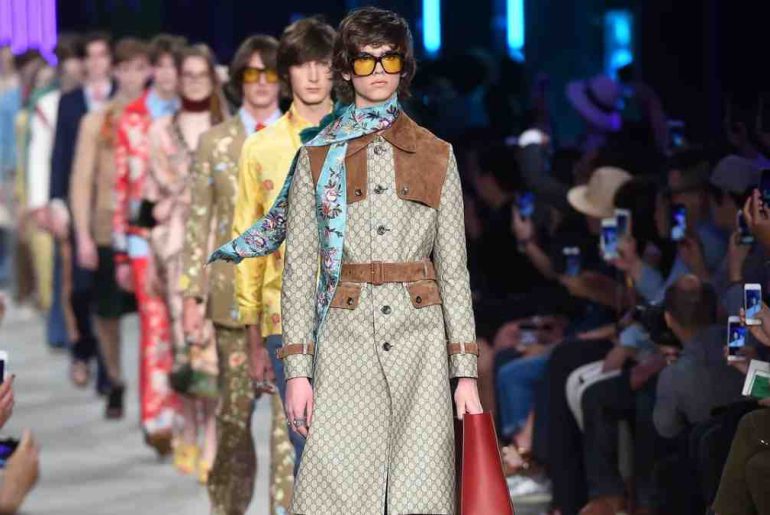
By challenging traditional binary norms, gender-fluid fashion has become a powerful form of self-expression. From the rock style of the Rolling Stones to Harry Styles’ Vogue cover and the Met Gala’s “Camp” theme, the boundaries between menswear and womenswear continue to blur. Rooted in LGBTQ+ history, non-binary activism, and changing cultural attitudes, fashion is steadily redefining what self-expression can look like.
“Slightly peaked shoulder jacket, ruffled blouse, and stacked heel boots”
Can you recall which heroine rocked this look on stage?
Chances are, you can’t, because it wasn’t a heroine at all! It was the famous American singer-songwriter Prince (Prince Rogers Nelson) in the iconic ‘Purple Rain’ video. Which leaves us wondering, does clothing really have to be gendered? Are beliefs such as “blue for the boys and pink for the girls” natural, or are they constructed carefully by society to help us pigeonhole ourselves, unconsciously pushing our creativity into a prison of “log kya kahenge?”

When we think about fashion, we often associate it with creativity and individuality. Yet, when it comes to gender expression, these ideals tend to disappear. For the queer community, fashion has long been a form of self-expression, resistance, and communication. By challenging the traditional male/female binary, genderqueer fashion pushes us to rethink why we assign gender to clothing in the first place.
“Genderqueer fashion represents the avant-garde of contemporary fashion,” says Bliss Foster, a millennial fashion critic. Unfortunately, it continues to face boundaries that dictate what men and women are “supposed” to wear.
Stereotypes, especially gender stereotypes, box an individual’s choices into socially acceptable norms, discouraging them from experimenting. A common example is the normalisation of the colours blue and pink for boys and girls, which can often lead to discrimination among young children.
Clothing, as one of our primary forms of visual communication, is deeply rooted in this traditional gender binary. Cultural stereotypes associate masculinity with utility, power, and rationality, while femininity is associated with decoration and frivolity, creating rigid fashion norms that influence how people dress. True genderqueer fashion seeks to disrupt this by incorporating elements traditionally associated with femininity into masculine clothing, thereby challenging the stereotype.
The fashion industry and queer community have never been alien to each other. Fashion has long served as a tool for expressing queer identities, including those of non-binary individuals. Shaun Cole’s “Dandies: Fashion and Finesse in Art and Culture” and Elizabeth Wilson’s “Adorned in Dreams: Fashion and Modernity” have examined the intertwined history of queer aesthetics and fashion’s role in expressing and exploring sexuality and gender.
Queer fashion has a much longer history than most people realise. The deconstruction of gender stereotypes regarding clothing started around the 1920s when pants for women began to be tolerated in sports and some limited activities such as cycling and horse riding. The rising wave of gender politics and the sexual revolution dates back to the 1960s, which was swiftly followed by the 1970s era where questions regarding gender stereotypes were seriously raised, dismantling those stereotypes gradually in the process.
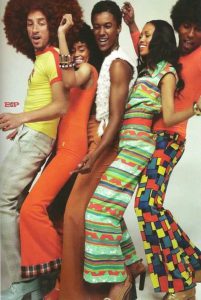
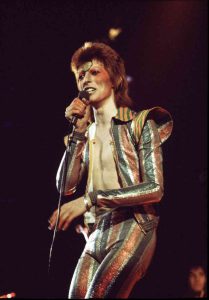
As feminist and gay rights movements gained momentum, the fashion industry reacted to these movements. Alongside these movements, popular culture also played an important role. David Bowie helped introduce gender fluidity into mainstream fashion, while the Disco era familiarised these ideas amongst the masses. Prince is also considered an LGBTQ+ icon to this day for defying gender stereotypes and pushing the boundaries of sexuality. For his admirers at that time, his difference and willingness to transgress boundaries made him stand out.
Similarly, and even slightly beforehand, The Rolling Stones used their own rock style to experiment with fashion and its boundaries, often choosing to wear colourful jumpsuits and ruffled shirts. Along with this, documented examples from the punk movement and the reintroduction of men’s skirts or divided skirts by the Japanese deconstructionist designers have also had their part in de-gendering fashion around the world. It was during this time when we saw the rise of trans and non-binary activists calling for gender-neutral fashion not only as a fashionable renaissance but also as an “anti-violence imperative”.
In recent years, we have witnessed a significant rise in acceptance of fashion that goes beyond the scope of gender binary. This progressive approach has allowed generations of people to express themselves and their identities more freely, most visibly through art, music, and, importantly, fashion.
From David Bowie to Harry Styles, the landscape of gender and how we perceive it in the world of fashion is changing drastically. Stereotypes are being gradually eradicated as consumers bother less about standard gender labels and adopt a more fluid approach to individual expression.
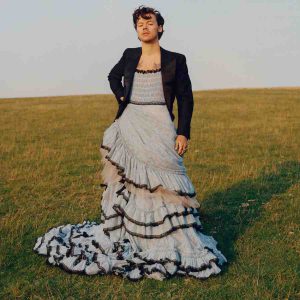
In 2016, actor and musician Jaden Smith could be seen participating in a Louis Vuitton campaign showcasing their newest collection. In this campaign he can be seen wearing a skirt whilst posing with other female models in similar outfits. Not long after that, Harry Styles featured on the cover of Vogue in 2020 in a pale blue, lace-trimmed dress underneath a black tuxedo jacket, both by Gucci. However, there was significant backlash for both, raising controversies around gender-related concepts (especially masculinity) and whether events like these fell under the umbrella of men appropriating women’s clothing.
While these examples were still perceived with scepticism among older millennials, what does Gen Z say about all this? Gen Z has introduced a unique set of consumer behaviours due to their digital inclination and favouring fast, seamless experiences. Moreover, keeping in mind their high levels of acceptance, these young consumers are ditching old labels and finding new ways to express themselves outside of typical gender norms. They are arguably the most diverse generation yet, as they are also far more comfortable with shifting views of identity than older generations have been.
The year 2019 was particularly important for de-gendering fashion and the rise of acceptance for fashion that stands out of the box. Be it the 2019 Vogue’s annual Met Gala theme or the #DeGenderFashion that gained traction and eventually turned into a social movement, the year was revolutionary for fashion and gender identity, especially for Gen Z.
In 2019, the Met Gala theme was chosen to be ‘Camp: Notes on Fashion’, which not only went beyond the convention but also provided the attendees with extravagant creative freedom regarding their fashion choices. This particular year was a chance for celebrities to push the boundaries of the binary and try pieces they perhaps would normally shy away from. Looking specifically at the male attendees, many chose to incorporate sequins and glitter into their looks, embracing an exaggerated version of their typical outfit choices.
Another notable moment was the “Clothes Have No Gender” talk delivered by the gender non-conforming activist, performer, and writer Alok Vaid-Menon at the Business of Fashion (#BoFVoices) stage. This later gave rise to #DeGenderFashion, which took the shape of a social movement. In that talk, they called for a complete de-gendering of the fashion and beauty industries, noting that “any article of clothing should be for anyone who wants to wear it, regardless of their gender.”
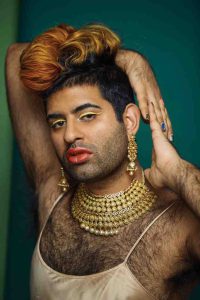
The idea of menswear and womenswear has been gradually eroding in recent years, giving much more room for individuality. People are no longer restricting themselves to the clothing limitations of their own gender but instead feeling free to express themselves however they choose. This has allowed the fashion industry to evolve, with many designers creating unisex and fluid collections with high-street brands following suit.
As this evolution continues, scholars such as Connell and Messerschmidt, argue that society has the capacity to deconstruct gender binaries and criticise hegemonic masculinity, encouraging brands to be more diverse and portray accurate representations of consumers. As emerging generations reject rigid gender standards, the fashion industry must adapt. It should strive to create a place where customers can take control of their bodies and accept their identities, regardless of appearance.
Ultimately, fashion has always been more than just clothing; it is a reflection of identity, culture, and self-expression. Every generation grows up with its own set of norms regarding who should wear what, only to challenge them again. Perhaps the true legacy of gender-fluid fashion lies in reminding us that the gender binary was drawn by people in the first place. And if it was drawn, it can be redrawn.
Read Also: Riches, Fashion, and the Met Gala: Who and What gets to be Art?
Image Source: British GQ, Getty Images
Chandrani