Tag

Hindu

Browsing

Over 13,000 seats remain vacant across 1,160 Delhi University programmes for the 2026-27 Spot Round, including for top colleges like Hindu, Hansraj, and SRCC. Find category breakdowns, college vacancies, and admission details. 

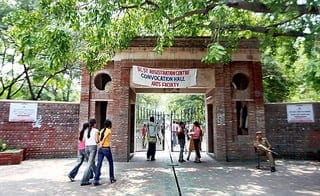
After multiple rounds of a month-long admission process, over 13,000 seats still remain vacant across Delhi University. Vacancies are seen even in some of Delhi University’s most prominent colleges, including Hindu College, Hansraj College, and SRCC. The vacancies span 1,160 college-programme combinations and include several courses where dozens of seats remain unfilled. 

As reported by the DU Admission Branch, the latest vacancy list shows that over 13,000 seats are available for the 2026-27 Spot Round. The data further reveals the breakdown of the category that currently holds the maximum number of vacant seats as the Other Backward Classes-Non-Creamy Layer (OBC-NCL) category at 4,133, followed by Scheduled Tribes (ST) with 2,476, unreserved with 2,113, Scheduled Caste (SC) with 2,038, and Economically Weaker Section (EWS) with 1,791 seats. There are also 566 Sikh and 316 Christian category seats vacant.  

This year, the number of vacancies remains remarkable, as seats remained vacant not only in colleges or programmes that traditionally see lower demand, but also in some of the university’s renowned colleges. 

For example, Hindu College still has 29 undergraduate seats vacant across 11 listed programmes, including Economics, B.Com (Hons.), Physics, Chemistry, Botany, Zoology and Philosophy.  Hansraj College has shown a greater vacancy with 79 vacant seats spread across 19 programmes, including Computer Science, Mathematics, Physics, Chemistry, Zoology, Botany and Electronics. On the other hand, SRCC has only two seats left in Economics, one unreserved, and two seats in B.Com. (Hons.), one each in OBC-NCL and SC.  

Some other notable colleges with vacant seats include Kirori Mal College, Gargi College, Daulat Ram College, Indraprastha College for Women and Dyal Singh College, among others. 

As far as courses are concerned, home science and B.Com courses have a high number of seats still available for admission. Swami Shardhanand College has the highest single programme-level vacancy in the list, with 145 seats vacant in B.Com. This includes 66 OBC-NCL, 34 SC, 34 ST and 11 EWS seats. At the Institute of Home Economics, B.Sc. (Pass) Home Science has 131 vacant seats, while Lady Irwin College has 101 vacant seats in the same programme. 

However, the vacancies do not limit themselves to only science and commerce courses. The courses in Humanities also show sizable vacancies. At Dyal Singh College, for instance, vacancies remain in Hindi, Sanskrit, Punjabi and Urdu programmes, alongside science and commerce courses. At Kalindi College, B.A. (Hons.) Sanskrit has 68 vacant seats, and Hindi has 54.

The university has strictly made it clear that these numbers are not final. These numbers are subject to change because of reconciliation, withdrawals, cancellations, and grievance redressal. Withdrawals will remain suspended during the Spot Round, according to the university.  

With the commencement of the Spot Round Admissions, another chance will be given to the students aiming to get into the University of Delhi against seats that remain vacant after the earlier admission rounds. 


Image Source: NDTV

Read Also: DU Clarifies Class 12 Admissions Only for Vacant Seats, CUET Unchanged

Chandrani 
[email protected] 

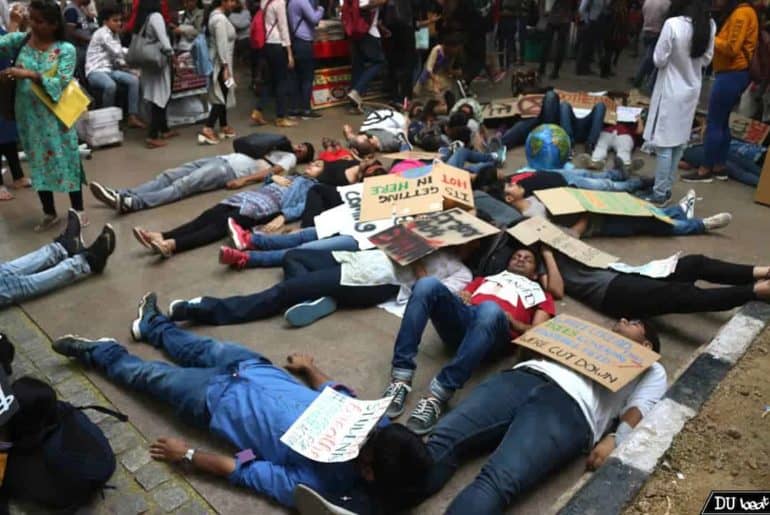
Colleges for Climate Action organised a climate action march at Arts Faculty, North Campus, University of Delhi (DU) on 1st November to stand in solidarity against climate change. 

The march began from Gate Four of the Arts Faculty, and was concluded at Gate three of Vishwavidyalaya Metro Station. Students from various colleges gathered at the Arts Faculty gate with masks on their faces, posters in their hands, and intent in their hearts. 

Slogans like “What do we want? Climate Justice. When do want it? Right Now.”; “Climate Change se Azadi”; “As there is no Earth B!” were chanted while matching forward. All the posters and structures held by students were made out of reusable materials. 

The main motive of Colleges for Climate Change, as told by the organisers was to “provide a convenient campus solution to college students to get involved in the fight against crisis.”

“Even though many people may not turn up on one day, march at institutions worldwide help to raise our voice against this as a community as a whole,” they added. 

The march concluded at the Vishvavidyalaya metro station where the students orchestrated a fake die, on the sounds of raging sirens to symbolise the urgency of a required climate emergency, as otherwise, this will be the clear end.

Sharda, student of Environment Sciences said, “People think they don’t know what to do for climate crisis, they don’t know how to contribute, but there is so much they can do, join strikes, use the public transport, make dire lifestyle changes and even quit meat.” 

After the fake die, students sat in at the Vishwavidyalaya metro station to share their stories of how they’ve contributed to climate action, they sang songs to promote solidarity through harmony and recounted various ways to contribute to climate action. 

The women specially from colleges, were seen leading the strike. Just like the global strike pattern, this March definitely had a women’s and young adult narrative. The protest was said to be apolitical, but asking for a political discourse. A Climate Crisis Act lies in the hands of those in power. Their negligence, by not declaring climate emergency and much more is what had let many to protest earlier. But, this protest was said to be apolitical. 

Pragya, a Hindu College student said, “We’re saying this is apolitical as we don’t pertain to any political ideology or are not affiliated to any political party, as climate crisis is an issue for the entire world and not just any political party.”

The march also emphasised on scrap the straw movement, with mentioning the petition which each college could fill out to ban use of all single use straws and plastic. 

Feature Image Credits: Noihrit Gogoi for DU Beat 

Chhavi Bahmba 

[email protected]


Culture preservation and safety has motivated the University of Delhi (DU) to convert the North Campus into an enclosed area to form a proper campus, much like the Jawaharlal Nehru University’s (JNU) campus. The initiative will be completed within a year and was informed by the Vice Chancellor Yogesh Tyagi at the executive council (EC) meeting on Saturday 26th October 2019. 

Currently, the proposal is in the contact phase where government agencies and departments are told to start the process, an official announcement hasn’t been made yet. 

The two-day meeting held on Saturday, was a platform for many issues to be discussed, the IOE proposal, construction of 39-storey building and the closing of North Campus. 

However, while these issues may seem independent, they are interconnected. If the EC’s proposal is accepted to enclose North Campus, the construction of the building will be deferred. And, IOE (Institute of Eminence) proposal would pave way for the closing of North Campus. 

EC member Rajesh Jha, said, “We have always demanded that the campus should be closed as we want DU to have a character of its own just like JNU and other varsities in the country. The closed campus will also help authorities improve the security on the varsity premises.”

North Campus is a hub of academics at the University of Delhi, with many colleges and departments within meters of each other, and so, it has always witnessed the greatest college student footfall. This raises some serious questions regarding the safety of the students, with recent developments in many violent cases taking place at North Campus. This concept will increase the safety of students manifold. However, it may subject them to false seclusion and isolation. The culture of campus may be gone when only students of those colleges could take part in it, and not all could witness it.

Interviewing students from all over the campus, DU Beat received many mixed responses.  Here’s what DU students have to say about this. 

Aditi Raj, Daulat Ram College, North Campus said “The idea seems far-fetched, I don’t know how they will manage to do it. The campus is full of roads that connect two parts of the city. And other universities like JNU, have a huge campus with all departments to enclose, where we are just calling few colleges and departments the entire university campus.” 

Satviki Sanjay, Miranda House, North Campus said, “I don’t think DU North Campus should be closed. To ‘maintain its culture’ sounds like a terrible reason as DU ‘culture’ is not just limited in the North Campus but also the other colleges. Closing it would just strengthen the already prevalent elitism in the North Campus. Moreover, there are logistical issues that need to be resolved. DU North Campus is not just educational institutions but an entire ecosystem of students, teachers, market places, transportation and all which make DU North Campus what it is and closing it would rather hamper the ‘culture’.” 

Akshat Arora, Motilal Nehru College, South Campus said, “I feel like restricting an area to a limited number of students will work against your intentions if you intend to preserve “cultures”.”

Whereas, A counter-opinion also existed among the DU students. Priyanshu Sinha, Delhi School of Journalism, North Campus believes, “When we step out of the Vishwavidyalaya Metro Station to head towards our respective colleges, it feels more like going to an isolated corporate office than going to a University. Like JNU, Delhi University needs to have a closed campus.”

Many times the argument comes that DU is a collegiate like Oxford which is based in the Oxfordshire. But then we forget that Oxfordshire is completely established for Oxford University whereas Delhi is a diverse city having government offices, corporate buildings along with the University. It doesn’t feel like a University campus when cars flock all the time, outsiders who have nothing to do with the college or the education roam around in the campus. It also dilutes unity of the campus as a single entity. This step by the administration is very pleasant and we welcome it wholeheartedly.”

Pranavi Prabhakaran, Daulat Ram College, North Campus, told DU Beat, “North Campus is a truly important academic area. It’s only surprising that this move hadn’t been taken earlier. I hope it will be cleaner now.”

While different opinions surface in the University, many questions like whether the infamous Hudson Lane and Patel Chest Photocopy Lane be part of mainstream campus? Will the stalls and Chai corners that exist, still cease to exist? Will colleges provide parking spots to those who earlier parked outside?

To answer all these questions and many more, a formal official notification is awaited. 

Feature Image Credits: Dailymail

Chhavi Bahmba 

[email protected]


The story of Draupadi ended years ago, or did it? Here is an insight into the inner turmoil faced by her. The story of Draupadi, to Draupadis.

One of the contemporary, and not very appealing facts is that we can still relate to Draupadi, a woman who was ‘ahead of her times’ centuries ago is still considered the same, and mind you, it is 2019, you can do the math.

There is not just a single Draupadi, but several Draupadis, right where you are sitting, if you hover your eyes around the room.

An introductory lecture on Draupadi is a hard nut to crack but one can furnish in a nut-shell. Draupadi, the daughter of King Drupad, born out of fire, the courtroom is an account everyone knows.

In Chitra Banerjee Divakaruni’s “The Palace of Illusions”, turn pages to the marriage of Draupadi which draws light on the created illusion of swayamvar. What if one tells you that Banerjee waves a creation which lets you know that the swayamvar was not a swayamvar but a marriage of convenience? The forbidden fruit of right to choice is what most of us don’t savour.

The marriage of Draupadi to all the Pandavas is another source of wrinkles on one’s forehead. Kunti – a woman, mother of Draupadi’s husbands, making a turbulent decision which alters her life henceforth. In epics, daily soaps, secret domestic tales it is very common?

The infamous vastraharan (de-clothing) of Draupadi is a question on inner conscience. Dragged to a court while menstruating, barred of her clothes- such was the plight of Draupadi. All done for a cause that doesn’t even qualify to be a cause- the game of dice, the inflaming addiction, the addiction of power. And a quick update- these so-called causes source upon many Draupadis, the worst part- future seems to be as monotonous as the past and the present.

While one may defend- “well someone’s (you know the name) superior powers did save her from the plight. But here is an eye-opener- the ‘someone’ was absent from the picture, Draupadi’s self- strength led to the incessant, never-ending cloth. Many Draupadis fight, fight for themselves, yet lie in the shackles of silence.

Here is a situation – a woman deprived of her fundamental rights, outraged in a room full of ‘honourable entities’, with no help from all the four sides of the walls, stands alone – isn’t this a contemporary fact? This episode exists, repeats and continues.

Draupadi was always a pawn in a game of chess- born for the cause of revenge, married for the sake of political alliance and finally reduced into a stake at the game of dice.

Irawati Karve through her work- “Yuganta” gives us an insight into the inner psychology of Draupadi through incidents. After the game of dice, when Dhritrashtra intervened as the indecency had gone too far and feared terrible consequences, grants Draupadi three wishes wherein she saves the Pandavas of the impending doom. “… but Draupadi has re-established peace. Like a boat, she has saved the Pandavas when they were about to drown in a sea of disgrace. The taunt that they had been saved by a woman infuriated Bhima.”

How many times has the society stitched the lips of women, tied their hands and reduced them to speechlessness? Draupadi’s power affected egos, Draupadis still exist, their power affects ego.

Draupadi was unapologetically herself. Karve tells us more about Draupadi when her brother visits her in the forest (during the period of exile) she says, “I have neither husbands, nor a brother, nor a father. If I had, do you think they would have stood for my being insulted like this?”

In the 21st Century sitting in our living rooms, it is a shame that we can relate to the problems of Draupadi, it is time to address these problems and not relate to these.

Feature Image Credits: Focuz Studios

Priyanshi Banerjee

[email protected]

Hostel dwellers of Hindu College protested in front of the Principal’s office against the new stricter criteria of attendance and GPA to be maintained to retain hostel accommodation in the second and third year by residents.

Recently, the newly-elected Students’ Union of Hindu College, led the protest against the hostel administration, as allegedly the college administration was threatening them by making calls to their families, and disciplinary action in terms of electricity cuts was imposed on the students.

The Union claims this was a protest to demand their rights. It was also said that these stricter rules were just to discourage the students to avail hostel facilities. The students also believe that the increase in fees of hostel facilities is just to pave way for privatisation of hostel in the coming years.

Delhi University (DU) Hostel for outstation students, who cannot afford the expensive PG life that Delhi has to offer, works as a suitable alternative. However, one must question the relevance of this protest.

Two years ago, the College Hostel administration had decided that only those who get above 6.0 CGPA in the Arts stream and 6.5 in the Science stream and who have above 67 per cent attendance will be able to retain their hostel accommodation.

Last year the it had been increased from 6 to 6.5 for the Arts stream and from 6.5 to 7.0 for science stream and the attendance criteria had also been increased to 75 per cent.

Many students were affected by this criterion, as it was stricter and student weren’t made aware of this earlier. However, no immediate protest took place.

There are few arguments that show this protest as a political move than a liberal one.

A Hindu College student who lives in the boys’ hostel, under conditions of anonymity told DU Beat, “The protest is not for the rights of the students. As the students of this year were well aware of the new rules as mentioned in our undertaking. The GPA and attendance criteria were mentioned.”

The Statement of undertaking is a legal binding document that is made signed by each hostel dweller. It is done so to make the students accountable for the conditions they have agreed on to avail hostel facilities.

As all the students had signed the undertaking in their complete senses, without any use of force, their right to protest against the rules is invalid legally.

Other than this, what is more astounding is the fact that when these rules were first implemented a year back, no protest or resistance took place, neither by the hostel dwellers nor the student union. The sudden need for protest raises questions of the intention of the protest.

Whether the protest was necessary or not, one must not forget that the hostel facility is the only way many outstation students can afford to study in DU.

For the update on the protest that took place, another student in anonymity told DU Beat, “There was only one protest by the newly elected Students’ Union and the other inmates. It was just really a one-evening-thing, and was resolved (called off) when they finally discussed the issue with the Principal.”


Feature Image Credits:  Yaksh Handa for DU beat


Chhavi Bahmba 

[email protected]


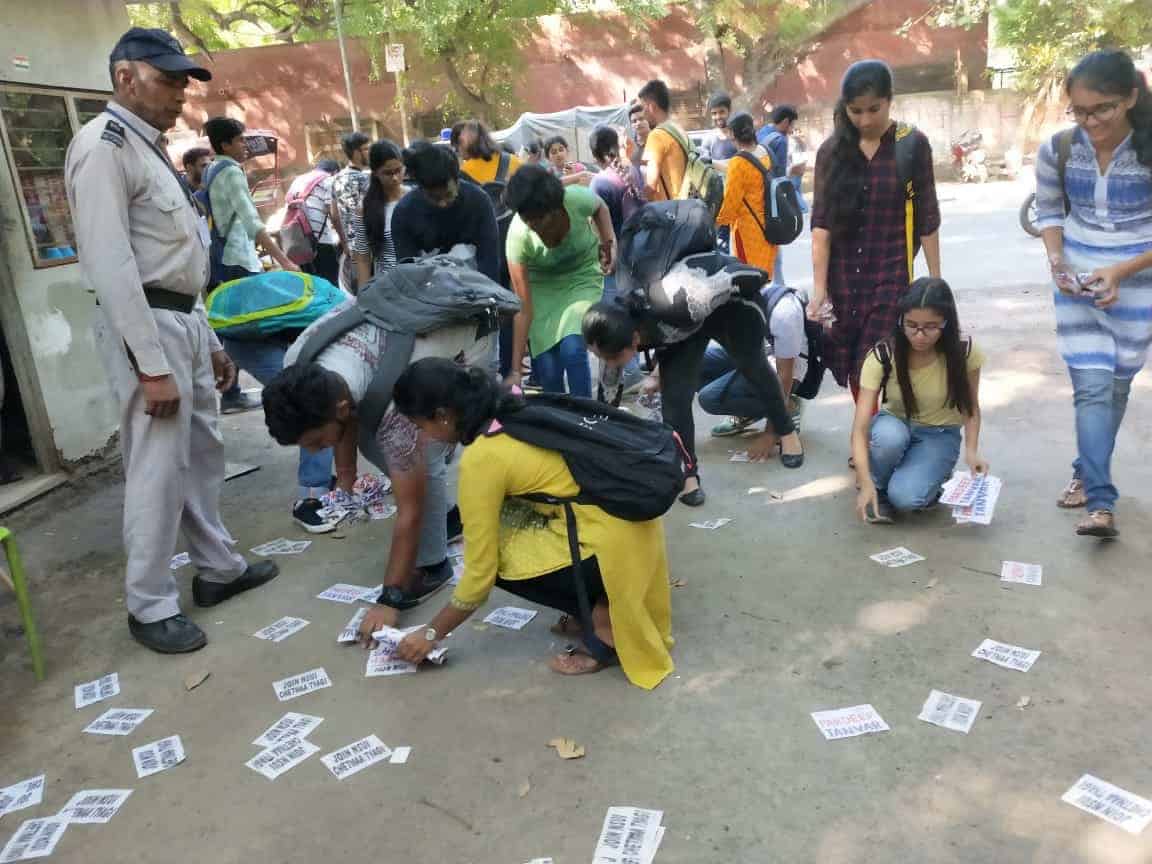
Every year around this time, Delhi University Students’ Union (DUSU) election approaches and so the campus also starts to get littered with posters and pamphlets. Posters can be seen on walls all over the campus and pamphlets scattered throughout the roads.

IMG-20190902-WA0022

But it is a matter of fact that very few are aware of National Green Tribunal’s order directing the University to ensure that no paper is used for campaigning on campuses and also it is prohibited to use printed materials for purpose canvassing according to Code of Conduct of DUSU elections.

IMG-20190909-WA0083

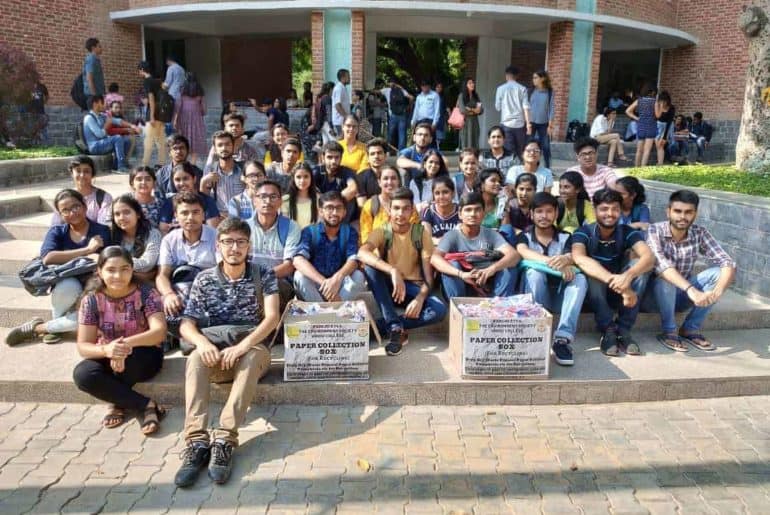
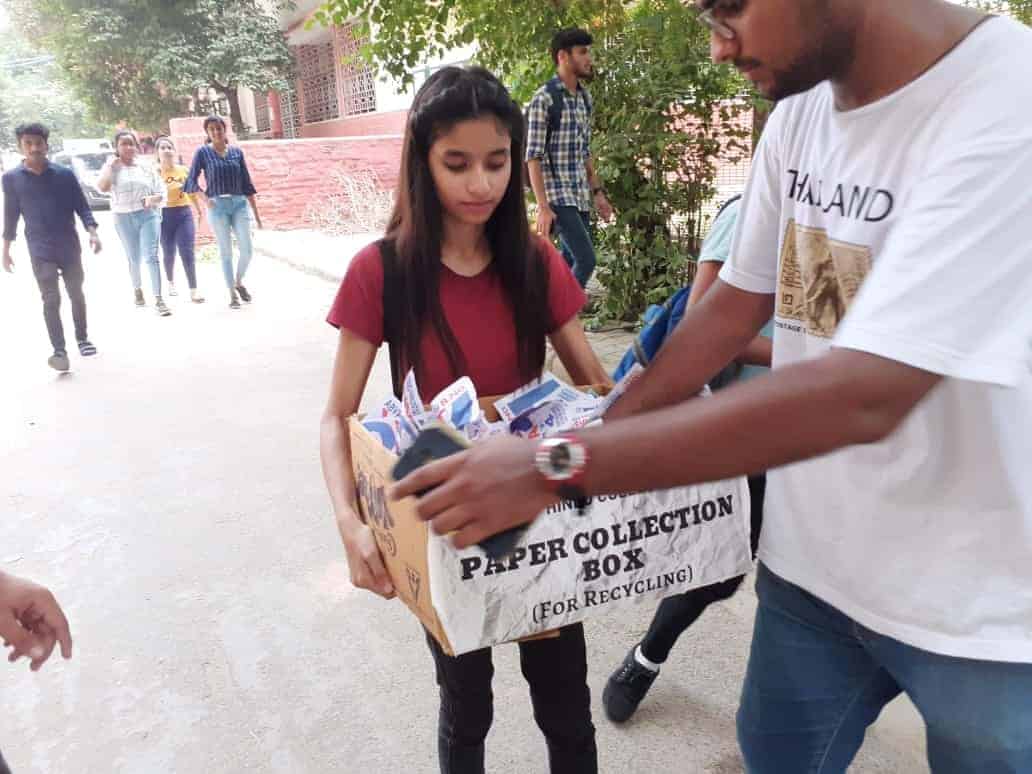
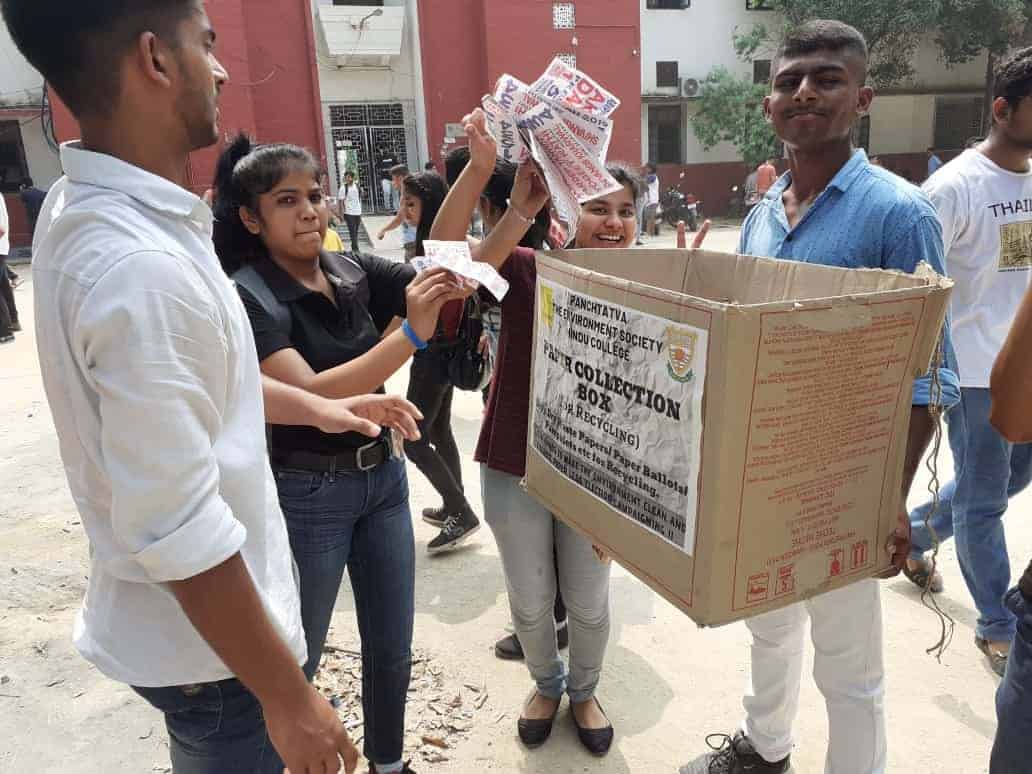
So realizing it’s responsibility, Panchtatva – The environment society of Hindu College under the guidance of its convener Dr. Anuradha Sharma, took out a Paper collection drive with 50 members of Panchtatva throughout the campus. The objective of such a drive was to collect the littered paper pamphlets and posters so that they could be sent for recycling later and also to promote clean environment around the campus inspired by the Prime Minister’s visionary Swacch Bharat Abhiyan.

IMG-20190909-WA0092

Dr. Anuradha Sharma, the convener of Panchtatva society, Hindu college said that it is the responsibility of each student to realize their duty towards the university and ensure to speak up and join hands together to prevent such wrongful practices in the University.

A prestigious institution in the country, the University of Delhi (DU) is a hub for students looking to make a career, and houses the best colleges in the field of science, commerce and arts courses in the country.

The University of Delhi not only offers the mainstream courses, but also offers certificate and diploma courses in languages such as Romanian, German, Spanish, Portuguese, French, and Italian. As the world is turning into a global village and different foreign firms are entering the Indian markets, there are a large number of job opportunities that are being created to tackle the demand by these firms.

There are many factors that one should consider while choosing a foreign language to learn in DU, some of these factors being: difficulty level, personal preference, interest, target country or region, sectors or industries, possible immigration, and future goals, etc. French, Spanish, German, Chinese, and Japanese remain the most sought-after languages for most of the students interested in pursuing foreign language courses in DU. However, in recent years, demand for Portuguese, Italian, Russian, Korean and Arabic has also been on the rise.

Ayush, a Literature student from Kirorimal College who pursued Mandarin language from St. Stephen’s College found the experience to be ‘mixed’ and said, “The faculty was brilliant and I was able to learn the language as well as the culture, since our teachers made sure we celebrated Chinese festivals and devoured Chinese cuisine. Although, it was a task to handle the academics as the exams for the language courses start around ten days before the semester exam. Over all, it was worth it!”

Another student of Philosophy from Miranda House, Rupali Gujral, who pursued Spanish language from Hansraj College stated, “The fees was very feasible and although it did become a little hectic to juggle academics and language course, it was pretty amazing. I would advise students to go for it preferably in the first year itself as it is less tedious then.”

Application forms for the courses can be obtained from the respective colleges. St. Stephen’s College has made their registration process completely online. Colleges release merit lists based on the composite scores of best four subjects studied at Higher Secondary level. Once enlisted in the said merit list, students are required to report to the respective college and complete their admission. Self-attested documents including class 12 marksheets and class 10 marksheet-cum-certificate are required to be submitted along with the fees.

Considering the myriad options that DU has to offer and its wide-ranging opportunities, DU Beat brings you all the information you need about Language courses at DU.

(i) Delhi University – North Campus Colleges

  1. St. Stephen’s College, University Enclave – Certificate, Diploma & Advanced Diploma in French, Spanish, German, Chinese and Japanese. Certificate and Diploma in Arabic, and Certificate in Persian.
  2. Sri Guru Gobind Singh College of Commerce, Pitampura – Certificate in French, German, Chinese, Korean and Japanese.
  3. Satyawati College, Ashok Vihar – Certificate & Diploma in French and German.
  4. Daulat Ram College*, Maurice Nagar – Certificate, Diploma & Advanced Diploma in French, Spanish, Italian, German, Chinese, Korean and Japanese.
  5. Hansraj College, Malka Ganj – Certificate, Diploma & Advanced Diploma in French and German.
  6. Ramjas College, Maurice Nagar, Delhi University – Certificate course in French, Spanish, German, Italian, Korean, Japanese & Chinese, Diploma in French, Japanese & Chinese and Advanced Diploma in French.
  7. Keshav Mahavidyalaya, Pitampura, Near Sainik Vihar – Certificate course in French and German.
  8. Mata Sundri College*, Mata Sundri Lane – Certificate course in French, Spanish and German.
  9. Miranda House*, Patel Chest Marg – Certificate course in French, Spanish and German.
  10. SGTB Khalsa College, Mall Road – Certificate course in Spanish, Russian, German, Korean, Chinese and Japanese.
  11. Deen Dayal Upadhyaya College, Karampura – Certificate course in Russian.
  12. Hindu College, University of Delhi – Certificate course in French, German, Spanish and Russian.
  13. Zakir Husain College, Jawaharlal Nehru Marg – Certificate course in Russian.
  14. LakshmiBai College*, Ashok Vihar – Certificate course in Chinese and Japanese.
  15. Kalindi College*, East Patel Nagar – Certificate course in Chinese language.

(ii) Delhi University – South Campus Colleges

  1. Jesus & Mary College*, Chanakyapuri – Certificate course in French.
  2. College of Vocational Studies, Sheikh Sarai Ph-II – Certificate course and Diploma in French and German.
  3. Delhi College of Arts and Commerce, Netaji Nagar – Certificate course in French, German and Spanish, and Diploma in Spanish and  German.
  4. Acharya Narendra Dev College, Govindpuri, Kalkaji – Certificate in Russian; Certificate & Diploma in French, Spanish and German & Advanced Diploma in Spanish.
  5. Kamla Nehru College*, August- Kranti Marg – Certificate, Diploma & Advanced Diploma in French
  6. Bharati College*, Janakpuri – Certificate in Russian, French, Chinese and German, and Diploma and Advanced Diploma in French and German.
  7. Sri Venkateswara College, Dhaula Kuan – Certificate course in German and Chinese.
  8. Gargi College*, Siri Fort Road – Certificate course  in German.
  9. Lady Shri Ram College*, Lajpat Nagar 4 – Certificate course in Russian.

*Women’s  colleges of DU.

Certificate level requires candidates to have passed 10+2. For Diploma and Advanced Diploma level, certification and Diploma is required respectively in the corresponding language. Admission will be given on merit or entrance test.

All the colleges offer convenient time slots for the classes on all the days. The fee structure too is pocket friendly  varying from INR 12,000- INR 19,000 depending on the course and time slot one chooses.

It’s time to finally replace your ‘Proficiency in English’ to ‘Proficiency in Spanish/French/any other language’ that you want!

Happy learning!

Feature Image Credits: Hindustan Times

Bhagyashree Chatterjee                                   [email protected]


With less than 20,000 seats left to be filled in the University of Delhi (DU), the principals of colleges affiliated to the varsity said that the cut-offs for admission to courses will see a marginal decline in the third list, on July 7, 2019. According to the data shared by DU, 43,854 admissions have taken place after 778 withdrawals since the beginning of the process. The number of cancellations since the second cut-off stands at 3,082, as reported by India Today.

Check here for live college cut-off updates.

Click here to check the third cut-off list for Gargi College.

Click here to check the third cut-off list for Shaheed Bhagat Singh College.

Click here to check the third cut-off list for Satyawati College.

Click here to check the third cut-off list for Shri Ram College of Commerce.

Click here to check the third cut-off list for Vivekananda College.

Click here to check the third cut-off list for Shivaji College.

Click here to check the third cut-off list for Kirorimal College.

Click here to check the third cut-off list for Maharaja Agrasen College.

Click here to check the third cut-off list for Aditi Mahavidyalaya.

Click here to check the third cut-off list for Zakir Husain Delhi College.

Click here to check the third cut-off list for Ramjas College.

Click here to check the third cut-off list for Jesus and Mary College..

Click here to check the third cut-off list for Janki Devi Memorial College.

Click here to check the third cut-off list for Shaheed Rajguru College of Applied Sciences for Women.

Click here to check the third cut-off list for Mata Sundri College.

Click here to check the third cut-off list for Miranda House.

Click here to check the third cut-off list for Keshav Mahavidyalaya.

Click here to check the third cut-off list for P.G.D.A.V. College.

Click here to check the third cut-off list for Lady Shri Ram College.

Click here to check the third cut-off list for Hansraj College.

Click here to check the third cut-off list for Shyam Lal College.


Click below to access the comprehensive third cut-off lists:

Arts and Commerce

Science

B.A. Programme 

Feature Image Credits: Akarsh Mathur for DU Beat

The much-anticipated second cut-off list gives aspiring students a chance to either secure their admission, or upgrade colleges.

With 23,780 seats filled out of 63,000 and huge crowds observed in many University of Delhi (DU) colleges in the first cut-off list, all eyes are on the second cut-off list now. Despite some of the highest cut-offs being declared for B.A. Political Science courses, various colleges, including Miranda House, Ramjas and Kirori Mal reported that seats for the programme had been filled up and a second cut-off list would not be released, as reported by The Hindu.


Beginning now, DU colleges have begun releasing cut-off lists on their respective college websites. Watch out this space for live news; keep refreshing this article for timely updates.


Click here to view the complete second cut-off list for Arts and Commerce Courses at DU.

Click here to view the complete second cut-off list for Science Courses at DU.


Click here to check the second cut-off list for Bhagini Nivedita College.

Click here to check the second cut-off list for Keshav Mahavidyalaya.

Click here to check the second cut-off list for Shaheed Sukhdev College of Business Studies.

Click here to check the second cut-off list for Ramanujan College.

Click here to check the second cut-off list for Gargi College.

Click here to check the second cut-off list for PGDAV College.

Click here to check the second cut-off list for Shri Ram College of Commerce.

Click here to check the second cut-off list for Satyawati College (Evening).

Click here to check the second cut-off list for Shaheed Rajguru College of Applied Sciences for Women.

Click here to check the second cut-off list for Kirori Mal College.

Click here to check the second cut-off list for Satyawati College.

Click here to check the second cut-off list for Acharya Narendra Dev College.

Click here to check the second cut-off list for Shaheed Bhagat Singh College.

Click here to check the second cut-off list for Deshbandhu College.

Click here to check the second cut-off list for Shyam Lal College.

Click here to check the second cut-off list for Mata Sundri College for Women.

Click here to check the second cut-off list for Janki Devi Memorial College.

Click here to check the second cut-off list for Vivekananda College.

Click here to check the second cut-off list for Jesus and Mary College.

Click here to check the second cut-off list for Zakir Hussain Delhi College.

Click here to check the second cut-off for Swami Shradhanand College.

Click here to check the second cut-off for Miranda House.

Feature Image Credits: Akarsh Mathur for DU Beat

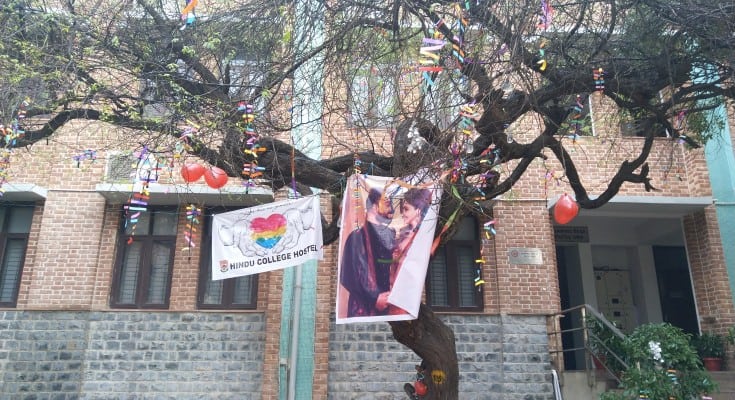
Everything about Hindu College’s annual V-Tree pooja tradition and the protests against it make for a brilliant case study in politics in action.

“The pooja epitomises politics in action. I find it fascinating”, says Saloni Verma, a third-year English Hons student at Hindu College. She says “I love how the pooja has been smartly evolved. It’s such a brilliant trick to capture the audience”. Without actually supporting the pooja, Saloni points towards a very interesting example of how politics is played out. Everything surrounding the tradition – from its concept and the opposition against it to the claims of competing parties and their mode of operation – is a case study into the functioning of active politics.

Now that the dust around the V-Tree episode has settled down (for now), this case study can be made. The very bone of contention – the tradition of the V-Tree pooja – illustrates how social issues
are often contested between the political right and the left. Analogies can be made with discussions surrounding other traditions which are often labelled ‘oppressive’. Saloni gives
an example of Rakshabandhan being considered by some to be a symbol of sexism and oppression. But such traditions have been modified.

Rakhis that sisters tie on their brothers’, and even sisters and sister-in-laws’ wrists, aren’t rare. About traditions and how the left and the right response to them, Saloni says “They (the left) just say that tradition is bad…Traditions can be misogynistic but the solution the left proposes is that you abandon the tradition which ignores the importance of traditions to people who may not have consumed the same literature as them. What the boys’ hostel did was that they morphed the tradition to make it somewhat acceptable.” She says that while
the decision to have a poster of Virat Kohli and Anushka Sharma as a couple was
“tokenistic”, it was “beautiful politics” as it “moulded tradition according to contemporary relevance”.

IMG_20190214_101537

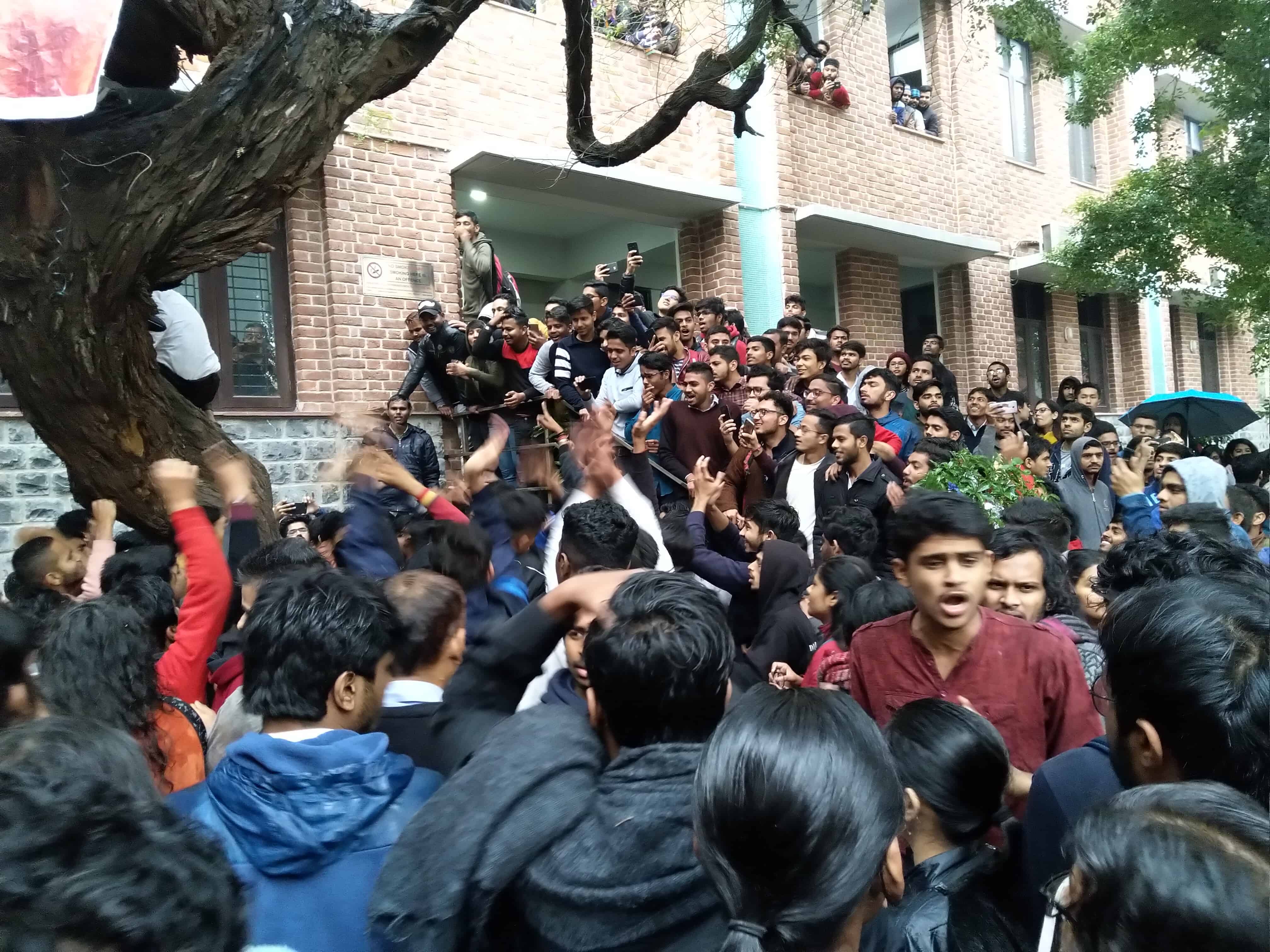
Often in politics, means become important. When four top judges of the Supreme Court took to the media to address alleged problems of mismanagement within the judiciary last year, many people opposing it asked why was the ‘correct procedure’, that is, dealing with the issues internally, not followed. Perhaps the content of their complaints got overlooked to an extent. In Hindu College, while the clashes of 14 February were at their peak, many people were expressing discontent over the means followed by the protesters, especially regarding the participation of non-Hinduites and the possibility of people getting physically hurt in the process. Perhaps enough attention wasn’t paid to the core of the protesters’ concerns and the discourse leaned more towards the means over the goals. Then again, when we ask whether means can be prioritised over the ends or vice versa, a single correct answer perhaps doesn’t exist.

The analogy I find the most interesting is with regards to how competing sides often claim victories for themselves, despite how things actually turn out. The ‘Aadhaar’ verdict by the Supreme Court was seen as a win by both the government and the opposition, and so was the ‘Rafale’ judgement; so are opinion polls and even election results. Here too, both sides claimed that they won. Those supporting the pooja said that they successfully conducted the “grandest” pooja ever. The protesters claimed that the “mere action of men withdrawing from the public to the private space” and “disruption of the pooja” was a victory. The mutual allegations of threats, intimidation and violence by the other side were also levelled, just like they usually are in larger political activities.

Despite all that, the vital element is this: narratives and counter-narratives will always exist, tensions will inevitably arise and contestations won’t stop, be it in colleges or countries – and that must continue. And when conflicts come about, it will be this active political assertion that will challenge the status quo, for better or worse. This crucially reinforces a belief that the tradition of democratic protests is alive and well. Perhaps not all traditions are meant to be disposed of, after all?

Image credits- Prateek Pankaj for DU Beat
Image captions- The V-Tree episode beautifully represents active political participation

Prateek Pankaj
[email protected]