Tag

DU

Browsing

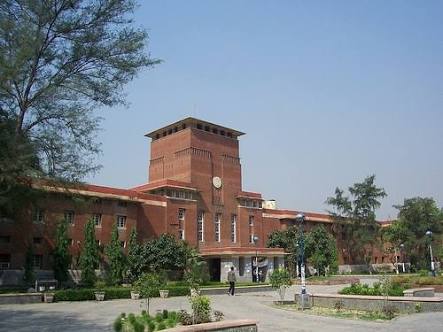
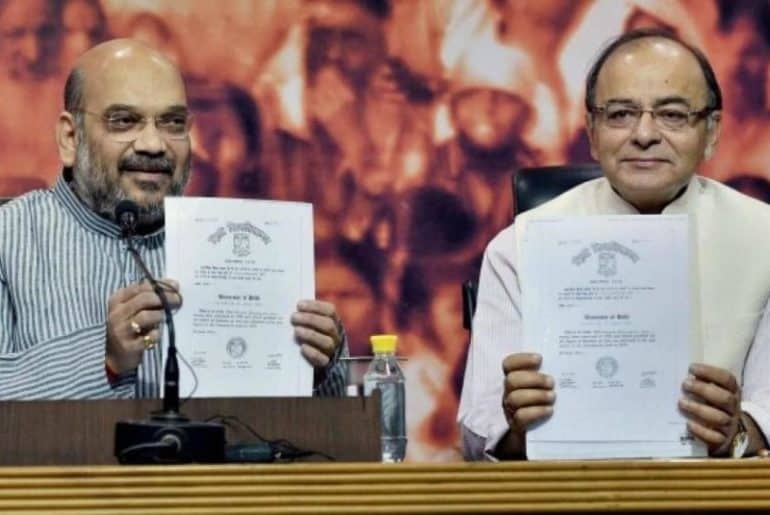
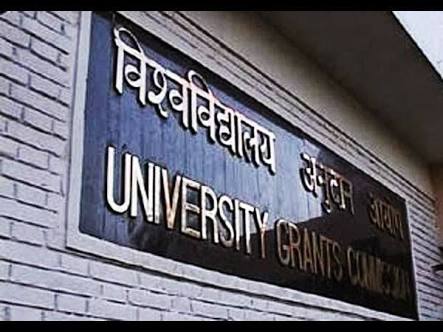
Many colleges from the University of Delhi have expressed their desire to become autonomous. Recently, the University Grants Commission (UGC) has invited colleges to discuss this matter under the UGC Scheme for Autonomy.

The University Grants Commission has invited colleges from across the country for an orientation programme on Thursday to discuss the matter of autonomy. Highlighting the importance of autonomous colleges, the UGC document on the profile of higher education in India reiterates, “the only safe and better way to improve the quality of undergraduate education is to the delink most of the colleges from the affiliating structure. Colleges with academic and operative freedom are doing better and have more credibility.”

The affiliating system of colleges was originally curated when the number of colleges affiliated under a university was small. The university could then effectively oversee the working of the colleges, act as an examining body and award degrees on their behalf. The system has now become cumbersome and it is becoming increasingly difficult for a university to attend to the varied needs of individual colleges.
The colleges affiliated under a university do not have the freedom to modernize their curriculum as they have to comply with the university norms. A few prestigious institutions under the University of Delhi, namely, St. Stephen’s College, Hindu College, Ramjas College, Sri Ram College of Commerce and colleges run by the Delhi Sikh Gurudwara Management Committee, have articulated the aspiration of achieving a deemed university status for the same reason.
The orientation programme is expected to give an idea about the interest level among the other colleges seeking an autonomous status. The UGC had initiated this scheme at the beginning of the year. In his letter to the colleges P K Thakur, secretary, UGC, wrote that the commission has been implementing the scheme of autonomous colleges in order to facilitate the colleges to achieve further qualitative improvement leading towards academic excellence.
If the colleges under Delhi University attain autonomy, they would have the freedom to formulate their own rules and regulations and design their fee structures which will no longer adhere to the guidelines set by Delhi University. Many students and faculty members have protested and are against these colleges attaining autonomy.

In 1981, St Stephen’s College was offered autonomy by the Ministry of Human Resource Development. However, DUTA?had opposed the move. In 2013, a similar offer was made to Lady Shri Ram College for Women (LSR) which yielded a similar reaction. This year, students of St Stephen’s College protested against the discussion of autonomy by the governing body of their college.


Feature Image Credits: The Indian Express

Bhavya Banerjee
[email protected]

The dramatic societies of the University of Delhi are one of the factors that add to the charm of the varsity. Bollywood actors such as Amitabh Bachchan, Manoj Bajpayee, and Shah Rukh Khan as well as well as filmmakers like Satish Kaushik to Imtiaz Ali have all been a part of dramatic societies. Theater and nukkad nataks (street plays) for the longest time have been used to promote social issues. With simplistic yet appealing performances they are able to draw huge crowds. It is because of their communication ability government bodies have often collaborated with Delhi University societies to spread awareness.
Ibtida, the dramatics society of Hindu College collaborated with the Pradhan Mantri Kaushal Vikas Yojana and subsequently performed in nine districts of Rajasthan. Earlier, the Ministry of Social Justice and Empowerment asked the street play societies of Daulat Ram College and Miranda House to promote the Accessible India campaign. Before that, BJP Mahila Morcha roped in Anubhuti, the
dramatics society of Janki Devi Memorial College to promote their Beti Bachao, Beti Padhao campaign.
While these associations show harmony between governing bodies and DramSocs, to say that both share an amicable relationship would be far from true. Today when a culture of censorship is being forced down on educational institutes, it is the dramatics socs who are raising the loudest voices of dissent.

Plays such as Chacha Chaudhary Aur Dina Nath Ki Waapsi by Kshitij, the dramatics society of Gargi College, Sare Jahan Se Achha by Ibtida, the dramatics society of Hindu College, and Sawaal Toh Uthega by Manchtantra, the dramatics society of Sri Guru Gobind Singh College Of Commerce openly speak the government ideology. It’s not new for DramSocs to take a volatile political stand, but in the recent times, they have come under the radar of authorities.

On 17th March 2015, Delhi University Student’s Union (DUSU) sent a notice to the Principal of Sri Guru Tegh Bahadur Khalsa College (SGTB Khalsa College), asking the college authorities to take strict action against Ankur, the theater society of SGTB Khalsa College for performing their play ‘Welcome to the Machine’ which, according to DUSU, is anti-Hindu in nature. Welcome to the Machine revolved around the how certain parties polarize the society on communal lines for political gain. It also spoke about the growing influence of religious bodies on cultural and education institutes.

Last year too Ankur logged heads with DUSU. They had to postpone their street play competition, Pratyaksh, which was being organised on the second day of the college’s annual cultural festival, Lashkara after the police requested the college to call off the event as a precautionary measure against clashes.

Earlier this year Mukhatib 2017, the annual screenplay festival organised by Shunya-the theatre society of Ramjas College on 31st March 2017 saw four plays being censored by the authorities to avoid any type of unrest in the campus. The organisers of the event were reportedly asked for the scripts of the plays which were to be performed in the festival just before the event. This was followed by the cancellation of four plays which had elements of nationalism in them. The students replied to this attempt of the administration by sealing their lips with black tapes and tying black bands around their arms.

These recent developments clearly show that dramatics, an art form that has always been used as a revolutionary tool, has come under scrutiny. But in a county of Safdar Hashmi, it is impossible to tone down the natakwalas. Be it suspension of events, threats or backlash, varsity’s street play/theater artists will still reclaim the campus.


Feature Image Credits: Kartik Kher for DU Beat

Niharika Dabral

[email protected]

Walking through the lanes of the photography exhibition about ‘Cultures of Sikkim’, the Department of Sociology of Maitreyi College released it’s fifth issue of its bi-annual newsletter ‘Sociologue – Aao Baat Karein’.

The attempt behind this is to create a sociological dialogue on the issues raised through the newsletter. It specifically focused at not so known- artforms, music, cinema, literature and sports of North East. The Chief Speaker for the day was Dr. Nitoo Das acclaimed Poet and Faculty at Department of English, Indraprastha College, DU. Her poems have appeared in national and international publications at various times.

The event witnessed cultural programme bringing to limelight, the traditional dances of North East States and showcase of antique ornaments from the lap of seven sisters. There were various students from different colleges of Delhi University to witness the event. The Chief Speaker, emphasised on the diverse tribes that constitutes North East and the challenges to counter the dominant narrative of the region by bringing it to mainstream.

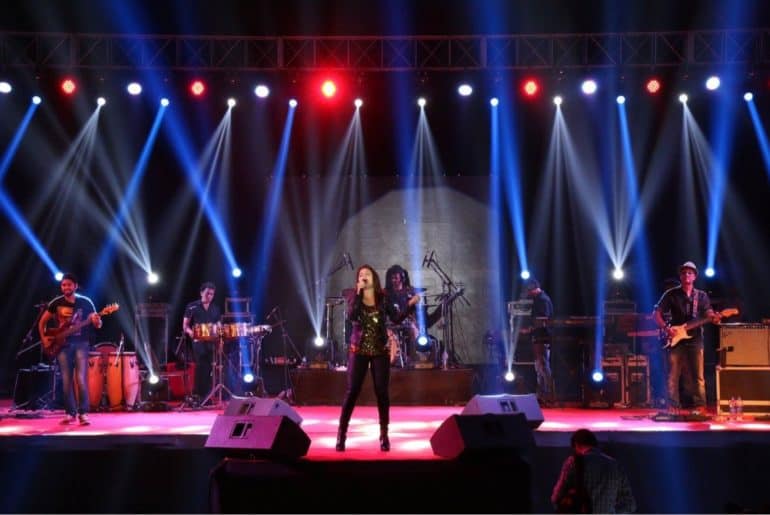
As music is the food for thought, the event came to an end, with the tunes of A&R band.


Feature Image Credits: Anahita Sharma

Naimisha

[email protected]

Several colleges of University of Delhi have alleged that they have not been receiving adequate funds from the Delhi Government for years. Here is a quick rundown of events that have lead to this never ending tiff between the university and the state government.

The Delhi Government is a part benefactor to some colleges which come under the University of Delhi. Out of the 28 colleges under DU, the Delhi Government fully funds twelve colleges and partially funds the remaining sixteen. According to some sources, the Delhi Government gives about 360 crores annually to the 28 colleges.

On 31st July, Manish Sisodia directed the Finance Department to stop the funds to 28 colleges of DU; over what he termed was “mala fide to delay the formation of governing bodies” which had been pending since October 2016. The purpose of these governing bodies was to facilitate and keep the check on the funds provided to DU by the government of Delhi and to ensure accountability. In a last minute save, the university sent a list of names for the governing bodies. However, that list was rejected by the Delhi Government on 14th August on procedural grounds.

In a letter to DU’s vice-chancellor Yogesh Tyagi, Manish Sisodia articulated “unhappiness” over “under-hand politics” in the formation of the governing bodies, which he alleged was the cause for lack in the operation of these colleges.
To contribute to the contention, multiple colleges of DU have alleged that the government has not released the allocated funds on time required for development. To add to these allegations, they also brought to notice that the government often released less than what they necessitate as a part of their budget which affects the functioning.

Principal of Kalindi College told Times of India that the college has not received adequate funds for the past three years. Dr. Anulya Maurya enumerated that the budget is made on the funds they assume they will receive; however they have not received proper funds from the government. The administration also commented saying that the problem lies in the formula upon which the funds are calculated. The government only accounts for 1000 students per college, however, in reality; the population is of about 3000-4500. This back and forth disputation between the two has affected the day to day functioning of the colleges that are aided by the government.

Deen Dayal Upadhyaya College, Maharaja Agrasen College, Shaheed Sukhdev College of Business Studies and nine others receive direct funding from the government. Whereas colleges like Kamala Nehru College, Delhi College of Arts and Commerce, Shivaji College, Gargi College and fourteen others come under the partially-funded category.


Image credits: Aapka Times

Bhavya Banerjee
[email protected]

SPADE, the socio economic society of Shivaji College, University of Delhi, organised a Policy Dialogue session on the topic “Economic Freedom and Liberalism” in association with Centre for Civil Society on 26th October 2017. The seminar covered various aspects of liberalisation and economic freedom and a different perspective was kept forward.

People attending the event

The session started with Mr. Mitra introducing a quiz, an exercise that tests the political inclination of a person. He then explained the concept of economic freedom and brought to notice the events of 1991 where the Liberalisation, Privatisation and Globalisation policy was introduced.

He talked about the global economic freedom levels where India ranks at 95 and how the lack of political stability affects the freedom levels. He drew out different parameters that affect the economic freedom of a country such as the protection of civil rights and political rights, the ease of doing business, world Competitive Index, Global Hunger and Press Freedom. Stating “Democracy is not a majority rule, it is the right to respect and protect those in the minority, it is a process, a negative feedback check” he explained how India has come down from being a full democracy to a flawed democracy.

Talking about liberalism he mentioned about the Right to choose and Right to Property and how it has a deep impact on the global Liberalisation. He emphasized drawing the relationship between the Right to Property and the historic disputes stating “75% of civil court cases are property disputes”. The event marked a great success for the society.

Being a student has its perks – be it in tourists’ places or on various airlines. So, get acquainted with a few privileges you can acquire being a student and make the most out of the opportunities.

With proper documentation, you can indeed enjoy the perquisites of being a student irrespective of whether you are in the first year of middle school or the final year of college. Take it easy on your little pockets and explore the places that can help you cut costs as students.

1. Discount Cards!

The University of Delhi has schemes under which you can get discount cards to help you save 20% to 50% on your expenditure. With an International Student Identity Card (ISIC), you can avail of great discounts all across the world on airfares, hotels, restaurants, magazines, cafes, multiplexes and game ranges. The Paisa Card, Taf Bazaar Card and Desconto are some cards you can apply for- to avail discounts at various eateries, bookstores, apparel stores, gyms and beauty parlours in Delhi NCR.

2. Apple Back-to-School Products

If you love Apple products, under their Back to College offer, you can get student discounts on the MacBook, iMac, iPads and even iPhones ranging between a minimum of Rs3,000 to Rs12,000.

3.  Fly With Discounts

There are students discount schemes in IndiGo Airlines and Air Asia and 50% discount schemes at both JetKonnect and Air India. Under this offer, your check-in baggage limit is increased by around 20 to 25kgs usually. The offer is only valid on economy seats. If you are studying abroad, Thomas Cook offers all US-bound flight base fares from Rs21,500, UK, and Europe from Rs9,800 and Canada from Rs23,000. Air India and other airlines like British Airlines offer free baggage allowance to students.

4. Gym Memberships

Gold’s Gym outlets across the country have a 50% off for all students. O2 gym offers an additional 5% off. Most gyms run student offers throughout the year in and around campus in DU.

5. Bus And Train Passes

Being a student has its benefits while travelling in the city as well.  In Delhi, you can get concession on a bus pass if you are a student but the Metro is yet to offer any kind of discounts. Indian Railways provide students’ concession in train tickets.

6. Courier services

You can use courier services from DHL and FedEx to send your admission applications for a flat rate of Rs890 and Rs990, respectively. To avail of this offer, you only need to carry a photocopy of your current college ID or any photo ID and address proof to verify your age. This has been specially designed for international university aspirants.

7. All Touristy

Heritage sites in most of the states have student tourist discounts. Also, special tour packages are available for college-going students at pocket-friendly prices.


Feature Image Credits: Yupcard

Radhika Boruah

[email protected]


Held on the 24th and 25th of October, the two-day event saw an array of activities devoted to the cause of raising awareness about mental health issues.

Students of B.A. Honours (Humanities & Social Sciences) celebrated a two-day Mental Health Awareness Week at the Cluster Innovation Centre (CIC), University of Delhi.

The first day began with a panel discussion on the topic, ‘Sorting Through Gender Identity, Sex, and Sexual Orientation’. Bhani Rachel Bali, the creator and founder of Kranti Kali, a startup that promotes feminism through art and technology, spoke about online harassment of women.  Taksh Sharma, a model, brought light to the transgender perspective through her personal experiences as a trans woman. Rakesh Kumar Singh is an author, activist, and founder of Ride for Gender Freedom, an initiative that aims to sensitise people about gender-based violence, talked about male privilege and the ways in which men can be good allies in feminist movements.

After the panel discussion, a workshop on menstrual hygiene was conducted by the students of CIC belonging to the Menstruation is Not a Taboo (MINT) Project. A quiz contest on mental well-being and psychology took place. Adil Jacob and Siddharth Garg from Jamia Millia Islamia won the competition. The first day of MHW came to a close with the film screening of the Academy award-winning movie, The Danish Girl.

The second day started with Living Stories, a project that initiates conversations between a person who acts as a book and others who come as readers. This edition of the project was solely dedicated to mental health.

This was followed by a panel discussion on the topic, “What’s depressing the millennials?” One of the panelists, Simran Luthra, the founder and curator of Talk Happy Therapy, an initiative which works for mental health awareness, shared her experiences of dealing with people with depression. Subhra Solanki is a guest lecturer at Jamia Millia Islamia, and discussed the problem of rigidity Diagnostic and Statistical Manual of Mental Disorders (DSM).

Slam poetry competition on the topic, ‘When Love Checks In’ saw 14 participants perform moving pieces of the spoken word that was followed by a special performance by slam maestro and judge, Shibani Das. Riah Rath from CIC won the competition and Aditya Kapur from Motilal Nehru College came second.

In the late afternoon, a cultural extravaganza hosted an array of wonderful performances. Rubhen D’sa, the founder of Taameer, a Delhi-based social community, shared fun stories about his travels. He was followed by Prateek Sachdeva, self-identifying Drag Queen, who entertained the audience with a stunning dance performance. Devang Panday and Apurv Chatterjee, students of DU, serenaded the audience with a medley of hit songs.  Zikr, the dramatics society of Cluster Innovation Centre, also performed a short but impactful play, narrating the story of a young gender-nonconforming boy.


In the end, the prize distribution ceremony took place and Mr. Ashu Mishra, Assistant Professor, CIC gave an exhortation speech. The event came to close with the vote of thanks.


Image Credits: Ened D’souza (From the left: Rakesh Singh, Bani Rachel Bali, and Taksh Sharma.)

Image Caption: The first day of Mental Health Awareness Week began with a panel discussion on Gender Sensitisation


Niharika Dabral
[email protected]


The governing body of University of Delhi’s School of Open Learning (SOL) has decided that it cannot afford to spend Rs 10 lakh to facilitate digital learning for around 1,800 poor students.

Last year, the annual interest and fee income of the institution was around Rs. 45 crores. Even after making capital amounts of Rs. 473 crores, SOL is reluctant to spend a meagre amount in the name of the underprivileged students. As sources revealed, the SOL spends around Rs. 15 crores on printing study materials every year. But on September 29, the governing board at its meeting refused to sanction Rs 10 lakh that would have facilitated distribution of tablets (each estimated to cost around Rs. 5000 each) among the needy students of the school.

SOL came up with a project to provide tablets to 1,849 students from the below-poverty-line section to enable them access to the school’s digital platform and e-resources. SOL’s governing body shot down the idea because it decided that “corporate social responsibility is not required of an educational institution”. CS Dubey, chairman of Campus of Open Learning, has written to the Union Ministry of Human Resource Development (MHRD) to intervene and allow the use of funds for the initiative.  Dubey highlighted the Government of India’s initiative Swayam, pushing for a digital platform in education. Here students could access learning materials on tablets through initiatives like SOL’s own 101 video lectures and SGTB Khalsa College’s 100 MOOC lectures. Indeed, without digital intervention, economically disadvantaged students would miss out on various e-resources available to SOL.

Revealing about Dubey’s letter to MHRD, an official said, “The letter states that despite the huge unused funds, the plan to help poor students with tablets customised for SOL’s indigenous learning management system that is already in operation- was not sympathetically considered at the special governing board meeting.” Though Dubey refused to comment on his letter to the ministry, he said that while SOL is striving to develop the flipped-classroom technology by giving more importance to virtual/ audio-visual teaching-learning followed by activity/skill-based experiential learning, it is “important to offer information and communication technology tools to the students from a financially weaker background for inclusive education”.

Feature Image Credits: DU Beat Archives


Radhika Boruah

[email protected]

Gwyer Hall, oldest DU boys’ hostel gets first digital library on Saturday, in a first of its kind initiative. Launched with 10 lakh e-resources, a seed fund of Rs 15 lakh was granted by Delhi BJP chief Manoj Tiwari from his MPLADS fund for the library.

The e-library is the first such library in a government-run institution of the country which was inaugurated by Minister of State for HRD (Human Resource Development) , Satyapal Singh, while the Bharatiya Janta Party (BJP) Chief, Manoj Tiwari, was the Guest of Honour. The Gwyer Hall digital library at the University of Delhi started with 10 lakh online books – journals, research books and literature. The aim was to help students get access to digital content from their hostel room at any time of the day.

Another Rs 1 crore fund is announced for initiating digital libraries in other hostels, Such initiatives are being undertaken for digital inclusion and students should play a crucial role in the Digital Movement. Applauding the step, Singh told the Times of India,” Apart from the benefits to the students, such initiatives are environment-friendly also.”

Feature Image Credits: The Rickshaw Explorer


Oorja Tapan

[email protected]

The Delhi High Court on Monday directed various authorities — including the Delhi Police, DMRC, MCDs, DU vice-chancellor, Union Home ministry, winning candidates of DUSU polls, the dean of students’ welfare, and the petitioner in the case of preventing defacement of public property during Delhi University Student Union election campaigning – to convene a meeting in order to devise a plan of action.

The court has also asked the winning candidates to place an action plan on how they proposed to clean the area and how future elections would be conducted. A bench of acting Chief Justice Gita Mittal and Justice C Hari Shankar issued the order while hearing the plea filed by advocate Prashant Manchanda, as reported by The Indian Express.

On Monday, the elected student representatives — including DUSU president Rocky Tuseed and vice-president Kunal Sehrawat — were in court. Stating that many of the defaced properties bore his name, the bench sought an explanation from Rocky. Counsel for Rocky told the court that they had carried out cleanliness drives in the North and South campuses — with the help of students and NGOs — to remove the graffiti and spray paint, irrespective of which candidate or political party had carried out the defacement.

The plea highlighted defacement of public property in Delhi University, properties within the jurisdiction of the MCDs and the Delhi Metro. It added that it was next to impossible to completely remove the defacement. The bench then directed the authorities to file a report of the meeting — to be held on 27th October at 3 pm at the dean’s office — on the next date of hearing on 28th November.

The bench has further said that defacement of public property was a cognizable offence, punishable with 10 years in jail. Rocky and the other candidates assured the bench that they would not do so in future.


Feature Image Credits: Hindustan Times

Ankita Dhar Karmakar
[email protected]