Tag

Delhi High Court

Browsing

On 18th May, the Delhi High Court refused to grant relaxation to a second-year law student from taking her fourth semester examination which commenced on 16th May due to low attendance. The Bar Council of India mandates at least 70% attendance for its professional course, but Ms. Ankita Meena could not attend classes in the fourth semester because of her advanced pregnancy.
Her lawyer stated that she was a regular and diligent student who could not attend classes due to health issues and the birth of her child but the Court refused to grant the relief in lieu of the provisions of Rules of Legal Education of the Bar Council of India and other High Court decisions. The student had relied on an ordinance of a chapter of the University of Delhi which reads, “in the case of a married woman student who is granted maternity leave, in calculating the total number of lectures delivered in the College or in the University, as the case may be, for her course of study in each academic year, the number of lectures in each subject delivered during the period of her maternity leave shall not be taken into account.” The petitioner had not applied for a maternity leave.
While speaking to a reputed newspaper, the Judge declared that once Rule 12 of Rules of Legal Education of the BCI prescribes a mandatory attendance of 70 per cent in each semester of LLB, no reliance can be placed on Rule 2 (9) (d) of Ordinance VII of Chapter III of Delhi University, which is a general provision that does not deal with a professional course like LLB.
The student’s counsels Ashish Virmani and Himanshu Dhuper then approached the apex court on 22nd May on an urgent basis but Justice A.M. Khanwilkar and Justice Navin Sinha denied her plea to appear for an exam on Wednesday afternoon. The Court sought the arguments of the University’s Council, who appeared before the court at 1 p.m. and by the time the hearing would have concluded, the exam would have gotten over which was at 2 p.m. on 23rd May.

However, The Supreme Court bench granted the liberty to the petitioner to seek the decision of Division Bench of Delhi High Court, where the case is already pending.


Feature Image Credits: India.com

Prachi Mehra
[email protected]

Recently the Delhi High Court acquitted Peepli Live co-director Mahmood Farooqui, in what seems to be a travesty of a judgement by the judiciary. Feminists and conscientious citizens alike have been outraged.

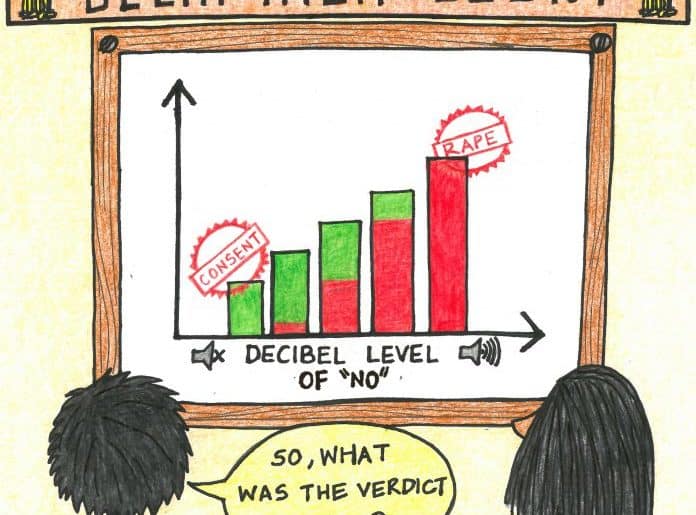
What has been the case so far: The judgment by Justice Ashutosh Kumar holds that in the modern world where equality is the “buzzword” and where both men and women are “initiators” of sexual acts, consent should not be mere hesitation or reluctance, but a clear and unambiguous “no”. In short, there is no room for a feeble “no”.

“The judgment creates a new defense for the rapist which does not exist in law. There is a double presumption – absence of intention to rape (by the accused) and non-communication by the woman despite a clear ‘no’ from her. The judgment has turned the definition of consent on its head. What was meant to protect the woman has been made into a defense for the rapist. The judgment is dangerous and will allow no conviction for rape at all,” is how Former Additional Solicitor General and noted human rights lawyer Indira Jaising reacted to the judgement. With its head-turning judgement, the judiciary has again established the rigidity of the conservative legal framework. What we are then left with, are the age-old stereotypes of an ideal rape victim, real rape, real resistance, and true consent. What the courts have refused to take into account in their judicial interpretation is that there is no feeble no. A no, in any form of hesitation and resistance is a no.

On the evening of the assault, the facts are these: We know that she went to his house believing they would all be going for a wedding. She found herself alone with a drunk Farooqui and his male friend.  We know she was concerned both about Farooqui’s state of inebriation and his mental health because she called his friend so that he was not left on his own. She wanted to leave soon after arriving. However, Ashish Singh, a friend of Farooqui, asked her to stay back since his wife had not returned, as if being a female friend somehow obligated her to provide “care” for him by “feeding him” in his wife’s absence (pp 4 of the verdict). Despite the fact that she had called a Meru cab (3 times) to leave his home and when the driver couldn’t find the location, she was willing to leave in a rickshaw, she was prevented from doing so by Ashish Singh, using the ruse that it would be unsafe for her to do so. But the judgement still does not take into consideration these interesting aspects into believing that she clearly didn’t consent or was interested in having sexual intercourse with Farooqui. Because c’mon, you wouldn’t want to leave a house so desperately if you wanted to have sex with its resident.

What the judiciary has carefully dissected is the relationship between the accused and the survivor, which it rightly should. it appears that Farooqui and the survivor had multiple interactions usually in the presence of other people. During many of these instances, Farooqui is described as being drunk and there are two mentions of consensual kissing. It isn’t unfair to discern that they may have been casual flirtation between the two. But that is on no account justifiable, nor does it excuse non-consensual sex at any later date.

There is a brilliant animation that uses a cup of tea to explain the concept of consent, and yes, it is as simple as that.

https://www.youtube.com/watch?v=oQbei5JGiT8

Consent is a constantly negotiated process. Women can consent to certain sexual acts and not others. They can start to have sex but withdraw consent at any time during the act if they are uncomfortable. The judiciary’s stand also reflects the twisted ways in which the larger society creates the definition of consent. There simply aren’t any grey areas between a consensual sexual act and rape. An individual’s hesitation and resistance echoes as loud as a vehement utterance of ‘no’. Just because a woman wasn’t supposedly resolute enough during the act, or preceding the act for reasons which could very well involve fear, does not equate to being ‘playful’ or being a ‘tease’.

In this case, the focus has been conveniently shifted from what the woman said, to what the man understood, illustrating how problematically, the terms of consent can be twisted.

Feature Image Credits: Feminism in India


Ankita Dhar Karmakar

[email protected]


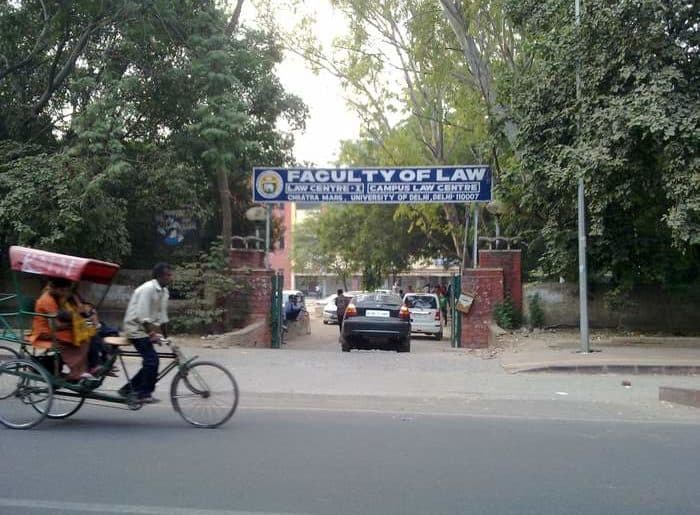
The Delhi High Court, on Wednesday, asked the Law Faculty of the University of Delhi (DU) to scrap its policy of clubbing two categories.


Delhi High Court, on Wednesday, ordered the Law Faculty of the University of Delhi (DU) to fill the vacant 301 seats for the LLB course, based on the petition filed by a group of students who failed to get admission in the last academic year (2016-17), due to the varsity’s step of clubbing the 2,310 seats with 301 seats that are actually meant for the “supernumerary candidates”.

On 28th June, the court had passed an order permitting the admission of the 2,310 students, oblivious of the fact that the university had “erroneously included” the reserved seats as well.

The “supernumerary candidates” fall under a third category that includes Persons with Disabilities (PWD), Children and Widows of Armed Forces (CW) and the Foreign Nationals (FN). As reported to The Indian Express, the bench consisting of Acting Chief Justice Gita Mittal and Justice C Hari Shankar were quoted saying, “It is submitted that DU was required to admit 301 candidates in the reserved categories as supernumeraries over and above 2,310 seats”. It also came to their notice that this admission process has been in existence and in practice since the year 2008.

“It appears that this submission is incomplete….as the undisputed factual position placed before us is that since 2008 till 2015-16, DU was admitting 2,310 students as well as additional supernumerary candidates for the PWD/CW/FN”, the bench noted.

Furthermore, according to report, the cut-off date of 31st of August will not come as a restriction to the admission of the concerned candidates.

Feature Image Credit- The Indian Express


Shrija Ganguly

[email protected]

On Thursday, the Delhi High Court directed the Central Board for Secondary Education (CBSE) to accept all applications for re-evaluation. This is the result of a plea that was filed by students against CBSE challenging their notification, dated 28th June that imposed conditions on re-evaluation of mark sheets that students were only allowed to submit applications for up to 10 subjects and up to 10 theory questions per subject. A bench, including Acting Chief Justice Gita Mittal and Justice C Hari Shankar, was hearing to this plea. The CBSE notification also mentioned that a revised mark sheet will only be issued if there is an increase of 5 or more marks, which the counsel called “arbitrary”.

The bench said, directing the board: “It cannot be denied that grave and irreparable loss/damage would be caused to the petitioners as far as their admissions to colleges are concerned,” and that the relief would be “admissible to all similarly situated students who seek reevaluation of their answer sheets.”

The bench posted the matter for further hearing on 26th July, issuing notice to the Centre, CBSE and Delhi University.

Image credits: livelaw.in

Anagha Rakta
[email protected]

On May 31st, the Delhi High Court issued a notice to the Centre, the University of Delhi (DU), and the Bar Council of India (BCI), seeking direction not to reduce the LLB seats in the University. The current intake of students is 2,310. Thus, the Delhi High Court asked the BCI to consider DU’s representation for increasing the seats in its LLB course and to take a decision by the evening of June 6th.

DU had sought permission to increase its seats for the law course, claiming it had improved its infrastructure and increased the strength of its teaching faculty. The Bench observed that the BCI had not capped the seats due to the lack of infrastructure, and therefore its improvement wouldn’t entitle DU to seek an increase in seats offered for the course. It, however, allowed DU to advertise for only 1,440 seats for its law course, like last year and said it would be subjected to the outcome of a plea seeking an increase of seats to 2,310. The order came during a hearing of a petition by lawyer Joginder Kumar Sukhija, who claimed that many students, especially graduates, would be affected if the seats were reduced. The petition added that by reducing the number of seats, the public money, which is used to provide a grant to DU, was not being put to optimal use.

Last year, the DU students protested after reports surfaced on the suggestion by the BCI to trim down the number of seats for admission to the 2016-17 batches for LLB seats at the three law centers. Since 2014, the Law Faculty has been in trouble with the BCI for not following the council’s rules regarding infrastructure support and student intake.

The PIL sought a direction to strike down the clause 5 A of Schedule-III of Rules of Legal Education 2008 enacted by the BCI, claiming it was capricious and in blatant violation of fundamental rights. Under Rule 5 A, a law college can admit only 300 students each year. As the varsity has three law centers, it can have a total of 900 seats only. But, as an exception, BCI has allowed the varsity to admit additional 180 seats per center for reserved categories, the lawyers’ body told the court. Hence, the law aspirants are hoping for an increase in the number of seats in DU. After all, 2000 students should be accommodated if adequate infrastructure is made available to those aspiring to enroll in the varsity.


Feature Image Credits: Bar & Bench


Radhika Boruah

[email protected]

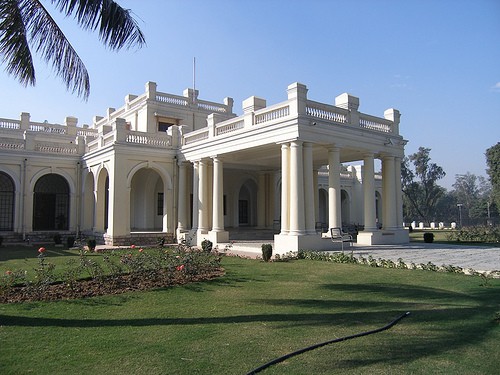
The University of Delhi has decided to challenge a Delhi High Court Order in the Supreme Court, which directed the University to grant monthly pension to over 300 teachers.

The decision to challenge the order was taken on Saturday, April 29th, 2017 in a meeting called to discuss issues centered around general provident fund (GPF), monthly pension, cumulative provident fund (CPF) and lump sum money at retirement for teachers. Issues around the absorption of ad-hoc teachers as permanent faculty, promotions and problems of physical education teachers were also discussed during the meeting that lasted for around 10 hours, as per a council member, who attended the same.

According to a Council member, Rajesh Jha, the decision to challenge the order was taken despite strong dissent from the members present. “We also submitted a statement of concerns over pension issues signed by five council members during the meeting,” he added.

Nandita Narain, the president of Delhi University Teachers’ Association (DUTA) told the media about the huge legal expenses and around a decade long litigation period the employees had to struggle through in order to earn the bench division litigation. The HC order challenge has been dissented against by a large number of employees of the University, and are dissapointed by the “callous approach” of the Ministry of Human Resource Development (MHRD), added the DUTA President.

A dharna was also organised by the DUTA members outside the Vice Regal Lodge, the venue for the meeting, for voicing their concerns around the issue.


Feature Image Credits: Flickr

Priyal Mahtta
[email protected]

After three years of protesting, there finally appears a ray of hope.

The Delhi High Court on Monday, 2nd of May, demanded a response from Delhi University concerning the issue of rent regulation and hostel accommodation. It is after years, that a definitive action is being taken on the matter.  In a Public Interest Litigation, it was demanded from the varsity that they act on providing hostel accommodation to all the regular students and especially the ones coming from the weaker sections of the society.

Praveen Singh, a DU alumnus who has been at the forefront of the protests, has alleged that considering the number of student who get admission into DU every year, the number of hostel seats are far from accommodating. It has been repeatedly demanded from the University authorites and the Delhi government that there be adequate hostel facilities and rent regulation. Stipend for the students who do not get into hostels and opening up of the hostel mess for the non residential students are issues also included in the PIL.

The university counsel has been asked by a division bench comprising of Chief Justice G. Rohini and Justice Jayant Nath to take action on the subject. A further hearing has been scheduled for July 18.

Read more about the rent regulation strike last year

Image Credits: prokerala.com


Arindam Goswami
[email protected]