

Tag

competitive exams

Browsing

Five stages shape a student’s journey through India’s competitive examination system. But when the system fails them, what remains of the future they spent years sacrificing everything to reach?


Denial

There exists an undeniable comfort in telling yourself that your life is not actually on hold. The same repetitive routine is not holding you back; it is preparing you for the ultimate test. You wake up right as the alarm starts to go off; you brush your teeth, staring into the abyss of your own eyes in the mirror; you eat your food, mentally preparing yourself for yet another ordinary day to come, which somehow finds a way to seize your heart. You convince yourself you are doing this by choice; you will get far ahead in life if you make this one last sacrifice. There is a future waiting for you.

Yet the reassurance bleeds you dry.

You’re not postponing living in the present; you are waiting for the right time. Most Indian students fall prey to this predatory education system where one competitive exam after the other forces your hand and breaks your will. No amount of coaching, classes, or revision prepares you for what is yet to come, but you still somehow believe that your sacrifice has a purpose. One day you’ll wake up, and all you need will be yours, as long as you stay put.

Your plans will wait for you, friends will wait for you, opportunities will wait for you, the world will wait for you as long as you clear the next attempt. Unfortunately, life doesn’t wait, and that future you keep wishing for is always just far enough to justify sacrificing the present.

This is the first sign: you believe the life you are postponing is still waiting for you exactly where you left it.

The classroom eventually empties, sacrifice often does not.

Anger

Then someday the system fails you. A dagger is plunged right into your gut, and as you lie bleeding, you realise.

A paper is leaked, an examination is cancelled, a result is delayed. You are yet again forced to wait just a little longer and accommodate someone else’s failure as if time must be an administrative inconvenience and not something that has already been taken from you.

Over the past decade, India has seen nearly 90 reported paper leaks across multiple states, affecting crores of students and job aspirants. From recruitment exams to board exams, NEET, and UGC-NET. The numbers are so high that they don’t even feel human.

People seem to forget that every single one of those numbers was a student who spent months or years preparing. A student who woke up early, paid for coaching, declined opportunities, rescheduled plans, all for one exam. They promised their families that this time would be different, and it was, in the most gut-wrenching way possible.

The founder of Shiksha Nation, Saurabh Kumar, said, “Students prepare for years. The system must prepare with equal seriousness.” That is not a demand. It is the least students should be able to expect from the system.

A paper leak is not just an administrative failure; it is a disruption of a student’s timeline. The anger does not simply lie in taking the paper again but in the time that feels wasted. They did everything right, and yet the future they had readily waited for was snatched away right in front of their eyes.

But anger does not always make you leave. Sometimes, it makes you hold on tighter.

Preparation leaves few visible traces beyond worn books and borrowed time.

Bargaining

As it slips through your fingers while you weakly try to grasp it, you know you don’t want to give up. No, you can’t give up, not after everything. You can’t leave, but you can compromise; you can negotiate. You can bargain with your own life.

One push harder, one more attempt, one more strategy, one more schedule. After this, you would never have to sit down to cram for hours again. The people in your life will stop being distractions; their company will become a celebration. Opportunities will envelop you as a family’s arms on result declaration; you will touch the horizon, and this time you won’t fall back down again.

The problem with “one more year” is that it seems redundant by the fourth time you say it. Preparation stops being a period of life and becomes the organising principle of life itself. There is a logic to it: after investing so much, stopping feels more frightening than continuing would. The years of effort you’ve poured into it would only be justified if you clear the next attempt.

The future keeps moving, and you keep following it; chasing the next, the next, and the next.

But eventually, the promise of the next attempt begins to lose its shine. You look around and realise that the years you were promised would come later have already passed.

Depression

This is perhaps where the waiting begins to reveal its cost. As it kicks in, you sink.

You notice how the people in your life moved on to bigger things; they graduate, find jobs, get married, all the while you were making decisions dependent on an examination calendar.

Your future leaves you behind.

It’s not that you aren’t working hard. What makes it so difficult is that you are relentlessly doing exactly what you should’ve been doing. Everything that is required of you, you deliver, and yet nothing in your life seems to have moved forward. Your everlasting dream of success fails you; that strange emotional experience of prolonged preparation breaks you not only physically but mentally. It eats away at your hope, at your faith till the time you cannot imagine breaking out of this cycle controlled by an exam.

You cannot imagine a free day without guilt; you feel wasted, abused. Every conversation revolves around your examination. Your life is not yours anymore. It has been taken from you, and now you’re devastated. Utterly helpless.

Days often begin and end at the same desk.

Acceptance

Suddenly it sets in: acceptance doesn’t have to mean accepting failure; it is something more.

Imagine telling every student that they have to give up their careers and that an exam does not matter when it so clearly does. To many students, it matters enormously.

Reality occurs much later for these students; degrees don’t guarantee employment, and employment may not guarantee security. For them, competitive examinations continue to represent one of the few reliable routes to stability. For a system to fail these students is a complete breakdown of trust. How can you tell students to move on after making them depend on these examinations in the first place? How does mismanagement on the system’s part become the fault of a helpless student? The acceptance must be of something else.

The future is not guaranteed simply because you have sacrificed your present for it.

That’s it. Hard work is not a contract with the universe; preparation does not ensure the examination is conducted fairly, and eventual success cannot return to you the years that have passed.

But what happens when you do continue? What happens when you do exactly what the system asks of you?

The Aftermath

Ayushman Singh did what the system asked of him. He continued. But that doesn’t mean nothing was taken from him.

He had bought a guitar in Class IX. By the time he began preparing for NEET, it had become, in his words, “just a piece of furniture” in his house. After the examination, he finally had the chance to sign up for guitar classes. Two days after learning that he would have to sit for the examination again, the guitar, which would finally be strung with life again, sank back into the darkness, camouflaged.

He had to postpone the life he had already started imagining.

Now, one would assume that his greatest loss after this experience would be time. Perhaps confidence. But, what he lost was the trust in his own nation. “Broken systems don’t just leak papers; they destroy trust,” he said.

And perhaps that is the problem with resilience. We see a student continue and assume that nothing was taken from them. We see them return to the classroom, the coaching centre, the examination hall, and assume that they have moved on.

They have not necessarily moved on. They may just have had nowhere else to go.


Image Credit: Ayushman Singh

Read Also: The Ghosts of Indian Small Towns: What Changes, What Stays


Ahana Dey
[email protected]


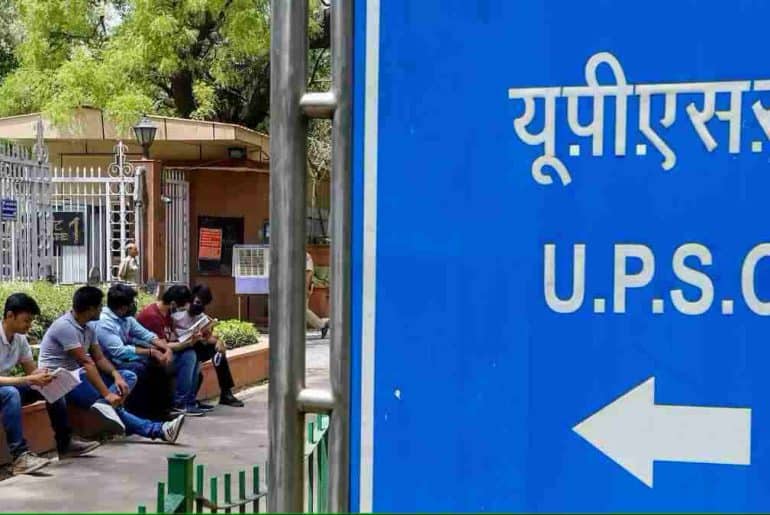
There is a distinct enthusiasm and fascination for the Civil Services entrance exam among the Indian Youth. Despite the slim chances of passing the three-level test, nearly 100,000 people from all over India sit for this exceedingly competitive exam each year. Let us decode this hype of UPSC through the perspectives of students. 

The craze for the UPSC is nothing new in our country, it’s something we’ve all seen but never given much thought to. We all have friends, family, and neighbours who occasionally encourage us to consider this field as a career option. Or, we have all probably seen viral clips on social media of officers performing their regular duties while a catchy sound or patriotic song is added, giving the image of the officer a completely different tone.

Delhi is known as the pilgrimage to prepare for such government exams. A large proportion of Delhi University students are UPSC applicants, with many having passed the exam and currently working in this profession. Being a student at Delhi University, I’ve encountered a lot of students who choose to complete their graduate degrees in the capital in order to simultaneously prepare for this exam.

Simply visiting Old Rajinder Nagar or Mukherjee Nagar, one might experience this atmosphere of stress. Here everyone from rickshaw drivers to tea vendors, teachers, learners, and residents are invested in this exam. From current affairs magazines hoarded in stalls to coaching centres claiming to have guided the rank holders. Aspirants’ rooms are set up with world maps, LBSNAA posters and sticky notes with capsule notes to memorise. The day seems to go on forever here. Some aspirants get up at four in the morning to study, while others stay up till the dawn. It’s popularly said that “UPSC is a marathon, not a sprint.” This determination of aspirants can be witnessed in such places.

After leaving my hometown for greater prospects in Delhi, I’ve dealt with the passive pressure to take the exam, and many others, like me, develop the same sense of insecurity that they will miss out on something amazing if they don’t sit for UPSC once in their lives. Many young people are motivated to apply for jobs in the government by both – the exam and the personality of the officers. I personally witnessed this during the first week of my college, when a well-known civil servant was brought to our institution and the auditorium was packed with young students; it was crowded, but the students were willing to sit on the floor only to hear the officer speak. This officer had just passed the exam two years before, and she had only just begun her actual journey, but she was already a star in the eyes of these young brains yearning to hear her views. It was like seeing a swarm of admirers adoring their favorite movie star; such is the allure of a civil servant.

We learnt from our conversations with students across Delhi that they view the job profile of a public servant as very dynamic. With the added benefits of being a government officer, a well-respected position in society, and the appreciation and love one gets after passing the exam as something many people desire. Many students nevertheless hold the view that what genuinely drives them is the chance to work at the grassroots level and the ability to change the world.

Before profession, the process itself makes most of the individuals disciplined, hardworking, diligent and responsible which then reflects in the work they do on field. The study for this exam is such that it gives you knowledge important to understand the working of the society and in turn makes you a well-informed citizens. The position demands a lot of responsibility from the individual which keeps him/her committed to the work.” – A graduate from Hansraj College, DU.

An aspirant from Jamia Milia Islamia adds,

I’ve analysed my skill-set and I hope to make an informed decision of going into the services and using them to the best of my ability. Apart from that, a will to give back to society in whichever way possible and the perks of a government job do not hurt the goal as well.”

One of the main reasons why the exam is so popular and hence favoured by students is that they believe the administrative positions thus offer exceptional benefits, as well as respect and plenty of possibility for advancement.

Even though thousands of students prepare for the exam each year, not all of them excel. The success rate for UPSC is less than 1%. The harsh competition makes it difficult to place everyone where they want to be, despite the fact that people may have ambitious goals. This is the reality of numerous competitive exams in India. The exam offers a certain number of attempts to the candidates, which is also dependent on their age and category. For the Civil Services, on an average, it takes candidates more than two years to pass the exam, or roughly three to four attempts to raise their chance of being chosen. There is a peculiar fascination to this exam even when only a small percentage is chosen. Many students simply ‘appear’ for the exam for the experience, but the pressure it produces is difficult to overcome

According to a Byjus study,

Among lakhs of candidates appearing for the exam, only a few thousand are serious about this exam, and we can roughly keep the number of serious candidates as 45,000.”

While students may be driven to work in administration, the quality of their preparation determines their success, therefore there is a fine line between those who dream of the UPSC and those who actually aim for it.

Taking career risks is still uncommon in our nation, where individuals prioritise employment security, rewarding careers, and recognition. In this atmosphere where a well-established career is valued, it’s surprising to see how students take multiple drops to try their luck again.

However, one cannot completely dismiss the other reasons why flocks of students prepare for the exam. It is also a sad reality that societal expectations and familial pressure influence the bulk of students’ decisions, with UPSC contributing a part in it. Schools and colleges sell the dream of UPSC to students without properly analysing the child’s interests. While many students wish to take this exam, some believe that even if their family influenced their decision, they finally came to like it. Among these two groups, we must not overlook individuals who are compelled to pursue UPSC as a career option without identifying what the work actually entails.

Once you tell your relatives that you’re preparing for UPSC, the respect for you shoots up but so do the expectations. This is because of the public image of the job. A common person can’t see the prime minister or Elon musk for that matter, but they’ve definitely been close to the DM or SDM of their area and saw their might. People believe what they can see.”– A student from Hindu College, DU.

We are bombarded with success and failure stories every year after UPSC results are declared. What stays hidden from us is that many people might clear the exam but are conflicted about whether they like their job or not. Not all successful candidates are happy and satisfied with their jobs. This field provides a lot of benefits, but it does not guarantee a happy and comfortable life for all. The actual groundwork necessitates a significant amount of strength, patience, and sacrifice, for which many students are unprepared.

Although social media has let us have a glimpse into their life, it has certainly made us glorify them and make them our staunch ideals. In this regard, we often forget that each person’s experience and journey would be different and while something may work for them, it may not work for another aspirant.”

The buzz around this exam is enormous, it is justified given the power and perks involved. Yet, Not every other bright child around is meant to sit for this exam. Along with money and fame, a person’s interests, personality, and, most importantly, how they intend to live their life are all crucial variables to consider while choosing a profession.

The Civil Services is a choice that students can make at any time, after assessing one’s own flaws and skills. However, there is no harm in exploring other viable options first. Students, particularly in places like Delhi, have a plethora of chances and experiences that can help them create a career in academia and business. Along with it, we are transitioning to a world where active learning and the development of diverse skills are given preference more. College-level students have the opportunity to study many areas of knowledge, hone their talents, adopt a growth mindset, and encourage creativity in their ideas. This can be Young India’s strength.

The appeal of ‘sarkari naukari’ persists in our country and many people still lack the freedom to pursue careers of their own choice. Yet, it’s critical to fully comprehend the requirements of any given exam and career before determining whether you are a good fit for it and whether the exam is a good fit for you.

Read Alsohttps://dubeat.com/2018/09/26/are-universities-culpable-of-glorifying-the-indian-civil-services-as-the-only-viable-career/

Featured Image Credits – Google images

Priya Agrawal