Tag

ban

Browsing

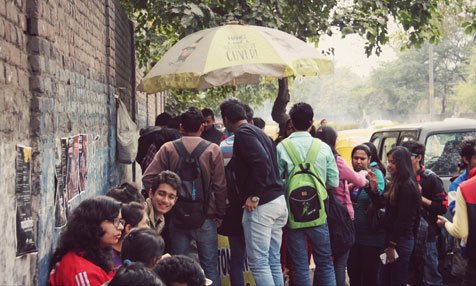
Delhi University has announced a month-long ban on protests and public gatherings across campus, citing concerns over safety and public order.

The University of Delhi has imposed a temporary prohibition on protests, demonstrations, and public gatherings across its campuses for a period of one month, according to an official order issued by the Office of the Proctor on February 17, 2026.

The circular, addressed to students, faculty members, and staff, states that all forms of public meetings, processions, rallies, dharnas, and demonstrations are “strictly prohibited” within university premises with immediate effect. The restriction will remain in force until March 17, 2026, unless withdrawn earlier.

According to the order, the decision was taken following inputs suggesting that unrestricted gatherings on campus could lead to traffic obstruction, threats to human life, and disturbances to public peace. The Proctor’s Office noted that in previous instances, protest organizers had allegedly failed to manage crowds effectively, leading to escalation and deterioration of law and order within university spaces.

The directive also references an order issued by the Assistant Commissioner of Police (ACP), Civil Lines subdivision, under provisions linked to notifications by the Ministry of Home Affairs. These regulations extend the scope of restrictions to several specific activities.

Under the order, the assembly of five or more persons for protest-related purposes has been prohibited. The use or carrying of potentially hazardous materials, including mashals, beacons, or torches, has also been banned. Additionally, slogan shouting, public speeches, rallies, and any activity that could disrupt public tranquillity or impede the smooth flow of traffic are not permitted during the enforcement period.

University authorities justified the move as a preventive measure aimed at maintaining safety and ensuring normal academic functioning across campuses. The order emphasizes concerns over crowd management and the potential spread of unrest during large gatherings.

The circular has come into immediate effect from February 17, 2026, following approval from the competent authority, marking a significant temporary restriction on collective demonstrations within Delhi University campuses.

Read Also: Understanding Ambedkar: lessons from an elective course 


Image Credit: Devesh for DU Beat


Anjali Kumari Jha

[email protected]

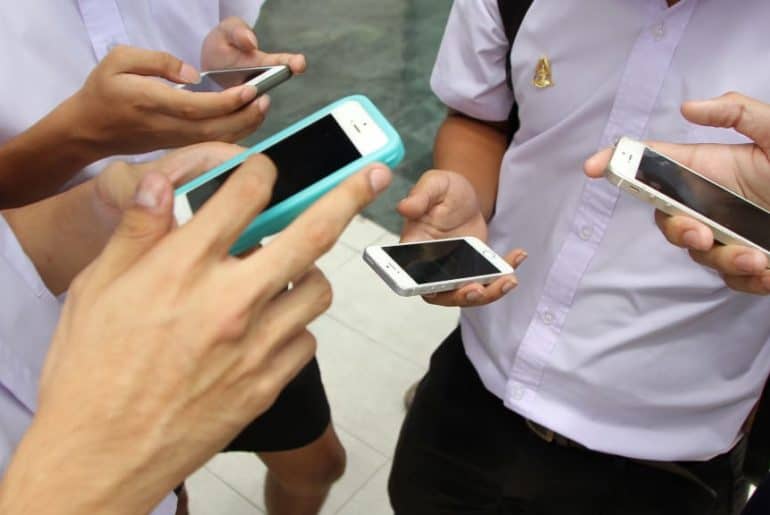
With the use of cellphones at an all-time high, there is an ongoing debate about if they should be allowed in colleges and classrooms, or not. Let’s delve into the matter and understand it better.

Technology has invaded almost every aspect of our lives. Our gadgets have become our new friends without whom life is just impossible to imagine. So much so, that we become totally inseparable with them. We are exceedingly becoming dependent on them to lead our lives. Students, especially, find themselves heavily reliant on their smartphones and even carry it to their colleges.

How right is that and should this act be allowed? This is the question that needs to be discussed.

People supporting the ban of smartphones in colleges term it as a distraction deviating students from their academics. Usage of cellphones in classrooms results in the wastage of time during important class hours. It also fuels their social media addiction since a productive academic atmosphere should be devoid of social networking apps. Another important aspect which Simran from Gargi College brought forward was how smartphones weaken the students’ ability to come to a solution themselves as everything is available just at the press of a button.

But, should we consider banning them from college premises keeping the above propositions in mind? There is another side of the coin that needs to be assessed too.

Smartphones are like handheld computers which can be used as a great tool of learning in innovative ways which are beyond the scope of traditional teaching. It becomes convenient for teachers too, in cases when they need to hand out digital academic materials to their students. Apart from being great learning tools, they also become absolutely essential for students for keeping in touch with their parents and ensuring their safety while they travel to and from college.

Thus, banning the usage altogether doesn’t appear like a wise decision but its shortcomings can’t be brushed under the table too.

There instead, needs to be a strict regulation on the use of smartphones on the campus. Social media apps like Instagram, Snapchat, Facebook must be inaccessible on college WiFi and strict actions must be taken against the defaulter. Mobiles should be collected before the class and should be handed over only when there is an academic need.

Feature Image Credits: DU Beat

Shreya Agrawal

[email protected]

A tug-of-war between students and the administration is common across colleges in the University of Delhi, where the former sees the policy as regressive, and the latter is welcoming of it.

In an official statement by the Delhi University (DU) administration, dated 1st January 2019, it is declared that DU college campuses are to be strictly cellphone-free. The policy is to be implemented from the coming semester in all the colleges that come under the umbrella of the varsity. The statement further read that any student carrying a cellphone will have to hand it in, and it will only be returned to them when a parent or a guardian has duly signed a letter stating the reasons for the breach of rule.
This ruling has resulted in student agitation, on grounds that cellphones are a basic human need these days, and everything from class timings to syllabus and notes are discussed over platforms like WhatsApp and E-mail.
“We fail to understand why in the 21st century such prehistoric rules are being forced on us,” says Ashwin Gupta, a
student from North Campus. “It would be an extreme inconvenience for students and teachers alike.” In accordance with what the students are saying, the professors, too, are against the said policy. “While DU claims to be modernising the system in every way they can, what we see today goes against that claim,” said a professor under conditions of anonymity. “Are we expected to hand out printed notes, which may go up to a 100 pages per student, per paper, every semester?”Protests were seen near the gates of the Arts Faculty, North Campus. However, little solution came out of the incident. Speaking to DU Beat, Nitin Alok, a member of the varsity administration board said that cellphones and the internet serve as distractions in classrooms, and that students should focus on the professors rather than their phone screens. “I am sure that the GPA of the students will increase this semester because of our policy,” Alok added.The efficacy and implementation of this policy will be judged in the coming days when college starts again for the term.
Disclaimer: Bazinga is our weekly column of almost believable fake news. It is only meant to be appreciated, not
accepted.

Feature Image Credits: CBS Philly


Maumil Mehraj

[email protected]

Disclaimer: Bazinga is DU Beat’s weekly column of almost believable fake news!

Four university students allegedly dealing in selling Maggi to other hungry students near the university campus were suspended for a period yet undetermined by the varsity. “The University has always vehemently condemned acts of illegal nature and although we are empathetic to the plight of the students we cannot act otherwise” said a senior member of the teacher’s body. In his defence, one of the suspended argued, ”I thought I could help a lot many people you know. Save them from starving. So what if i make a little money out of it?”  With a ban on the ‘rescue snack’ many students are in dilemma as to what will feed their mouths. Canteens in DU have reported mass decline in sales and menu cards have undergone massive transformation as well. “We have nothing to feed them” said a distressed canteen manager deploring the loss of their best-seller.

Meanwhile there has been no news of the owner of ‘Tom Uncle’s Maggi point’ who has not been seen at his regular since the last few days. One of the most famous Maggi joints inside the campus, it was known for selling varieties of the same. According to sources he has been trying to sell off the last of his stock to anyone who will buy it. The varsity has since ordered an area wise sweep of the campus to locate any shops selling the product, within a 500 metre radius. These shops will be instructed to switch to another product, failing which they will be asked to leave the campus. For students the university has ordered a week long suspension for anyone found with a packet or more. Such are the new conditions which DU faces.  Such an ordinance is expected to be a tough trial on everyone.

Bazinga is DU Beat’s weekly column of almost-believable fake news!

Feature Image- www.sodelhi.com