
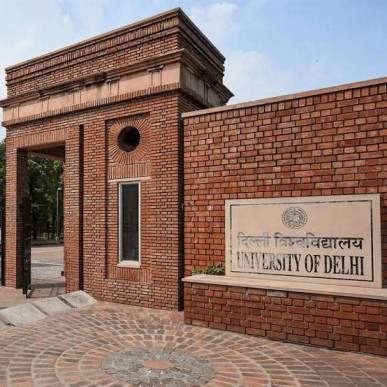
Delhi University aspirants all across India have been receiving scam calls from individuals posing as DU representatives, offering seats in their desired colleges for a ransom.
Due to its impeccable literary heritage, surmounting cultural importance and a great network of alumni, Delhi University stands out as one of the most aspirational and promising institutions for UG (undergraduate) studies. With CSAS phase 2 underway, where the college allotment process is decided by the preference list, students are navigating a mix of excitement, anticipation and nervousness.
Despite the step-by-step process clearly outlined by the official website for admission to DU, a lot of students have reported getting scam calls from individuals claiming to be ‘admission counsellors’. They promise to prepare a personalised preference sheet for the students, helping them secure a guaranteed seat in their favourite college, all for a hefty amount of money. What makes the fraud particularly convincing is the callers’ apparent familiarity with the admission processes, quotas and college placements, lending credibility to their false claims.
Several students spoke to Hindustan Times regarding such frauds and one such student Tanya Rathi, from Ghaziabad reported:
My father received a call from someone saying, “I’m from DU.”‘ They said they help students with counselling and assured us that they would fill my preference sheet in a way that would ensure I get the college I wanted. In return, they quoted him ₹50,000.’’
Another student Rehan Chandra, from Jaipur stated:
The desperation to get into one’s dream college is such that once you hear the person take the name of a top college saying they can help get you admission there, one easily falls for it in that instance… When I received the phone, the caller asked me which college I wanted.
Then the person on the other end of the phone claimed management quota seats were available and demanded ₹1 lakh to guarantee that I could get one.”
Multiple such incidents have been reported, suggesting that these are not isolated cases but a part of a larger scam racket, taking place across all the cities, targeting the innocence and aspirations of the hard-working students and exploiting their lives for some amount of money. Such cases have occurred in the past as well. Last year a major fraud racket was caught by Delhi Police and Rs 1.34 crore was recovered in cash in Ghaziabad from two such scamsters who had been targeting the same group and sentiments.
Similar instances of such frauds have also been reported and raised by users on Reddit of the r/delhiuniversity community who claim that they have been repeatedly contacted by individuals claiming to be the representatives of DU Admission Counselling offering direct admission.
Addressing the concerns of such unsolicited calls, the Dean of Admissions of DU, Haneet Gandhi, informed:
The university has repeatedly maintained that admissions are conducted only and only through the official CSAS portal. Any student receiving any such calls should not even think twice and report it to the concerned authorities immediately.”
Such calls are not meant to be taken seriously, and for any guidelines or doubts related to admission and the counselling process, parents and students are advised to refer to the official DU Admissions.
If you get such a suspecting call, you could report it at www.sancharsaathi.gov.in / www.cybercrime.gov.in
Or call: Cybercrime Helpline Numbers: 1930, 011-20892633, 9319301930
Rajarshi Ghosh
Read Also: NCWEB applications open for B.A. (Prog) and B.Com; last date to register: July 24
Image Source: Adda 247



Trending