Author

DU Beat

Browsing

As the August 1 deadline nears, Delhi University has seen a subtle mix of groups choosing to continue into the fourth year – and most find niches, be it course or college.

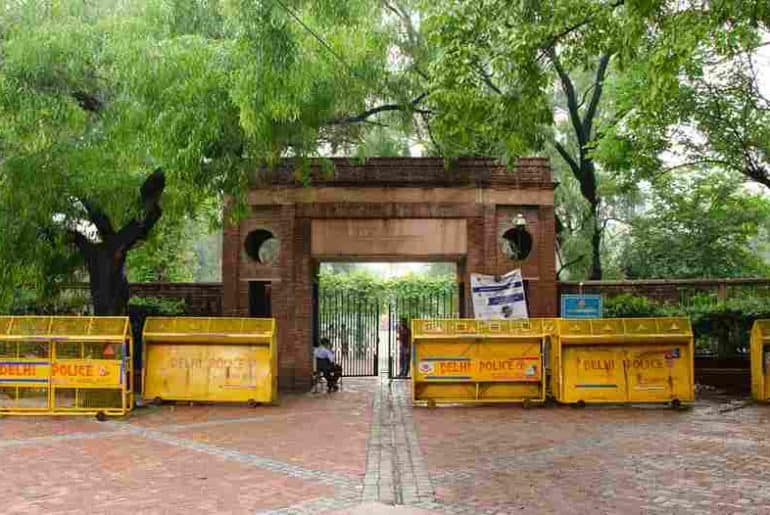
Thought of as a “game changer” by Vice Chancellor Professor Yogesh Singh, the introduction of the fourth year has been dubbed a “half-baked experiment” by the faculty members. A similar scenario was observed in 2013 regarding semester-wise divisions and FYUP, which was faced with strong opposition from student groups and faculty members, leading to its eventual withdrawal.

Though it is important to note that this year, its implementations under NEP 2020 do see some significant upgrades, such as measures for enhanced WIFI connectivity at a cost of ₹65.71 crore, a fully digitised library, and approved infrastructure projects worth approximately Rs 1,912.15 crore, with 329 already released. These projects include a new computer centre in the North campus and new hostel projects in the South campus. 

The metrics show that as of last week, over 70% students have still opted in for continuing their studies into the fourth year. This is 10% more than the expected number of students, and that too before the deadline of August 1. Over 50,000 of the existing 70,000 will be graduating with a research degree next year, yet the divisions are high. According to the Indian Express, Humanities and languages streams have seen higher student retention into the fourth year compared to low continuation rates in science and commerce. 

Similarly, top-tier colleges see a lower opt-in ratio than other colleges. As DU dean of academic affairs Ratnabali K said:

While the final data will reveal more accurate trends, initial observations show that peripheral colleges have recorded higher retention rates in the fourth year, whereas top-ranking colleges have slightly lower retention rates. One reason could be that students in these institutions are more likely to pursue the traditional postgraduate route.

Data shows that at Shri Ram College of Commerce, only 170 of 900 B. Com (Honours) and 74 of 210 Economics (Honours) students are opting for the fourth year, while on the other hand, Kirori Mal College sees a 50-50 split across courses. The divide remains evident even in Lady Shri Ram College for Women, where, even though about 60-70% students are continuing, the retention is highest in Psychology (Hons) of about 80%. 

Thus, uncertainty engulfs the DU landscape for the coming year. It might rumble the sedentary lifestyle of CUET-PG and CAT aspirants or just about lead to some real upgrades. The ramifications remain yet to come. 

Read Also: Uncertainty Shadows The Fourth Year of Delhi University’s NEP Rollout.

Featured Image Credits : Vanya – DU beat 

Shreya Bhushan 

[email protected]


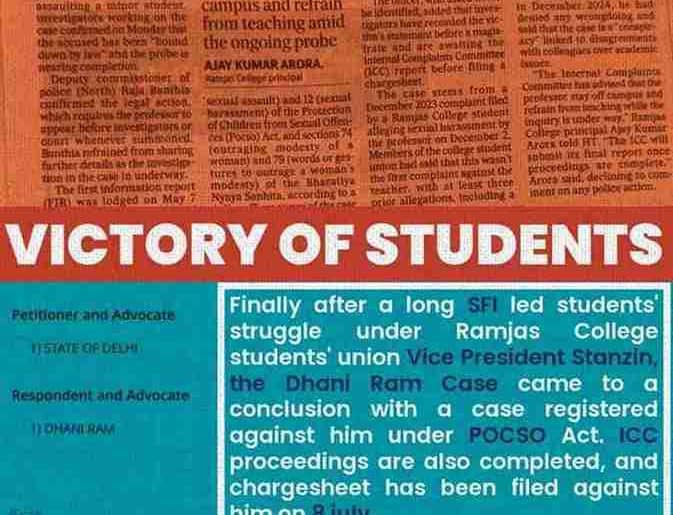
After a seven month wait marked by student outrage, protests, and institutional roadblocks, legal action is finally being taken against Ramjas College Professor Dhani Ram accused of sexually harassing a student of the college; a minor.  Even as the student body celebrates this win, the concerns of political violence, safety and accountability in academic spaces are yet to be addressed.

On 8th July, 2025, a chargesheet was filed against Dhani Ram, professor of the Commerce Department of Ramjas College and the joint dean of Dean of Students’ Welfare, DU, as part of the case registered against him for allegedly sexually assaulting a minor undergraduate student at Ramjas College. This followed months of mounting controversy, and arduous efforts by the student body since the complaint was first registered with the Internal Complaints Committee (ICC) of Ramjas College in December, 2024. 

There has been a history of sexual harassment allegations against Prof. Dhani Ram, with the latest being the fourth official complaint filed at the ICC. Despite repeated complaints against his conduct, no action was taken by the college authorities against him. After calls of protest by the student body and groups including AISA and SFI demanding accountability and proper investigation by the authorities, Ramjas College temporarily suspended Prof. Dhani Ram on 24th December, 2024 with the ICC inquiry still pending.

On 8th January, 2025, a call for protest was issued by Stanzin Deskyong, the Vice President of the Ramjas College Student Union due to the negligence towards due process by the college authorities following the complaint. The protest demanded that the victim’s consent be taken into consideration, the reconstitution of the ICC, timely enquiry into and suspension of the accused professor, and transparency during the enquiry, including the publication of an official suspension order on the college website. However, a mob including both Ramjas students and outsiders, allegedly of the ABVP, disrupted the protest. They harassed and attacked the students with flowerpots and sticks, severely injuring a third year student and threatening a professor. Student bodies and other student parties issued a call for protest and demanded action from the administration for this violence.

As part of the ABVP’s protest, which was staged separately, the members locked the Dean of Students’ Welfare office and conducted a sit-in protest demanding Prof Dhani Ram’s resignation. Later, a screenshot of a mail allegedly written by the professor was circulated on social media by ABVP Delhi, implying that Dhani Ram resigned due to their “persistent efforts” but no official confirmation of the same was given.

An FIR was finally registered by the Delhi Police on 7 May, 2025 under the Protection of Children from Sexual Offenses (POCSO) Act, including charges of section 10 and 12 of POCSO (aggravated sexual assault) and sections 74 and 79 (related to offenses against women) of the Bhartiya Nyaya Sanhita (BNS) after more than 6 months of the initial complaint.

On May 19, 2025, Prof. Dhani Ram was confirmed by Delhi Police to have been legally bound to comply with the police investigation, and further proceedings such as court summons. The Internal Complaints Committee proceeded with its investigation and in the meantime advised the professor to stay off campus and refrain from teaching while the inquiry was ongoing.

In the latest update, according to Raja Banthia, the Deputy Commissioner of Police (North) the investigation has been progressing and after the final report of the ICC the chargesheet has been formally filed against the professor.

Sohan Yadav, an activist of SFI, DU remarked on the matter:

It has been only after consistent and sincere efforts from the side of students and student-representatives like Stanzin (Ramjas SU, VP) that sexual abusers like Dhani Ram have received an FIR. We must note that organisations like ABVP were the ones who physically attacked students and professors when we, SFI, tried to organise a peaceful gathering in support of the survivor in college.

We must collectively learn that students united shall always be victorious!

While this is an encouraging step on the road towards justice, a meaningful step towards ensuring accountability and reinforcing the security of students on campus is yet to be taken. The slow response by the authorities concerned, and inability to address student demands for transparency has reinforced the concerns about corruption and complicity of the ICC.


Read Also: Student protest in Ramjas College against the sexual harassment charges on Prof. Dhani Ram violently disrupted by ABVP

Featured Image Credits: SFI Delhi Instagram Page


Mangalya Singh

[email protected]

Delhi University asks CW quota candidates to submit ECC and documents by July 28 for UG admissions 2025-26.


The University of Delhi has released notification for candidates applying under the Children/Widows (CW) of Armed Forces Personnel supernumerary quota for undergraduate admissions for the academic year 2025-26. A tentative list of eligible candidates has been published, and those included must complete their document verification by submitting the Educational Concession Certificate (ECC) and other required documents no later than 11:59 PM on Monday, July 28, 2025.

 The notice explicitly states that this date will be the last and final opportunity for CW candidates to submit the necessary documentation. No extensions or special requests will be entertained after the stipulated deadline.

All CW category applicants aspiring to secure admission under this quota must check their eligibility and priority classification, which ranges from Priority I to V, as detailed in the attached Annexure I available on the official DU Admissions 2025-26 portal.

Required Documents by Priority

The type of documents required for verification varies depending on the candidate’s priority status:

Priority I:

Pension Payment Order (PPO) and subsequent PPOs (if any)

Service/Discharge Book issued by respective records

Battle Casualty Certificate


Priority II:

PPO and subsequent PPOs (if any)

Complete Service/Discharge Book

Battle Casualty Certificate

Proceedings from the Invalidment Medical Board


Priority III:

PPO and subsequent PPOs (if any)

Service/Discharge Book


This categorisation ensures that concessions are granted in a structured manner to the most deserving candidates based on the nature of service and sacrifice made by their family members in the armed forces.

The document submission process must be completed online through the official University of Delhi admission portal, under the “Undergraduate Admissions 2025-26” section.

This move is part of the university’s broader commitment to honouring the contributions of armed forces personnel by providing educational support to their wards and widows. However, university officials have urged candidates to act promptly and accurately, warning that incomplete or delayed submissions will lead to disqualification.

Candidates and parents are advised to keep a close eye on official communication channels and ensure that all documents submitted are authentic, complete, and legible.


Read Also: Delhi University CSAS UG ADMISSION 2025 – First Allocation List Released; Check Here!


Image source : Devesh for DU Beat


Madhav Choudhary 

[email protected]

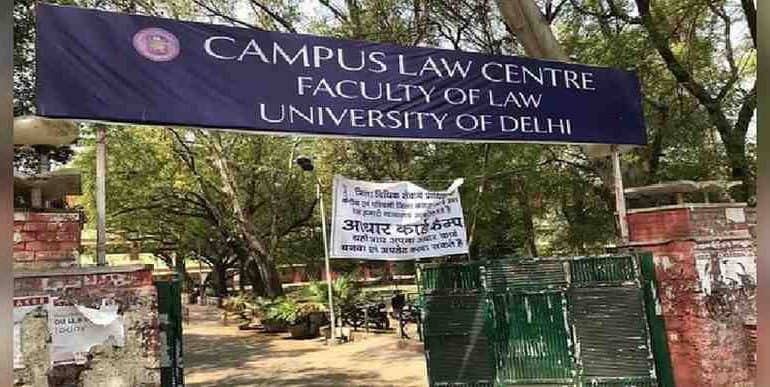
Law Centre II invites submissions for the `National Capital Law Journal 2025’,  its yearly publication, releasing details, guidelines and steps for publication. 

Law Centre II, the widely acclaimed Law School of Delhi University, is back with its annual National Capital Law Journal. The college, being a part of the esteemed Faculty of Law of DU, offers a full-time LLB curriculum. 

The publication of NCLJ began in the year 1996 in an attempt to spark debates on legal issues in our country and to encourage research. It is an endeavour to bring together a diverse group of audience with their shared interest in politics. The journals also carry comments on legal issues, articles, and case comments from renowned researchers and academicians.

The call for papers for NCLJ has officially begun, and interested applicants are requested to adhere to the rules and deadlines for submission. There is no restriction made to any particular field of law, and the papers can be written on any theme of contemporary areas in law and legal education. As the paper is blind peer-reviewed, individual confidentiality is maintained. 

The deadline for submissions is 10th August 2025.

A few instructions from the organisers:-

  • The first page of the manuscript should only contain the title of the paper. The body should begin from the corresponding page.
  • All submissions must be made in .doc or .docx format. No PDF formats will be accepted.
  • Plagiarism of any kind will lead to immediate disqualification.
  • Only the submissions from academicians and professionals will be accepted.
  • The submissions, along with the footnote, should be in Times New Roman and with appropriate spacing.
  • The headings must have uniform formatting.
  • Only in the case of Long and Short Articles, co-authorship of up to 2 authors is allowed.
  • Co-authorship is not allowed for Notes and Comments.
  • Copyright over the published papers should rest only with Law Centre-II.


A Covering Letter is required along with the mailed submission. The Letter should contain the following information:

  • Name and Designation of the author(s).
  • Institutional Affiliation
  • Contact Number
  • Title of Paper
  • Type of Submission
  • A declaration that the work is original and has not been or should not be published to any other journal while under review with Law Centre-II.


Categories for the manuscripts are:-

  • Long Articles- 8,000- 10,000 words, including footnotes.
  • Short Articles- 4,000-6,000 words, including footnotes.
  • Short Note and Case Comment- 2,000- 3,000 words, including footnotes.


The name of the author or institutional affiliation must not be mentioned anywhere in the manuscript to ensure transparency and fairness in the review process.

All submissions must be made to [email protected] along with the subject `Submission of Research Paper’ in accordance with the deadline.


Read Also: DUTA Elections 2025-27: Timeline Revealed for Key Leadership Positions

Featured Image Source- The New Indian Express

Ananya Agarwal

[email protected]

Seven youth activists were allegedly detained without due process, tortured in custody, and later released, raising serious concerns over legality and institutional silence.

Over a span of 11 days in July, seven students and youth activists were detained by the Delhi Police Special Cell in a manner that civil liberties groups allege have amounted to enforced disappearance. The arrests, which began on July 9, have drawn criticism over alleged procedural violations, custodial torture and intimidation, including threats of sexual violence. 

The detained individuals were affiliated with student-led platforms such as the Bhagat Singh Chhatra Ekta Manch and the Forum Against Corporatization and Militarisation.  

On July 9, Delhi Police detained Gurkirat, Gaurav, and Gauraang, members of the Bhagat Singh Chhatra Ekta Manch, without issuing any formal arrest warrants or prior notifications, an action that appears to violate procedural safeguards outlined under Sections 35 and 36 of the BNSS. Two days later, activists Ehtmam-ul Haque and Baadal were also taken into custody under similar circumstances in Delhi.
Samrat Singh, a psychologist and social worker based in Yamunanagar, Haryana, was reportedly picked up from his residence without any involvement from the local police, raising concerns over the legality of cross-jurisdictional action by Delhi authorities. 

While all seven activists were released by July 21, rights groups have said that the circumstances of their detention and treatment in custody merit closer scrutiny. The use of coercion, threats of sexual violence, and blatant disregard for due process remain matters of serious concern. 

Legal groups and those detained allege that the arrests were made without warrants, and that standard procedures—including informing the accused and producing them before a magistrate within 24 hours—were not followed. Family members and legal representatives claim that for several days, they were unaware of the whereabouts of the detainees, effectively making the situation one of enforced disappearance under international human rights norms.  

The Campaign Against State Repression (CASR) said the detentions violated Article 22 of the Constitution, which guarantees the right to be informed of the grounds of arrest and to consult legal counsel. The group also said there was no adherence to the Supreme Court’s D.K. Basu v. State of West Bengal (1997) guidelines, which mandate the preparation of arrest memos and timely communication with families. 

A report by Maktoob Media, based on interviews with the released individuals and legal advocates, stated that several of the detained activists alleged they were subjected to custodial violence, including beatings, electric shocks, and verbal abuse.  

The Bhagat Singh Chhatra Ekta Manch (BSCEM) stated to DU Beat:  

This level of repression with abduction, week-long illegal detention, and custodial torture including electrocution, being forced to strip naked, sexual harassment, heads being dunked into unflushed toilet bowls is not an isolated incident.” 

The statement continued, “These actions reflect the broader crackdown on democratic voices under the Surajkund Scheme, which aims to criminalise and silence all forms of dissent.” 

Among the most serious allegations were threats of sexual violence directed at female detainees, who were allegedly warned they would be raped with rods if they did not comply with police demands. In some cases, activists claimed they were coerced into signing declarations renouncing political involvement or agreeing not to return to Delhi. 

The Campaign Against State Repression (CASR), in its statement, alleged that the treatment meted out to the detainees amounted to sexualised violence and custodial abuse in breach of both Indian legal provisions and international human rights obligations. The group urged the courts to initiate an independent judicial probe into what they described as unlawful detentions, disappearances without disclosure, custodial torture, and gender-based threats made against the activists during their confinement. 

Among the seven detainees, the case of Rudra, a 20-year-old student of Philosophy (Honours) from Zakir Hussain College, Delhi University, has received particular attention. Rudra disappeared shortly after boarding a train to Delhi on July 18. His phone was switched off within hours, and no information about his location surfaced until he was released on July 21. Activist groups say Rudra’s temporary disappearance typifies an emerging tactic of off-the-record detention meant to silence political speech while evading legal scrutiny.  

Twenty-nine civil society and human rights organisations issued a joint statement demanding an independent judicial inquiry into the detentions. The signatories included the People’s Union for Civil Liberties (PUCL), the Association for Protection of Civil Rights (APCR), Women Against Sexual Violence and State Repression (WSS), and student organisations such as AISA, SFI, and BSF. According to a report by Maktoob Media, the statement described the detentions as part of a broader attempt to criminalise student and youth dissent, particularly among those opposing state policy in conflict-affected regions. 

The joint statement urges the need for judicial oversight, accountability for police actions, and an end to the use of preventive detention in such cases. 

The All India Students’ Association (AISA), which led demonstrations in Delhi following the arrests, framed the incident as an alarming expansion of authoritarian practices under the guise of national security. In a statement to DU Beat, spokesperson Anjali said: 

The rapid erosion of civil and democratic rights has only accelerated in recent times as the ‘war against Naxalism’ spreads into cities. Any and all dissenting voices are being hunted and persecuted… This pattern must end immediately and a judicial inquiry must be constituted into the abductions, enforced disappearances, custodial torture, and threats of sexual violence faced by the detained activists.” 

Other campus groups have called on university administrations and the University Grants Commission to take a stand in defence of student rights and institutional autonomy. 

Despite the severity of the allegations, the case has received minimal coverage in major national dailies and television media. Only a handful of independent outlets have documented the timeline of events, first-hand accounts from the activists, and statements from rights organisations. This limited media scrutiny, observers argue, reflects a broader pattern of silence when allegations involve state agencies. 

Lawyers representing the activists have announced plans to seek legal redress, including filing compensation claims and writ petitions questioning the legality of the arrests. These legal proceedings, if admitted, could require the Delhi Police to account for their conduct during the 11-day detention period and explain the apparent procedural lapses.

Simultaneously, rights organisations are exploring formal complaints to the National Human Rights Commission and relevant State Human Rights Commissions.  

According to Maktoob Media,  

“Legal support networks are also preparing to escalate the matter internationally, citing the custodial torture and enforced disappearances as violations of India’s obligations under international human rights law.” 

The detention and alleged torture of Delhi-based youth activists has raised serious questions about the state’s adherence to democratic norms and constitutional protections. While all seven individuals have been released, rights groups argue that the manner of their detention and treatment warrants urgent institutional scrutiny. 

Failure to address these concerns, they warn, could deepen distrust in law enforcement and weaken public confidence in democratic institutions. With civil society seeking accountability, the onus is now on the judiciary and human rights commissions to ensure due process is upheld. 

Also Read: DU Student Activist Missing Amidst Alleged Police Detention, Speculations Spark Concern


Image Credits – Himanshu for DU Beat

Eram Asrar

[email protected]

 

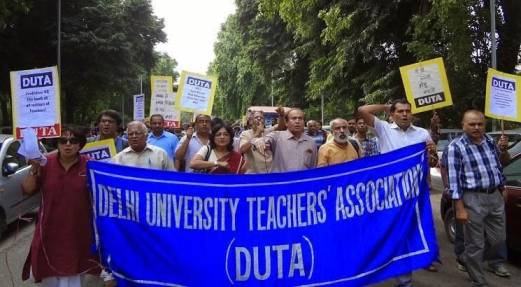
The Delhi University Teachers’ Association announces the official schedule for the election of its next president and executive committee for 2025-2027, outlining the procedures for membership, nominations, voting, and counting. 

The Delhi University Teachers’ Association (DUTA) has officially released the timeline for the forthcoming elections to appoint its 30th president and 15 executive committee members for the 2025-27 term. The announcement was released on 21 July 2025 by the Election Officer, Prof. M. Thirumal, and entails a detailed and structured schedule for the election process, concluding on 4th September 2025.  The last date for DUTA membership registration is currently set for 12th August 2025, at 11:59 p.m. This will be followed by the publication of the draft Electoral Roll on 19th August at 5:00 p.m. Copies of the document will be available for consultation at the DUTA office following the publication. Members can submit objections to the draft Electoral Roll until 5:00 p.m. on 21st August, after which the final Electoral Roll will be released on Saturday, 23rd August, at 2:00 p.m. 

The nomination period will commence on Monday, August 25th, from 2:00 p.m. to 5:30 p.m., and will carry on into Tuesday, August 26th, from 10:00 a.m. to 2:00 p.m. Nomination forms can be collected from the office of the election officer located at the DUTA office or can be obtained from the DUTA website starting from 25th August at 2:00 p.m. The nominations should be placed in the sealed box located at the DUTA office. The deadline for filling nominations is 2:00 p.m. on August 26th, with scrutiny scheduled for 3:00 p.m. the same day. Nominations can be withdrawn until Wednesday, 27th August, at noon, and the official candidate list will be released that same day at 2:00 pm. 

The voting will take place on Thursday, 4th September 2025, between 10:00 a.m. and 5:00 p.m., with the counting of votes starting at 6:00 p.m. Voting will take place at the Arts Building Complex and Satyakam Bhawan, North Campus, Delhi University. Voters are required to show legitimate photo identification provided by their department/college/institution or a photo ID card in the DUTA-approved style to cast their votes. Mobile devices will be prohibited inside the voting booth to maintain the integrity of the electoral process.  With this comprehensive plan, the DUTA reaffirms its dedication to a transparent and well-administered electoral process. The upcoming elections are anticipated to significantly influence the association’s trajectory for the next two years, prioritising academic policy, welfare, and institutional governance within the mandate.


Read Also: Former Delhi University Professor Meenakshi Jain Nominated to Rajya Sabha by the President

Image Source: National Herald

Navya Chandok 

[email protected]


Ambedkar University, Delhi, has initiated the introduction of two new campuses in Delhi’s Rohini and Dheerpur to meet the rising academic demand. 

Dr. B.R. Ambedkar University Delhi is set to introduce two new campuses in Rohini and Dheerpur. The clearance for this infrastructural improvement project was obtained 3 years back. The pre-existing campuses at the moment are located at Kashmere Gate, Karampura, and Lodhi Road.

The new Dheerpur campus is estimated to be 4.95 acres, with a development cost of 1199.12 crore rupees. The location of this campus is near Gandhi Vihar Outer Ring Road and is surrounded by 50 acres of the Dheerpur wetlands. With 176,000 square meters of built area and a 40,500 sqm basement, it is aiming to provide for the footfall of 4500 full-time students and 2000 part-time students in the 1st phase.

Besides the usual facilities, according to the university website, the campus will include an auditorium, a convention center, an exhibition center, seminar and conference facilities, a library, cafeterias, a students’ center, indoor and outdoor sports facilities, a guesthouse, a health center, display and performance areas, a convenience/utility center, and a crèche.

The Rohini Campus, on the other hand, is around 20 acres with a development cost of 1107.56 crore rupees. It is located near Sector 3. The campus will also have all the same facilities as its Dheerpur counterpart, and along with that, it will have seven schools, namely, the Schools of Undergraduate Studies, Liberal Studies, Development Studies, Law, Governance & Citizenship, Business, Public Policy & Social Entrepreneurship, Education Studies, Human Studies and Culture & Creative Expressions.

Both of the new campuses would be meeting GRIHA (Green Rating for Integrated Habitat Assessment) 5 standards. According to the university website, it aims to cater to the best standards in energy, water, and waste management. According to reports, CUES (Centre For Urban Environment and Sustainability) and DDA (Delhi Development Authority) are taking on the development and maintenance of the project.

In a statement, the Vice-Chancellor, Anu Singh Lather said,

The university building that we are functioning out of is a very old heritage building. We have maintained it well, but we will have to move out of here soon. It will take at least a couple of years for the construction of the new campuses to end and for us to relocate


Read Also: Delhi University CSAS UG ADMISSION 2025 – First Allocation List Released; Check Here! 


Image Credits: Dr. B. R. Ambedkar University Delhi Website

Anjali Kumari Jha
[email protected] 

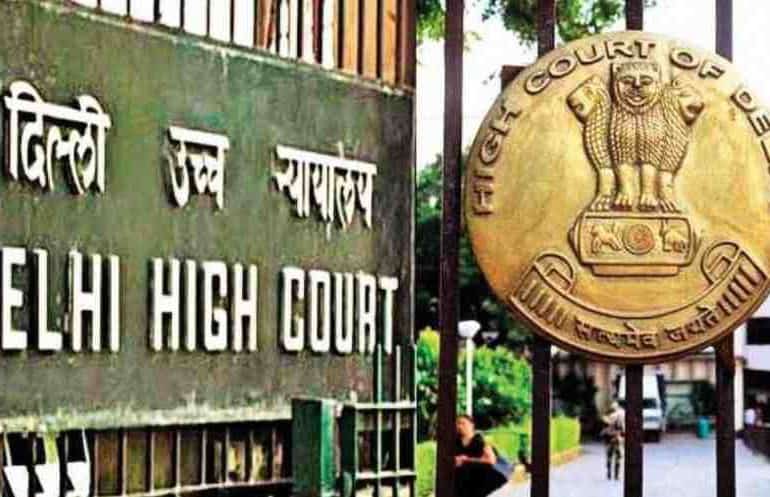
Aditi Rawat, a sports quota candidate, has challenged the alleged failure of the Hindu College administration to comply with Delhi University’s CSAS Policy 2025-26, which mandates a five per cent allocation to ECA/sports quota in each college for every program.

The Delhi High Court, in its hearing on Friday, had demanded an explanation and specifics of the supernumerary quota seat allocation done by the authorities of Hindu College after a petition by a candidate, Aditi Rawat, on the same. 

The petitioner, a gold medalist at CBSE nationals, with the representation of advocate Jeentender Gupta, has argued that based on the number of seats currently offered in the college, it mandates at least 47 seats for ECA/sports quota under Delhi University’s Common Seat Allocation System policy for the session 2025-26, which makes it mandatory for every college to allocate five per cent of the seats in each program to ECA/sports quota. 

However, only 20 seats (equally divided between the categories) were allocated by the college. Additionally, it allocated seats for only three sports, including basketball, cricket, and football. 

The petition states, “Hindu College failed to release even a single seat for lawn tennis in this quota, denying the petitioner her right to be considered for admission in her preferred institution on merit.”

The plea further argues that the college and Delhi University’s authorities cannot unreasonably exclude an internationally recognised sport from the seat matrix.

Justice Vikas Mahajan has ordered the requisite college authorities to reserve a seat under the quota for its academic session of 2025-26 while it decides on the plea.

Read Also: Delhi University CSAS UG ADMISSION 2025 – First Allocation List Released; Check Here!

Featured Image Credits – India Legal 

Divyanshi Dusad 

[email protected]

DU student activist Rudra has been reported missing; fears of illegal detention rise amid reports of custodial torture and police crackdowns on activists.

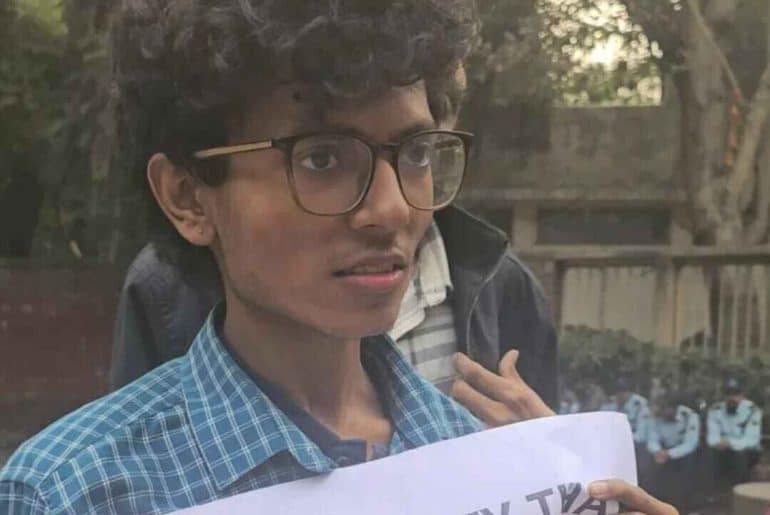
Concerns are mounting over the disappearance of Rudra, a 20-year-old student of Philosophy (Honours) from Zakir Hussain College, Delhi University, who has been untraceable since the morning of July 18, shortly after arriving in the capital. His disappearance follows a disturbing pattern of alleged illegal detentions and custodial torture by the Special Branch of the Delhi Police, involving seven other student activists earlier this month.

According to friends and fellow activists, Rudra boarded the Howrah-New Delhi Duronto Express from Kolkata on July 18. He contacted a friend around 7:40 AM, confirming that he had arrived at the New Delhi Railway Station. That call was his last known communication. Since then, there has been no word from him, and his whereabouts remain unknown.

In an interview with Maktoob Media, Rudra’s friends stated, 

Rudra is a very bright student and a diligent activist who has the best interests of people at heart….. What has been happening is an unprecedented attack on resisting voices, and a direct fascistic attack on democracy.

With no information from the police or authorities, Rudra’s family and comrades fear that he has been detained incommunicado—similar to the six previously missing student activists, who were eventually found to be in police custody days later. These detentions, unacknowledged at the time, have since been linked to allegations of severe custodial torture.

The Campaign Against State Repression (CASR) issued a statement,

While in custody, the activists were subjected to torture that directly violates the right to life and dignity under Article 21 of the Constitution. They were stripped naked, beaten, electrocuted, and subjected to degrading treatment including having their heads submerged in toilet bowls.

The six previously detained individuals include Gurkirat, Gaurav, and Gaurang from bsCEM; Baadal and Ehtemam from Forum Against Corporatization and Militarization; and Samrat, a psychologist from Haryana.

Rudra’s Class Representative issued a statement to DU Beat:

Although he was not very regular to the class, he read a lot. He posted about the articles he read on social media. It seemed like he was affiliated to the communist student activist groups. As CR, I’ve talked to him regarding assignments and tests. He was particularly quiet.

Human rights organisations and student groups have condemned what they describe as an orchestrated crackdown on student activists, involving arbitrary detentions, lack of due process, and third-degree custodial torture. According to multiple reports, the seven released activists were held in undisclosed locations and subjected to degrading and violent treatment.

Currently, any details regarding Rudra’s whereabouts are still awaited. 


Read Also: bsCEM Student Activist Gurkirat Detained by Delhi Police on 16th July: Released Later Same Day 

Image Source: Maktoob Media 


Madhav Choudhary 

[email protected]

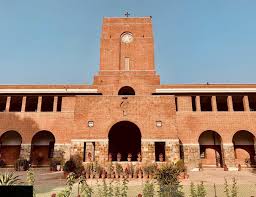
Once an institution known for prolific discourse, intellectually developing excellence, and an exclusive institution of Delhi University, is facing turmoil, the issue is non-compliance with filling out a feedback form.


St. Stephen’s is facing fresh allegations of ‘forms or freedom’ by a bunch of Stephanites. It comes in the face of challenges faced by students from the administration, by withholding their documents and processing any certification, if they do not fill out an IQAC form.  The IQAC student survey form is a part of a routine survey from the Internal Quality Assurance Cell, which is chaired by Professor John Varghese. When asked about the motive behind this survey, a student tells- 

This is the student satisfaction survey that every student is required to fill out. While there is no pressure to fill in good data, the pressure is to fill in the form. Last year as well, students were hounded several times with a reminder to fill in the data. This is because they want to assess each student’s perception of college, and data is the key to control.”


The cell works out in a structured way, as every society consists of these DCS(Data Collection Specialists) who later assess and report the quality of the operations of society and faculty in general, though the data regarding society activities is very minutely accumulated and is followed up by a very anonymous procedure. In terms of faculty, students are asked whether the course is completed timely or not, and how many classes were held for each paper. According to a few students, it is claimed by the authorities that the data helps to augment the academic quality.  The movement hence walks a tightrope that if this survey is going at a cost of depriving students of their official documents, then there is some course correction that needs to be followed.

However, it is said that the same tactic was followed in earlier academic sessions too, to fill the feedback form, students never really came through it. But a persistent insistence on filling the feedback form, which should be a voluntary-based approach, is now being used to threaten the students to do the same for processing any academic-related requests. Though students assure that the academic quality is not compromised, the college remains a safe space for them. This matter holds a vital issue to assess the current situation, especially at an institution that is known to dissent and provide a healthy space for discussion. This is still a developing story. 


Image Credits: St. Stephen’s Instagram page.

Kinjal Sharma

[email protected]