Name: Aman Sablania
College: DelhiCollege of Arts and Commerce
year: 1st year
couse: Journalism(hons)



Who are the Naxalites?
The Naxalites, also sometimes called the Naxals, is a loose term used to define groups waging a violent struggle on behalf of landless labourers and tribal people against landlords and others. The Naxalites say they are fighting oppression and exploitation to create a classless society. Their opponents say the Naxalites are terrorists oppressing people in the name of a class war.
How many Naxalite groups are there?
Many groups operate under different names. The Communist Party of India (Marxist-Leninist) is the political outfit that propagates the Naxalite ideology. There are front organisations and special outfits for specific groups such as the Indian People’s Front.
The two main groups involved in violent activities, besides many factions and smaller outfits, are the People’s War, the group many believe is responsible for the attempt on Naidu, and the Maoist Communist Centre.
Where do they operate?
The most prominent area of operation is a broad swathe across the very heartland of India, often considered the least developed area of this country. The Naxalites operate mostly in the rural and Adivasi areas, often out of the continuous jungles in these regions. Their operations are most prominent in (from North to South) Jharkhand, Chhattisgarh, Madhya Pradesh [ Images ], eastern Maharashtra, the Telengana (northwestern) region of Andhra Pradesh, and western Orissa. It will be seen that these areas are all inland, from the coastline.
The People’s War is active mainly in Andhra Pradesh, western Orissa and eastern Maharashtra while the Maoist Communist Centre is active in Bihar, Jharkhand and northern Chhattisgarh.
Who do they represent?
The Naxalites claim to represent the most oppressed people in India, those who are often left untouched by India’s development and bypassed by the electoral process. Invariably, they are the Adivasis, Dalits, and the poorest of the poor, who work as landless labourers for a pittance, often below India’s mandated minimum wages.
 The criticism against the Naxalites is that despite their ideology, they have over the years become just another terrorist outfit, extorting money from middle-level landowners (since rich landowners invariably buy protection), and worse, even extorting and dominating the lives of the Adivasis and villagers who they claim to represent in the name of providing justice.
Who do the Naxalites target?
Ideologically, the Naxalites claim they are against India as she exists currently. They believe that Indians are still to acquire freedom from hunger and deprivation and that the rich classes — landlords, industrialists, traders, etc — control the means of production. Their final aim is the overthrow of the present system, hence the targeting of politicians, police officers and men, forest contractors, etc.
At a more local level, the Naxalites have invariably targeted landlords in the villages, often claiming protection money from them. Naxalites have also been known to claim ‘tax’ from the Adivasis and landless farmers in areas where their writ runs more than that of the government.
 When did this movement start? How did it get its name?
The earliest manifestation of the movement was the Telengana Struggle in July 1948 (100 years after the Paris Communes were first set up, coining the word Communist). This struggle was based on the ideology of China’s Mao Zedong, with the aim of creating an Indian revolution. Not surprisingly, the ideology remains strong in this region of Andhra Pradesh.
But the Naxalite movement took shape after some members of the Communist Party of India (Marxist) split to form the Communist Party of India (Marxist-Leninist), after the former agreed to participate in elections and form a coalition government in West Bengal. Charu Mazumdar led the split.
On May 25, 1967, in Naxalbari village in Darjeeling district, northern West Bengal, local goons attacked a tribal who had been given land by the courts under the tenancy laws. In retaliation, the tribals attacked landlords and claimed the land. From this ‘Naxalbari Uprising’ came the word Naxalite.
Was it ever popular?
In the late 1960s and early 1970s, the Naxalite movement was popular. There were reports of brilliant students, including from the famed IITs, dropping out of college to join the struggle for the rights of the tribals and landless labourers. But as has been the case with many movements set up with high principles, over the years the Naxalite movement is seen as having lost its vision and having compromised its principles. Nevertheless, the fact that it has an endless supply of men and women joining its ranks shows that many still believe in its cause.
Do the Naxalites face much opposition?
Yes they do, almost from the entire Indian political spectrum. Noticeably, when the Naxalite movement first started in the late sixties in West Bengal, it was the CPI-M that cracked down hardest on the Maoist rebels, with ample support from the Congress at the Centre. At village levels, the Naxalites’ terror tactics have spawned local armies to provide protection to the landlords and others. The most infamous of these is the Ranvir Sena in Bihar and Jharkhand, formed by Bhumihar caste landlords, which kill tribals, Dalits and landless labourers either in retaliation or to enforce their domination.

Author : Chetan Bhagat
Five years ago when Five Point Someone came out I quite fell in love with the book and emailed the author. I must have been among the very early readers of that novel because Chetan Bhagat wrote back to me personally inquiring about the book, and we shared a few emails back and forth.. But when hotmail revamped its mail setup increasing its mail space to 1 GB to catch up with Google ,I lost that mail along with many others. By that time Chetan Bhagat’s second, One Night at a Call Center had come out and it gave me no reason to feel bad for losing my correspondence.
However, after reading his latest book, 2 states: The Story Of My Marriage I am almost tempted to write to his office and request them to dig into the archives and see if they can find my mail and send me a copy. For 2 states comes very close to meeting the bar set by first book. Like Five Point Someone ,this book takes place at another holy Mecca of Indian Higher Education: IIM Ahemdabad. Punjabi guy Krish meets Tamil Brahmin Ananya in the canteen at IIM. She is the “best girl” among the very few girls in their batch. A whirlwind campus romance follows. Then boys parents meet the girl’s and disaster ensues. What follows is a quintessentially Indian tale, somewhat exaggerated and stereotypical at times, of the two young lovers trying to convince their distraught families who care unable to fathom why anyone would want to marry outside their community.
Funny and refreshingly unpretentious it never claims to be much more than what it is: a Hindi Masala book equivalent of Bollywood films. Chetan Bhagat takes good natured digs at Tamil Brahmins and Punjabis , often making fun of the differences between the two communities. His rather unsparingly honest description of his previous profession , investment banking makes an interesting read.
However, the story is quite predictable with some of the plot twists actually being very ridiculous. Also, in many interviews Chetan Bhagat has admitted that he thinks of himself as 90% entertainer and 10% reformer. This reformer side shows up in his references to national integration and unity. This depiction however tends to get a little tacky.
Like Five Point Someone, this book also draws a lot from his own life, with Bhagat even discussing the unhappy circumstances of his parents’ marriage. How long will he be able to continue drawing from his life? Not much longer, it seems. Am I going to write to his office? Not yet, but maybe with the release of his next book .
At just 95 bucks a copy it is worth a shot.
Celebrated on the 31st of October, Halloween is a much anticipated festival in Western countries but has yet to make a mark in India. It supposedly has its origins in an ancient Gaelic festival called Samhain, roughly translated to mean “summer’s end”. On this day, the borders between this world and the Otherworld were believed to become thin, allowing spirits to pass through them and enter the world of the living. To ward off evil spirits, people would wear masks and costumes which would later inspire the elaborate fancy-dress parties that are now intrinsic to Halloween celebrations. The term itself was originally spelt as Hallowe’en, short for All Hallows’ Evening, which we now know as All Saint’s Day. Though Halloween precedes All Saints’ Day by a day presently, there was a time when both events used to take place on the same day. In fact, Halloween used to be celebrated on May 13th but the date was shifted to November 1st to coincide with the Christian festival of All Saints’ Day by the Church in an effort to dilute the pagan connotations.
The Jack-o’-lantern was initially a device to scare off evil spirits like the costumes and masks. The ancient Celts believed the head to be the most powerful part of the body since it contained the spirit and the body and hence, would place skeletons carved out of the “head” of vegetables like turnips and rutabaga on their window sills to protect themselves from ghosts.
The popular custom of “trick or treat” has surprisingly grave origins. It is possibly inspired by the practice of “souling” which was practiced in the Middle Ages by poor people who would go door to door and receive food in return for prayers for the dead on All Souls’ Day. The custom firmly established itself with Walt Disney portraying it in their cartoon. Later on, UNICEF even conducted a national campaign in US for children to raise funds while doing the rounds on Halloween, asking for “trick or treat”.
Read on to know more!
DAY1: 24TH SEPTEMBER
English play prelims
Blitzkrieg prelims (the annual rock show)
DAY 2: 25TH SEPTEMBER
Western solo prelims
Eastern instrumental
Classical solo
Street play prelims
Mr. and Ms.Rendezvous
Hindi play finals
Quiz
Clash of the titans (English debate) prelims
DAY 3: 26TH SEPTEMBER
Eastern solo prelims
Western group song
Street play finals
Western instrumental
DAY 4: 27TH SEPTEMBER
Kombat, the general quiz
Fusion band competition
Eastern solo and group finals
English Debate finals
The Second Annual Vinod Chowdhury Debate, organized by the Economics Society, was held on the 3rd and 4th of September at St. Stephens College.
The close-ended motion for the Preliminary Debate was: ‘This house believes that economics makes rational fools of men’. There were 26 speakers from various colleges including SRCC, Hansraj, LSR, Miranda House, Kirori Mal and DSE.
The motion for the Final competition was: “This house believes that small things are beautiful”, this topic to be engaged with only in relation to Economics. The judges were Ms. Das and Ms. Somnathan, both Professors at Delhi School of Economics.
Results:
1st: Vishwajoy of Ramjas College, who spoke for lower taxes on cigarettes
2nd: Gagandeep, from DSE
3rd: Prithvi and Anwesha of St. Stephen’s College
As part of an international campaign to free the apprehended Burmese leader, Daw Aung San Suu Kyi, Lady Sri Ram College organized a series of events to enhance the impact of the campaign. Aung San, who happens to be a distinguished alumna of the college (1964), has been imprisoned many times in course of her struggle for a free and democratic Burma.
In order to celebrate this indomitable spirit , LSR organized an exclusive screening of the film ‘Burma VJ: Reporting from a close country’, which through it’s hard hitting visuals and singular footage strongly reflected the difficult fight for democracy in Burma. The screening was accompanied by a panel discussion which saw participation from some of the most eminent personalities including G Parthasarthy, distinguished diplomat; Jaya Jaitly, political and social activist; Ravi Nair, human rights activist and Sagarika Ghoshe, TV anchor who acted as the mediator for the event.
Dr. Meenaxi Gopinath in her welcome address said, “We feel empowered by the struggle of this illustrious alumna for democracy and human rights in Burma.”
Parthasarthy expressed the need for international pressure to solve the Burmese issue- “ We have to work with others in the world, we have to persuade ASEAN.” Jaya Jaitly stressed on the effectiveness of independent action from each nation by means of a letter to the UN Secretary General. Introspection and suggestions for the future formed a part of Ravi Nair’s opinion, who further went on to muse over how the world should deal with generals who had no “eyesight, insight or foresight”.
Also present were Burmese monks Ashin Pannasiri, one of the many mistreated at the hands of the military and who had to escape from jail; Ashin Thavara, who featured in the above mentioned movie ‘Burma VJ’ and Thin Thin Aung from the Women’s League of Burma. Ashin Pannasiri’s version of the famous Saffron Uprising of 2007 deeply touched and inspired the audience.
LSR organized an essay writing competition based on Aung San Suu Kyi and a cross country race for her release. The Cross Country which was held on the 28th of August saw the participation of over 600 students.
A message from Dalai Lama to LSR said,” I am happy to learn of LSR’s initiative. It is my hope that Ms Aung San Suu Kyi will not be kept captive for long and that under her leadership the people of Burma will soon achieve their aspirations for which she worked so hard and so courageously.”
Lady Sri Ram College proudly celebrated the struggle of a woman who symbolizes democracy and is an epitome of courage and values. It held this event with the hope that the world will unite in this fight for justice and see participation from the youth, just as Aung San Suu Kyi herself participated in the struggle to alter the lives of millions!
As told to Pragya Mukherjee
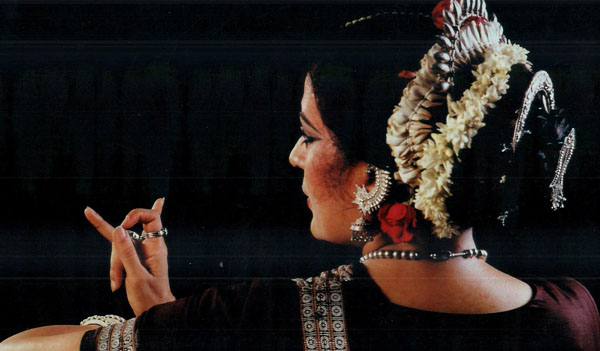
Sonal Mansingh, the internationally acclaimed danseuse proficient in various dance forms be ranging from Bharatnatyam, which comprised her debut performance-arangatram and first raised her to heights of fame, to chauu and Odissi, has performed before the highest dignitaries all over the world and her art has won her the highest of accolades including Padma Bhushan (1992), Sangeet Natak Akademi Award (1987) and the Padma Vibhushan in 2003, conferring on her the honour of being the first woman dancer in India to receive this award. However her tremendous achievements are not merely a result of talent but of tremendous grit and dedication to her craft. Her passion for dance was such as to make her run away from home in order to be able to continue to pursue dance as a career. She spent long years training under great luminaries in the filed of dance such as Prof U.S. Krishna Rao and Chandrabhaga Devi and later Guru Kelucharan Mohapatra who was the one to train her in Odissi.
Her sterling resilience was tested to the limit when during a car accident in Germany her spinal cord was injured and her legs lost their function. However this was when chiropractor Pierre Gravel gave her new hope by announcing she may be able to dance again. Living with this hope she made a complete recovery and within a year she was able to successfully perform to a full house.
Sonal Mansingh has been elected a member of the Executive Board and General Council of Sangeet Natak Akademi, National Cultural Fund, Ministry of Culture. More recently she has been appointed a trustee of the largest institution in India, the Indira Gandhi National Centre for the Arts (IGNCA). In 1977 she founded the Delhi based Centre for Indian Classical Dances (CICD) which has produced numerous stage productions and been the training grounds of many notable artists today.
This legendary dancer’s passion for her art should be an example for all. Here’s a short tete-a-tete with the legend herself.
DuBeat: What inspired you to take up dance as a profession?
SM: I am from a political family. My grandfather, Mangal Das Pakwasa, was one of the first five Governors of India. My grandfather and both my parents were greatly interested in the arts and so famous artists would often come and perform at our house. I grew up among these artists and naturally grew an interest in it.
DuBeat: Was dance still not considered respectable enough that you had to run away to pursue it?
SM: Dancing and dancers had a negative connotation in those days and this prejudice hasn’t entirely died down even now. Dancing is still a problematic profession for some packets of society.
DUBeat: Wasn’t it difficult to steel yourself to run away? How were you able to make such a big decision?
SM: It wasn’t a hard decision to make. This is something I try to make my students understand as well. If you really do something with a passion nothing and no one can get in your way. You only realize you made a choice in hindsight but at that time nothing else really seemed to matter.
DUBeat: How did you develop an interest in Odissi?
SM: It was under Guru Kelucharan Mahapatra that I discovered Odissi and how much it needed to grow. At the time Odissi had a limiter repertoire so we began researching all aspects of it- performance, art and tradition. This was when I started learning Chau as well.
DUBeat: What was your reaction to the famous documentary film made on you by Prakash Jha?
SM: Oh he did a wonderful job! But now he can make a new one, so much has happened since (laughs)
DUBeat: Do you feel the youth today is losing interest in Indian Classical Dance?
SM: I wouldn’t say that. I still meet a lot of passionate youngsters interested in classical dance. However if interest is digressing into other newer forms of dance it is perfectly all right. It’s really all up to individual choice and what you consider to be enriching or fulfilling for you.
DUBeat: Any message for our readers?
SM: Be passionate about what you do and never lose sight of your principles. I don’t wish to generalize but there are youngsters one hears of with a callous attitude who carelessly crush people on the pavement or show similar disregard for the lives and problems of others. This insensitive attitude has to change. There are of course many young people who are passionate about change and keen to make a difference but there are also those who take life lying down. Always keep with you a strong sense of values and learn to be compassionate.
Trapped
Midst Thanatos and Eros
This Yellow Laburnum wilts.
But Slowly steady
it’s Sun
Approaches.
These, the days
Grow hotter
And stronger.
The force of
A bull.
The heat of
An anghiti.
The Laburnums bloom
Strident yellow
Fiery fire.
Matched
Pace to heat.
A Hectoring Blaze!
O do unto me
As the Summer Sun
Does to the Laburnum!
Scorching Passion,
A flaming emotion.
With tongues of red
And fingers orange!
Ablaze as Indra on a
Cloud alights.
So bloom my petals.
They bleed fire!
And trails of Red
The fingers of desire.
I rake them
down your blazing back!
A scream
Of sweat.
Each droplet drenched
In withering passion.
Consume
In your blaze
My burnished blooms.
Feed That fire!
And In some
Sultry moment.
As a stallion lost
On a wild charge!
I’d open my being.
And with burning
Yellow laburnums
Scream!
Your name.
Scene was sorted, some had snorted
Some writhed in newfound ecstasy,
Some indulged in drunken revelry,
While the rest just wandered in gay abandon
An acid laughter at the peak of incision
The green of it all was stark to the vision
Instruments all around, Alterations in bulk
A livewire played in the ear, distant hypnotic beats
They came for a different perspective
A different dose, I believe
Good or bad, who are we to decide?
For them, it could pass off as Heaven