Author

DU Beat

Browsing

Much like the Dark Knight who silently overlooks the city of Gotham in the dark recesses of the night, the volunteers of Friendicoes at Lady Shri Ram College care for the animal life on campus when nobody is looking. In talks with the volunteers, we discovered that this NGO not only feeds the “stray” animals but also looks after their immunisation and sanitation.

A first year volunteer, Khushi, explains that the dogs and cats on campus are fed twice a day- with a rotational duty list, the volunteers ensure that all dogs are given Pedigree, milk, bread and water according to their individual dietary requirements. In addition to the food, these animals are bathed at regular intervals and are made to wear collars- the best part, these collars come in a range of neon colours, the hues of pink and orange that complement their shiny coats perfectly.

A recent event showcases the concern and love the volunteers have for the dogs in LSR. A dog who gave birth has been given a small, shady area to make sure she is not disturbed by the footfall and the daily college chaos. Understanding that a new mother is overly protective of her pups, the volunteers have cut off the area ensuring the safety of both the students and the mother.

When asked why they chose to work with Friendicoes , when it had an additional requirement to be vaccinated for Rabies, a condition that scares off most students, the volunteers promptly answered- “for the love of animals”. To these brave students, the so called “stray” animals are not simply animals found on the street , but lives that deserve attention and protection. They firmly believe that it is every single individual’s responsibility to help and care for those who cannot fend for themselves- animals and humans alike.

These courageous humanitarians are bold and conscientious, fulfilling their responsibility in every way possible. After all, it is the silent crusader who works tirelessly behind the scenes and saves the city, when the citizens are fast asleep, dreaming of a better tomorrow.

Image credits: Friendicoes’ Facebook page

Anahita Sahu

If you’ve seen American shows or sitcoms, the craze and hype of Halloween won’t be a notion alien to you. If you haven’t, you shall still be apprised with the basic gist of the huge occasion October 31st is. And if you still don’t have a clue about what we’re talking about, chances are you’re living under a rock.

With the advent of the notion of globalization and the world becoming a ‘global village,’ traditions and values of the diversified hues are being adopted regardless of the geographical borders. Commendable, won’t you say? The fluidity of festivals is a worthy example and an idea with bright potential. While pondering over these noble and mighty ideas, one would wonder about the insertion of American celebrations, say Halloween, in the Indian culture; the more, the merrier, right? It’s not so simple.

Spooky pumpkins, ridiculous costumes and over-the-top makeup, trick or treating for children and themed parties for the adults, the story of Halloween runs deeply in the Western culture. But this story shall be subjected to a few technical and intellectual difficulties in the Indian counterpart for some painfully valid reasons.

  1. The trick or treating: Lol. India Mein?

There is only one rule which dominates the rule book of Halloween: children are supposed to ask for either treats or tricks from the houses they choose to knock on. Once you’ve absorbed the concept, try to picture this imagery in the Indian context. Firstly, as kids, the idea of not talking to strangers/taking things from strangers is hammered into our brains for blatant reasons. Secondly, the traditional rule takes place in the hours of an evening, and well, we all know how safe the streets of India are once the sun sets. The whole placement of children asking for trick or treat, hopping between homes can’t be executed for essential safety reasons. The parental philosophy paradox could not be more relevant here! Thus, one brick of the Jenga falls.

  1. The ‘Dress to Success’ Concept: Future ki Kahani, Halloween ke zubaani?

Myriad people, myriad mind-sets. Generalization is an abominable sin, but that doesn’t stop us from highlighting the sectional plight. We all know the formidable tales of Sharma ji ka beta and our dearest Pappu. To some extent, the minds of Indian parents still hover around the ‘successful’ careers of medicine and engineering. Halloween will just be another fancy dress competition where the kids will be reflections of the future their parents visualized for them. A Halloween with a motley of costumes: some with lab coats and lawyer robes, and some in superhero costumes. And here stands the purpose of Halloween defeated!

  1. The Intolerant India: Nahi, aapne pehen kaise liya?

The Intolerance debate became the favourite newspaper headline for the media for a loooong time. And a little momentum of the debate holds relevance in the Halloween modalities too. Fancy this: someone wearing the costume of a respectable figure, indulging in smoking/drinking. Such a scenario would seem minuscule to the young blood, but it sure has the potential to freeze a conventional street and make the dresser the victim of harassment. To talk about the restrictions surrounding the female dress code and the ogling that would invite, well, let’s not pull that string. Loyalty to figure and orthodox ideas run deep in the country, giving everyone a shade of intolerance and further hampering the creative streak of the Halloween celebration.

  1. The Notion Fallacy: Kaunsa amusement?

Diwali is the festival of lights. Holi is the festival of colours. Thanksgiving is the festival of gratitude. And Halloween is the festival which celebrates horror and everything spooky (hint: the pumpkins). Lights, colours, gratitude, are diametrically related to the spreading of horror in the community. Think of the gory and abhorrent ‘tricks’ people would commit in the name of Halloween; the Indian community is that unpredictable.

  1. The Market of Festivals: Bhaiya, aur kitne?

CBSE Political Science books taught us the importance of diversity in our country. This diversity lends us a colourful flavour to the cultural hemisphere, with a plethora of festivities lining up to be celebrated. With an average of two-three festivals per month booking up our calendar schedules, do we need one more to crowd our holidays? Specially the month of October which brings the celebration of Durga Pujo, Dussehra, Diwali back to back, the idea of another festival succeeding Diwali times indeed sounds less favourable and extremely tiring.

Colourful candies, orange pumpkins, shades of costumes flooding the streets under the black night; can the horror and fun of Halloween float through the Indian minds? Candy for thought!

Saumya Kalia
[email protected]

Image Credits: history.com

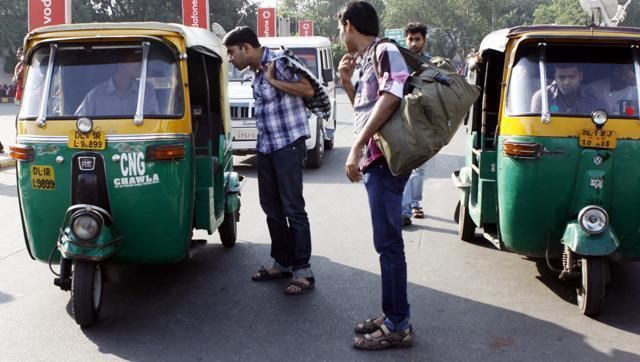
Travelling by autos is an integral part of college’s commuting process for a large number of students. Be it door-to-door travelling or as a connector between metro station and the college. These autos usually operate on a sharing basis and drop you at your college gate for a small fare of Rs 10-Rs 30, acting as a crucial medium of last mile connectivity.

However, with app-based cab services like Uber and Ola, the business of these auto drivers seems to be in jeopardy. Especially with Uber giving promotional discounts of up-to Rs.50, a large number of students have started taking these cabs instead of the autos.

These cabs are air conditioned, the drivers do not demand more or less than the meter-generated amount, they do not refuse going someplace else just because there is traffic and you can find a cab for yourself anytime and anywhere by just moving your finger on your phone – giving students plenty of reasons to use these cabs.

Therefore, the auto-rickshaw associations, feeling threatened, decided to have strikes and demanded the government to ban these app based services in return. Besides this, these associations weren’t even letting the cab drivers enter many of their areas leaving the last mile connectivity system in a mess. As a result, the students could neither get an auto nor a cab. Many of them were even seen walking miles or asking for lifts to their college.

The idea of going on a strike doesn’t seem to be justified from the consumer’s perspective as this entire thing is all about evolution of business. The one who provides better services at lower prices, survives in the market. Even though India is a mixed economy, the transportation sector has already been opened for private players and besides that, their operation, too, would be well-regulated by the government making sure they do not exploit the customer. For instance, surge pricing by Uber and Ola was asked to be removed during the odd even days.

Thus, the possibility of getting these app based cab services stopped seems quite bleak. Still, it’s for the time to tell how things would unfold. Meanwhile, students should be prepared of standing at the metro station and being absolutely clueless about how to reach college.

Image Credits: Hindustan Times

Aditya Narang

[email protected]

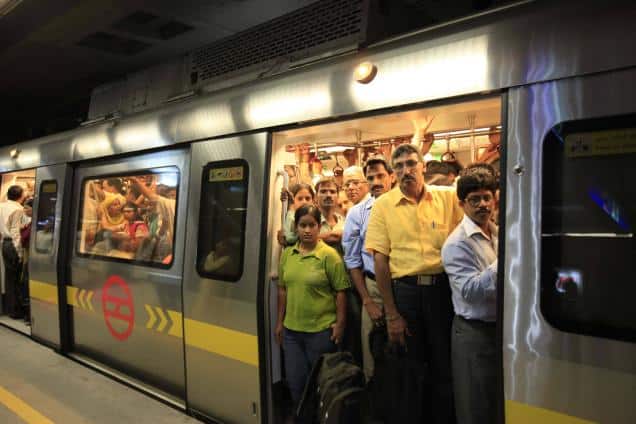
As students of Delhi University, we tend to spend a lot of time, travelling to and fro between college and home and more often than not, majority of us prefer taking the metro. Compared to other means of commuting, Delhi Metro is cleaner, air conditioned, convenient and provides a quick service eliminating the possibility of getting stuck in hour-long road traffic jams.

Apart from this, a large number of colleges are in close proximity to the metro stations and are usually not more than a 5 minute auto ride from them. However, considering such huge volumes of people travelling through the metro, it acts as a nice place for pick pockets to operate. Gone are the days when only Jewelry and Purses were the only things susceptible to get stolen. The smart phone revolution has compelled everyone to own a smartphone for themselves, which on an average, is no less than Rs.6000, hence making them a lucrative item to steal.

Sadly, I have been a victim of the same and lost my mobile phone while travelling from Vishwavidyalaya to Laxmi Nagar metro station. Like anyone who lost their cell phone, would do, I got a complaint registered on the lost and found section of Delhi police online portal and submitted a copy of the same at Yamuna Bank police station. Days went by, and eventually I lost all hope of getting my cell phone back.

Interestingly, a few days later, I had the opportunity to speak to a policeman in my vicinity about the same and he, in the course of our conversation explained the negligible possibility of anyone getting their stolen phone back, once lost in the metro.

He said, that these pick pockets operate in a group of 3-5 people and generally spot their target beforehand which is usually when they see someone using their phone. Once that has been done, one of them distracts the victim by slightly pushing while the other person gets the phone out of the pocket while the victim is distracted and hands it over to the third person standing behind so as to prevent getting caught. They usually target students, travelling with their friends/boyfriend/girlfriend as they tend to be less alert and ‘distracted’ (of course).

Once that has been done, they immediately switch the phone off, making it difficult to track the phone even if you have the IMEI number. After that, they get off the metro, take the phone to repairing hubs like Gaffar Market and get the IMEI number tampered. Once that is done, it is almost impossible to track the phone. It is however necessary to get the police complaint registered so as to make sure that the stolen phone is not misused.

Cell phone theft, apart from the monetary loss, also at times causes a huge of loss of data including important documents and memorable pictures. Therefore, it is very important to have your data backed up. Nevertheless, being conscious and alert about your belongings can prove to be really beneficial and save you from a rather heartbreaking (and a pocket-aching) loss.

Image credits: The Hindu

Aditya Narang

[email protected]

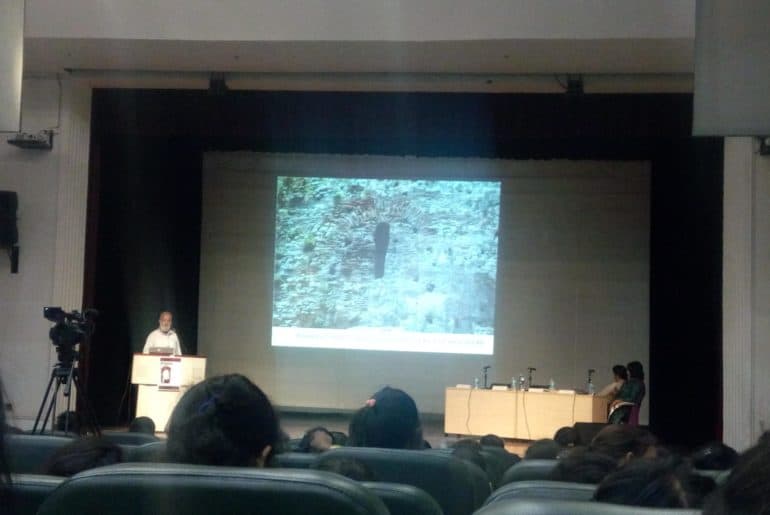
The Centre for Inter-Disciplinary Studies, Indraprastha College for Women (IPCW); organised a Conference on “Dilli: Perspectives on Delhi” on October 6, 2016. The College hosted speakers with years of experience in the study of various aspects of Delhi. Encompassing issues from Ancient Delhi Architecture to Makeshift Bazaars, the event gave deep insights into the capital city’s cultural understanding.

The first session, with the theme – Delhi’s Cultural Heritage opened with the Delhi Heritage virtuoso, Mr. Sohail Hashmi’s presentation. His address included an in depth historical explanation of Delhi’s architectural and religious culture He also put forth and attempted to break certain myths attached to Islamic architecture. The second speaker, Ms. Fauzia, an expert in Old Delhi Culture; familiarised the audience to ‘Dilli ke lehaze’– the long lost linguistic culture of Old Delhi.

Centered at ‘Equitable Access to Delhi’s Resources’, the second session witnessed speakers Mr. Ashutosh, Spokesperson of AAP and filmmaker Mr. Shaunak Sen presenting some eye-opening realities of the Delhi’s common man. Mr. Ashutosh, in conversation with Ms. Poornima Joshi, political editor, the Hindu; discussed the Delhi Government’s efforts in improving health, education and the bijli-pani concerns of the populace. Filmmaker, Shaunak Sen, on the other hand, presented clips from his documentary, ‘Cities of Sleep’ highlighting the issue of sleep shelters in various parts of Delhi. The screening was followed by a discussion on the issues highlighted.

The post lunch session with the theme –‘The Tragedy of Delhi’s Commons’ had Mr. Manoj Kumar Mishra; who has been working for the cause of reviving River Yamuna for over a decade, present to the audience, the miserable condition of the River through a series of slides. He also pointed out the possible solutions to revive the Lifeline of the city. The next speaker; Dr. Sunil Kumar, Professor at the Department of History, University of Delhi, talked about ‘The Medieval History of Saket region ‘. He also elaborated on the geographical history of the water bodies in the Lashkargah and Quila Rai Pithora area.

Towards the last session of the Conference, speakers Mohammad Sayeed, Ms. Samprati Pani and Mr. William F. Stafford focused on issues that lay close to the common man, ‘Making Space in Delhi: Ethnographic Explorations’. Speaker Mohammad Sayeed threw light on the issue of unauthorized housing and its consequences in particular areas of the city. Ms. Samprati Pani, highlighted the culture of Makeshift Bazaars in Delhi, their modern face and their influence on the life of Delhi commons. As the last speaker of the session, William F. Stafford discussed about the convergence of modes of transportation. He further talked about the common mode of transport, the auto rickshaw, as a symbol to understand public transactions.

The first Conference, from Series 1 of ‘Dilli: Perspectives on Delhi’ came to its close, with a vote of thanks by the College fraternity to the guest Speakers.

Image Credits
Priyal Khattar

Priyal Khattar
[email protected]

If we look around the world today, it seems like peace has become a long dream for some people in their countries. Air Strikes, religious wars, terror strikes and bomb blasts- all of these makes us want to remember a man who taught us the lessons of non-violence and peace, for the world to follow.

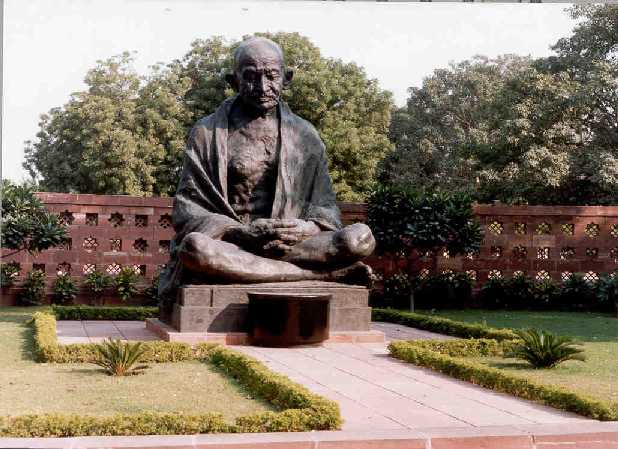
Mohandas Karamchand Gandhi, who is known as Mahatma Gandhi or also fondly as “Bapu” was one of the most prominent faces of the freedom struggle in India. A master strategist, he formulated several unique ways to unite Indians for the cause against British rule. Sunil Khilnani, the professor of Politics and Director of King’s College London India Institute remarked “Steve Jobs should have learnt from Gandhi about how to build a perfect brand of oneself.”

A mass leader, he had such a great following that on one single call, the whole nation used to unite and walk behind him, following his lead. Be it during the Champaran movement, Kheda Satyagraha or Quit India movement, Gandhi made sure that the entire country was with him. So powerful was his message of non-violence that even today he is followed by powerful leaders like Barack Obama and Nelson Mandela. So phenomenal was his contribution to our freedom that no political party has critiqued him any sense ever since we gained independence, unlike other freedom fighters like Jawaharlal Nehru and Bhagat Singh, who too, found themselves in various debates of political battles.

With the education system in India battling today to create skilled professionals and our society and parents in a frenzy to create the next generation of engineers and doctors, we should revisit what views Gandhi had on education. His views focused on the fact that education should never be a means to achieve status, position or earn money, rather it should be the means to bring freedom to individuals. He focused on an education that aimed at holistic development of mind and body.

As the incumbent government rolls out the national educational policy 2016, holistic development of a human, discouraging rote learning, and inculcating compassion for others are just few pages that it can pick up from Gandhi’s life to shape the future generation. A simple look at our newspaper says why we need to remember the story of Gandhi. As cases of road rage, Dalit atrocities and religious intolerance covers major media space today, we should learn from the man who served leprosy patients at his time.

The idea of Gandhi is not an all well story. Often Gandhi and his works are taught in such a way in schools across our country that he is portrayed as a saint. The way Gandhi overshadows the freedom struggle over other leaders in Indian School textbooks is something not many people approve of. He is also criticized for not being able to stop the partition of India and Pakistan. A lot of people today joke the concept of ‘if you are slapped by your enemy on one cheek, show your other cheek’ which drew its inspiration from Gandhi’s message of winning your enemy with love rather than war. Today he has been reduced to a mere symbol of freedom struggle for the masses and the government through its huge advertisements on his birthday every year. He is also criticised by some people for promoting racism and the practice of caste system in India and South Africa.

As we all observe the 147th birth anniversary of one of the greatest human beings on the planet, we shouldn’t forget this philosopher who gave the mighty British Empire a tough fight with his weapons of Satyagraha and non-violence. With growing tensions in the South Asian neighborhood, unrest in Middle East countries and tussles within the major superpowers, we don’t know about what is going to happen in the near future. Even in this uncertainty, we are very certain that Gandhi is an idea which is not going to die any time soon in this century, and we hope that it never does.

Image Credits: www.rajyasabha.nic.in

Srivedant Kar

[email protected]

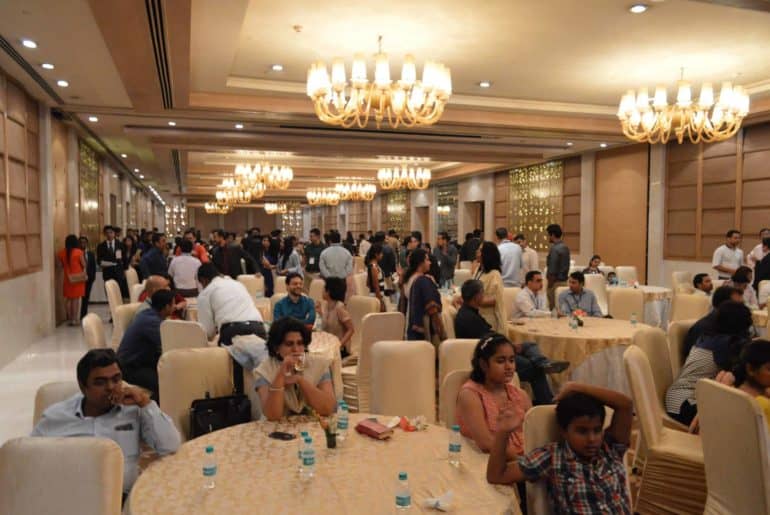
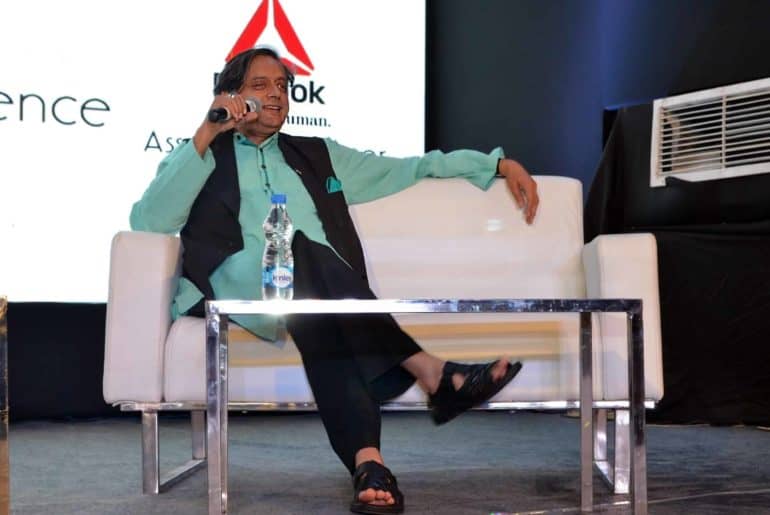
The students of Department of Commerce, Delhi School of Economics, organized their Annual Alumni Dinner, Reminiscence 2016, on Saturday, 17th September, 2016, at Hotel Radisson Blu, Dwarka, New Delhi. The event was a huge success, and witnessed a total participation of more than 300 people, including the faculty, alumni and students of the College. The Chief Guest of the event was the Honorable Member of Parliament from West Delhi Lok Sabha Constituency, Mr Parvesh Sahib Singh Verma.

dse alumni dinner

The event started at 7pm in the evening, with the lighting of the lamp by Prof. Kavita Sharma, Head of Department of Commerce, Delhi School of Economic. Thereafter, an enlightening welcome speech was given by Prof. Kavita Sharma, followed by melodious singing by Soumya, a MBA (HRD) student. Then the course coordinator of MBA (IB), Dr Ashish Chandra addressed the audience and was followed by felicitation of distinguished senior alumni of MBA-HRD (MHROD) and MBA-IB (MIB), who are serving in some of the top corporates and have made the department proud.

This was followed by a power-packed singing performance by Poojan, a MBA (IB) student. The students also gave an invigorating dance performance to entertain the guests and the fellow students. Later, a troupe of Sufi performers enthralled the audience with their melody. An alumnus of MBA (HRD), Mr Kushal Dubey, charged the audience with his solo singing. The session culminated with a vote of thanks by Dr Urvashi Sharma, course coordinator of MBA (HRD) followed by speeches of student Conveners of Alumni Teams of MBA(HRD) and MBA(IB).

alumni dinner dse

Dinner was served at 9:30 PM. All the alumni of the college and the students, as well as faculty, had a healthy interaction over dinner. Reminiscence is an annual affair, and every year, students, faculty and alumni of the college gather over dinner in order to interact and catch up with each other as well as the happenings in the college


In a season where vector-borne diseases are spreading like wildfire, DUB tells you how to be cautious without compromising on your fashion ideals!

Every year during this period of the year, newspapers get flooded with cases related to dengue and chikungunya in the city. As political battles are drawn with blame game and municipal authorities go on a disaster control mode against these diseases, we bring to you what all you need to know and do to stay safe.

Dengue and Chikungunya are viral diseases which are spread by Aedes mosquitos. According to the Centers for Disease Control and Prevention (CDC), the primary symptom of dengue is high fever, which occurs with at least two of the following symptoms: severe headache, severe eye pain, joint, muscle or bone pain, rash, mild bleeding from the nose or the gums, small spots caused by bleeding into the skin, and low white cell count. Chikungunya symptoms include high fever, severe joint pain, joint swellings, muscle pain, head-aches and rashes. It is mostly non-fatal.

You should follow certain precautions for prevention of these diseases:

  • Get plenty of rest
  • Consume fluids
  • Get tested immediately if any of the above symptoms manifest themselves.
  • Use mosquito nets at home
  • Dab on mosquito repellant before leaving home
    Fashion tip: The market today is flooded with wonderfully fragrant repellant sprays and creams which can doubly perform the job of a perfume or deodorant spray
  • Wear long sleeves and pants to avoid being bitten.
    Fashion tip: Experiment with prints like plaids, stripes, polka dots and florals in terms of long sleeve shirts. Keeping your legs fully covered need not necessarily entail boring denim jeans as palazzos, long skirts and pajamas can be viable options too!
  • Keep your surroundings clean, and dispose of waste regularly.
  • Aedes mosquitoes – which transmit both dengue and chikungunya – breed in clean water so don’t let water stagnate anywhere in or near your home.
  • Mosquitos are attracted to dark colours, so avoid wearing dark-coloured clothes.
    Fashion tip: Bring out those pretty pastels and whites while you still can. Come winter, you’ll anyway be stuck with greys, blacks and maroons!
  • Don’t wear tight clothes, for mosquitoes find it easier to bite through tight-fitting garments.
    Fashion tip: Opt for Pakistani kurtis, maxi dresses, oversized tees, sport jerseys and boyfriend jeans and make a statement while still being safe!

 FEATURED IMAGE CREDITS: www.smh.com.au


Srivedant Kar
[email protected]
Kriti Sharma
[email protected]


In the last ten years, the Vayam Performing Arts Society has been steadily growing and expanding its scope, gaining for itself both recognition and experience. What began as an idea in the canteen of Delhi University’s Shivaji College in 2006 has now over 500 productions and 180 awards and special performances to its name. And Vayam’s name, a Sanskrit word that translates to “we”, carries within itself the ideas that society hopes to embody – togetherness, social empowerment and integrity.

Expanding its scope further, Vayam organized a ten-day- long confluence of varied art forms and artists in March this year titled “Malang – The Performing Arts Festival”. Taking the initiative of promotion of artists and art forms forward, the society recently staged their much appreciated theatrical production ‘Syaahi’ at Akshara Theater in Delhi.

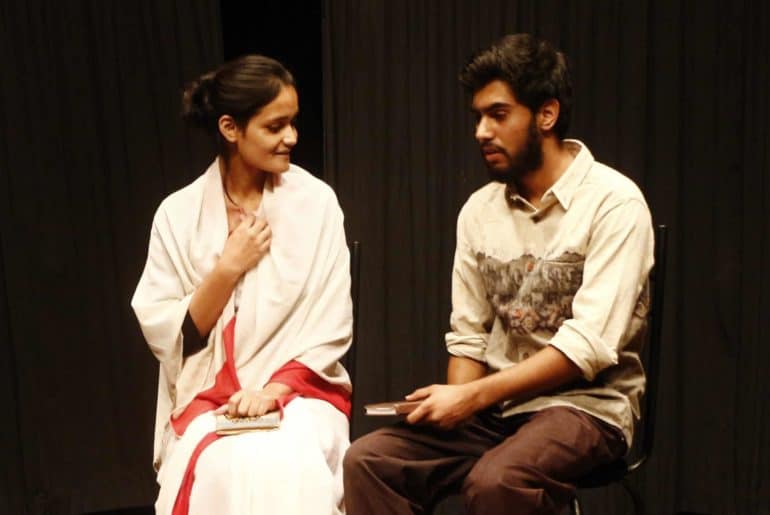
The plot of ‘Syaahi’ is an amalgamation of three stories – ‘Gidhade’, ‘Kutte’ and ‘Sakharam Binder’ by the renowned Indian playwright, Vijay Tendulkar. It is not exactly an adaptation of any of the stories. Rather, the characters and instances of the stories have been used to carve out a script which appears to be an excellent confluence of a few extracts of these plays. The three plays are cushioned with a fictional story that runs as the plot line.

_mg_3321

‘Syaahi’ is a fiction drawn on the canvas of factual instances. It tells the story of a budding writer whose writings are criticised, demeaned, denounced, and declared inappropriate. The writer digs up his life and brings out the darkest events to the pages. The book marks a huge success in his career and the writer emerges to be a potential source of income to the publisher. The publisher, in order to earn more profit, suggests that he pens down his own life. As the play progresses, we see him getting caught in his own writings; struggling between realism and surrealism. The writer intertwines his life and his writings to such an extent that ultimately he ends up destroying his own writings.

img_0839

The actors of the play do a brilliant job of infusing authenticity and credibility into the story. Each scene of the play is intertwined beautifully to link various instances across the parallel lives of characters of the play. The entire cast including Aakash Bhardwaj, Rahul Yadav, Mansi Gupta, Akshay Tyagi, Nitesh Sharma, Ujwal Arora, Shubham Aggarwal, Sankhya Joshi and Lakshay Arora have worked for almost a year to build and develop their characters. The precision and execution of the screenplay is superlative. The smart use of concordant music and lights complements the scenes and makes the entire experience of watching the play all the more interesting and worthy.

Both the shows of the play were packed with enthusiastic spectators to an extent that there was no space to stand in the auditorium as people were sitting on stairs to watch the performance. The hall resonated with long and loud round of applause after both shows. The shades of humor, thrill, obsession and fear make this play enthralling, captivating and entertaining for the viewers. The audience moved out of the auditorium overwhelmed with the quality of theatre that they witnessed. There were words of praise and appreciation all around on the conclusion of the event as the audience and organisers were delighted with the proceedings of the event.

The highlight of the event was the promotion of social causes. The second show of the play was attended by almost 20 members of an NGO called ‘Yes! We Can’ which supports the cause of making daily life easier, accessible and enjoyable for persons with disability. It was a first opportunity for the differently abled persons present at the venue to witness a live performance of a stage play. The joy and satisfaction of attending the event was visible on their faces. Apart from this, a donation drive also formed an integral part of the event as useful material like clothes, bed sheet, books, utensils etc. were collected for the needy and handed over to ‘Kartavya – The Social Service Society of Shaheed Sukhdev College of Business Studies, University of Delhi’.

With its well established campus wing in Shivaji College, University of Delhi and professional wing based in Delhi and Mumbai, Vayam is making eminent progress to fulfill its aim to become a driver of social change by means of art. The society is also currently recruiting interested budding artists, script writers, directors, technicians and volunteers to expand its scale of activities.

Provided by Vayam Performing Arts Society