
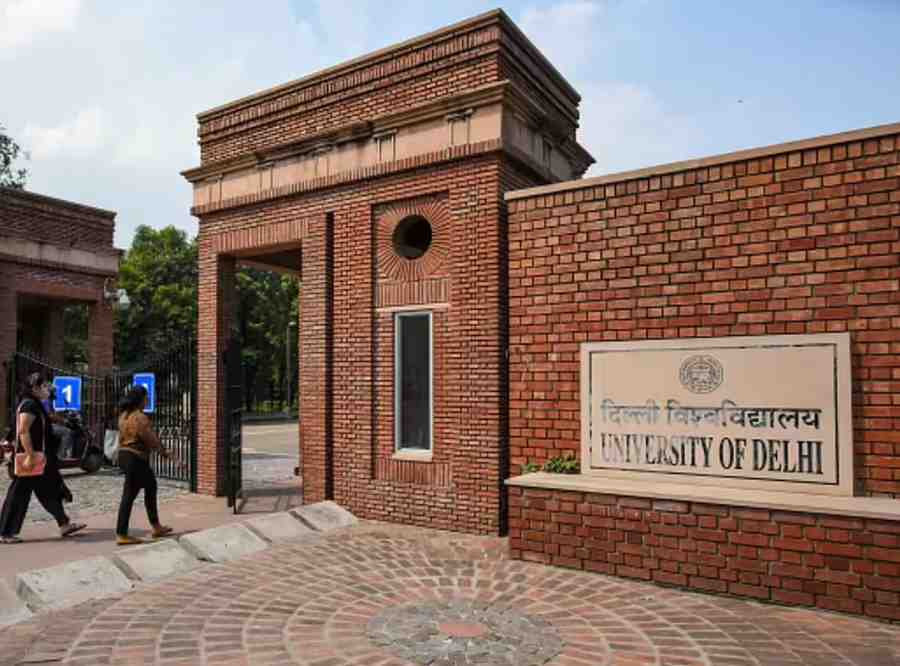
DUSU elections 2026 face Delhi High Court scrutiny over alleged victory procession violations, contempt concerns and the use of money and muscle power.
Earlier last week, the DUSU elections concluded, bringing with them the familiar display of money, muscle and power that have come to characterise the student politics at the University of Delhi. Despite the Lyngdoh Committee recommendations prescribing safeguards for student elections, including keeping the elections free from any sort of political influence from the parties, violations continue to surface from time to time.
On September 18, a bench comprising Chief Justice D.K. Upadhyaya and Justice Tejas Karia heard a plea filed by Prashant Manchanda, alleging violations of the Delhi High Court’s rule of no victory procession. The plea alleged that such processions amounted to contempt of court and were also in violation of the Lyngdoh Committee recommendations. The court had previously made it clear that no candidate or student of the university or supporter could take out a victory procession following the declaration of results. The court had also warned that the counting of votes and declaration of results could be stayed if the concerned authorities failed to take required measures regarding the “unruly conduct” during the election process.
During the Wednesday hearing, the court noted that all the show-cause notices had already been issued to DUSU candidates, including those who had won their respective elections and subsequently participated in the victory processions. Mr. Manchanda was asked to place all the relevant material related to these alleged violations before the court.
According to a report by The Hindu, the bench remarked, “This is not done. This is not done”, indicating the court’s concern over the alleged violations of its directions. However, on the positive side, it was also observed that in contrast to previous years, there had been a significant reduction in the defacement of public property. But the bench added that “much needs to be done.”
Senior advocate Kirti Uppal, counsel appearing for one of the candidates, argued that after winning the elections, people go through certain sentiments which are difficult to ignore or contain. She noted that such celebrations had remained relatively restrained this year and even dhols had not been brought out. Responding to this, the Chief Justice clarified that the drums were not the primary concern. Rather, he said, the difficulty lay in the show of “muscle and money power” by these candidates.
Read Also: IPCW Announces Student Elections Following Earlier Refusal
Image Source: NDTV
Ipshita Grover
ipshitagwork@gmail.com

Comments are closed.