

The Delhi High Court sets aside Jamia Millia Islamia’s termination of a professor, finding that the University had recommended his removal before issuing a show-cause notice and failed to share the inquiry report. Upholding the principles of natural justice, the court gives him a fair chance to respond.
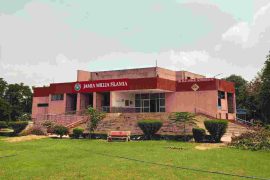
The Delhi High Court quashed the order by Jamia Millia Islamia University, which had terminated the services of Dr. Sarfaraz Ahmad, an assistant professor in the Department of Persian. Dated 20 March 2023, the termination followed a unanimous decision of the Executive Council to dismiss him. The dismissal was to take effect from the date the written order was issued.
In his judgement, Justice Prateek Jalan said that the dismissal was fundamentally flawed, with the facts of the case showing inadequate compliance with the principles of natural justice—fairness, impartiality, and the right to be heard before a decision affecting someone is made. He found that the University failed to comply with Statute 37(4) of the Jamia Millia Islamia Act, 1988, by not providing the teacher a reasonable opportunity to show cause before removal. Describing this as “a clear case of too little, too late”, he noted that the dismissal had already been recommended by the Executive Council even before any show-cause notice was issued.
Dr. Ahmad (petitioner), appointed to the aforementioned post in 2012, was alleged by the University to have been unauthorisedly absent from his teaching duties for almost two years, which he attributed to victimisation by certain senior professors at the department. According to him, the matter was subsequently resolved by the University’s registrar, following which he resumed taking classes in 2021. However, the University maintained that several complaints were received against him for his unauthorised absence, and that his return had caused disruption in academic functioning. An Inquiry Committee, constituted in April 2021, investigated and concluded that his presence would “vitiate the academic atmosphere”. Consequently, the Executive Council on 10 August 2022 recommended strict action—his removal under Statute 37 of the Jamia Millia Islamia Act, 1988—on the grounds of:
Dereliction of duty, refusal to perform other academic responsibilities like setting of question papers, attending departmental meetings, performing invigilation duties, etc, defiance of administrative authorities; non-compliance with office orders, and misbehaviour and obstructing others in their work.
Following this, a show-cause notice was issued on 8 September 2022, to which Dr. Ahmad replied on 22 September 2022. Despite his response, the Executive Council passed a resolution on 22 February 2023, terminating his services, which the university implemented via the 20 March 2023 order.
According to The Bar Bulletin, the Delhi High Court thus noted that the inquiry report was never given to him, denying him a real chance to defend himself. Setting aside the termination order, the court directed that the resolution dated 10 August 2022 be treated as only a proposal for removal. It also ordered JMI to give Dr. Ahmad the inquiry report and related documents, allowing him two weeks to reply, after which the Executive Council must reconsider the matter afresh in its next meeting. However, it also kept open Dr. Ahmad’s right to seek review under Statute 37(5).
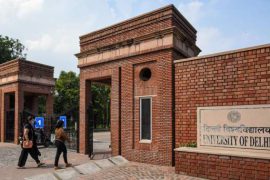
In a parallel but contrasting case in July, the Delhi High Court upheld the dismissal of Dr. Amit Kumar, a professor in the Department of Political Science at Bharti College, University of Delhi, who faced allegations of sexually harassing students. A few students alleged that Dr. Kumar had sent them inappropriate and unsolicited messages filled with sexual intent via Facebook Messenger and WhatsApp. Following a thorough inquiry, the Internal Complaints Committee (ICC) of the University found a case of sexual harassment under the POSH Act and recommended his dismissal. According to Law Chakra, Dr. Kumar challenged the decision on multiple grounds—arguing that interactions on social media do not constitute harassment at the “workplace”, questioning the constitution and procedural fairness of the ICC, and claiming that he was not given a fair hearing by the ICC and DU authorities. However, the HC rejected the argument and held that harassment on social media is not outside the POSH Act’s purview.
While both cases involved the removal of professors, the Delhi HC had opposite conclusions based on how procedural fairness was handled. In Dr. Ahmad’s case, the inquiry report was never given to him before the decision to terminate him, thus citing a breach of natural justice. On the contrary, in Dr. Kumar’s case, the HC noted that the complaint, inquiry proceedings, and final report were not only all shared with him, but he was also given the chance to respond. Therefore, the case was not overturned.
This issue also sheds light on Delhi University’s ad-hoc culture. In December 2023, eight out of ten long-serving ad-hoc teachers were displaced from the English department of Ramjas College. Satyawati College (evening) also reported en masse displacement of teachers from the Department of Hindi in September 2023. According to DU Beat, only five out of the existing eleven faculty were retained, despite there being 16 posts for which interviews took place. The shocking suicide of Professor (Dr.) Samarveer Singh, who had been working as an ad-hoc faculty member at Hindu College’s philosophy department for six years, brought the issue of DU’s ad-hocism to the fore. He was among the many professors displaced during the permanent faculty recruitment drives.
Another recent case High Court ruling reflects this problem. The court in July criticised Delhi University for “deliberately relying on ad-hoc appointments in place of regular employment”, concerning Namita Khare and Mehak Talwar’s case. The HC ordered the regularisation of these two ad-hoc teachers in the Department of Germanic and Romance Studies since 2017, who had challenged not being shortlisted for regular positions, despite fulfilling the eligibility criteria, arguing that the screening was arbitrary and excluded them unfairly. According to The Indian Express, Delhi University has filled around 3,500 permanent teaching positions with approximately 3,000 ad-hoc teachers. Without increments, promotions, and medical security, this is not just short-term precarity, but work conditions that have persisted for decades. In this scenario, the HC judgement offers a sliver of hope for the regularisation of hundreds of similarly placed teachers who have long served without permanency, benefits, or protection.
Summing up, these cases show a recurring pattern of systemic challenges—procedural lapses and over-reliance on ad-hoc appointments, inadequate protection of faculty, causing not just employment uncertainties but also emotional disruption. Professors often spend years working on a contractual basis, with their job security hanging by a thread. Therefore, a stricter adherence to due process is imperative across India’s institutions of higher education.
Read Also: U-Special Buses to Return to DU, Students Ask if They’re Still Needed
Image Credits: DU Beat
Nasheta Zaidi
zaidinasheta @gmail.com


Comments are closed.