
Delhi University has approved direct PhD admissions for eligible Four-Year Undergraduate Programme graduates. Academic Council members have raised concerns over reservation guidelines and institutional fellowship support.
Delhi University has officially approved a major policy change allowing eligible graduates of the Four-Year Undergraduate Programme (FYUP) to apply directly for doctoral (PhD) programmes, removing the requirement to complete a master’s or MPhil degree beforehand.
The policy, recommended by the Research, Innovation and Entrepreneurship Council (RIEC), aims to align the University’s academic framework with the National Education Policy (NEP) and streamline the transition from undergraduate studies to advanced research.
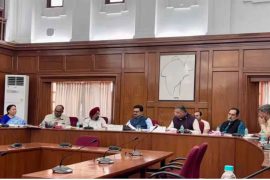
However, the proposal sparked debate during the Academic Council meeting, with members Maya John and Latika Gupta submitting a formal dissent note. They raised two primary concerns: ambiguity surrounding reservation policies and the existing cap on institutional fellowships.
The first concern relates to reservations in the admissions process. According to the dissent note, candidates entering PhD programmes through the four-year undergraduate route and those applying through the conventional master’s route effectively form two separate applicant pools. The members argued that the University has not clarified how reservation policies will be implemented across these routes, raising concerns that students from marginalised communities could face systemic disadvantages during admissions.
The second concern focuses on financial support for research scholars. At present, the University’s Non-Junior Research Fellowship (Non-JRF) is limited to 16+1 scholars per department. The dissenting members argued that allowing direct PhD admissions after FYUP is likely to increase the number of full-time research scholars without a corresponding increase in institutional funding. They urged the University to extend financial support to all eligible non-JRF PhD scholars rather than limiting fellowships to a fixed number.
With the policy now approved, Delhi University has taken a significant step towards expanding research opportunities for undergraduate students. At the same time, the concerns raised by dissenting members highlight questions around equitable access and financial support that may shape the policy’s implementation going forward.
Read Also: DU Revises CSAS-PG 2026 Schedule; Spot Round 1 to Begin July 25
Vanshika U Singh


Comments are closed.