
Tag

society

Browsing

Driving on the wrong lane is a punishable offence in India. Sporting a weird hairstyle is not. However, for the most of us, the former is but a walk in the park as compared to the cardinal sin of growing ones hair long. For India, dear ladies and gentlemen, has a government sworn to extreme liberalism and parents that would make Stalin seem like a kindly Santa Claus.

I am not going to question the science here. Parents believe that long hair is bad for boys and I’ll let that be. If a father gets his 15 something boy to lose his locks, one can understand. What does the poor 15 year old know about the evils of long hair? The problem starts when the boy turns 18. Going strictly by what the Indian laws say, the lad is now sane enough to vote and find himself a wife. But the parental opinion on the correctness of hairstyle remains as strong as ever and so does their conviction that there boy still cannot decide the way his hair should be.

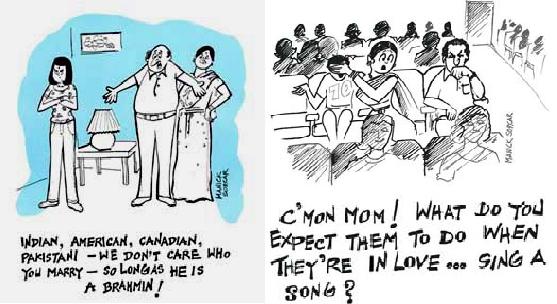
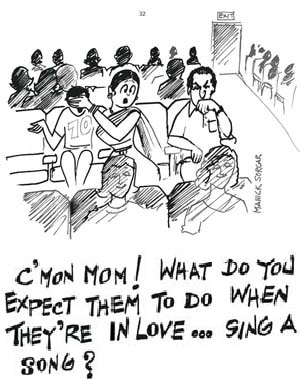
Another body of science, one which most parents strongly subscribe to, berates the impact of the opposite sex on teens. These parents make sure that the knowledge is passed on and by the time the kid reaches 16, the theory is so ingrained in his/her system that the a mere word with a member of the other sex feels like guilty pleasure. In fact the typical Indian parent is never really comfortable with his kid having a relationship, even when that kid is 21 and not a kid at all.
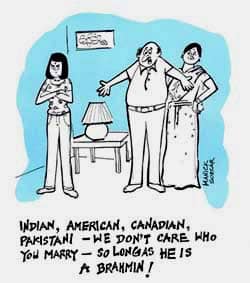
The two examples above don’t matter much in themselves. What they do show, however, is that the Indian parents like to have an overbearing influence on their kid’s lifestyle. The point I am making here is that Indian parents are staunchly anti-individualistic. There single most important aim is to mould their children into this ideal Indian boy/girl irrespective of the child’s attributes, skills and preferences. He should earn a certain amount, choose the safest career path available, be unwaveringly loyal to the family and leave matrimonial decisions to the parents. The saddest part in all of this is that parents are mostly successful in their quests and originality is bled out to the last drop. Then they proclaim that the Indian culture is the strongest in the world. The more I think of it the more I am convinced that our culture is one of our biggest weaknesses.
n515107959_781827_1769Debating in Delhi University is very different from debating at the school level. The main difference stems from the existence of Parliamentary Debating.

While conventional debating (the kind you did in school) involves a team with one person for and one person against an idea, Parliamentary Debating (PD) involves different teams with one team for and one team against an idea. A team can consist of two or three people (depending on the tournament) and teams typically fight in multiple preliminary rounds during a tournament, at the end of which the top 8 teams are selected to go into the quarter-finals.

PDs are different, not only because of their tournament style or the fact the one side will “win” but also because of the values involved. Your oratory ability is considered second to your points and adjudicators (who are also students and not the teachers or IAS officers you had in school) award the debate to the team that can best prove their case rather than the team that has the most fluent speaker.

While there are many Debating Societies that take part in PDs, there are many that don’t. Indeed, there are even colleges which don’t have Debsocs. Debsocs are vital, not only because of the network that allows you to be invited for PDs, but also because they provide the training that is crucial to winning.

The money in both conventional debating and PDs is good (although one has to be very good at PDs in order to win). In conventional debating, the writer’s records put the average prize at around Rs.900. Almost every department in every college in DU has their own festival which usually includes a debate. Therefore there are plenty of debates to take part in, especially during December. Most Debsocs that participate in PDs organize one or two every year.

Debsocs vary from college to college: some are very active and drill their juniors into shape, while others do not. In the end it depends on you college and priorities. Debating teaches one not only how to speak but also how to think logically about a situation and express one’s thoughts clearly, skills that will be of great use in the real world.

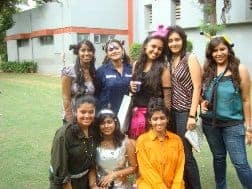
Every fresher will find to his or her amazement and hopefully excitement that the first week of college means a constant of barrage of society promotions and recruitments.  However don’t let the volley of auditions and college activities confuse and stray you from the path of your destined society, since the society you join ends up defining the circle of people you associate with.

Delhi University societies are not just friendship circles. They rely on hard work, talent and dedication. As a society, you participate in umpteen college, inter-college and inter-university competitions. Every society of every college has its own fest, and you can rely on these to keep your nose to the grind stone all year-long. As you audition for the various societies, the harsh and apparent nit-picking during selections will only be proof of the high standards and professionalism of the societies, making it a good idea not to take them too lightly.

The prominent societies (you might have to start getting used to calling them SOCs) with a presence felt in almost every college are:

  1. THE DEBSOC: Debating ought to come easy to you to not just join but stay in this one. Arguably this society houses Delhi University’s best speakers and hence is definitely worth being a part of.

  2. THE CHOREOSOC: Involving insane amount of rehearsing, the theme-based choreography done by a lot of Delhi university colleges is something you don’t want to miss.

  3. THE DRAMSOC: It’s time you got out of that shell. Trust this society to teach you that and so much more. You might just work with people having years of experience at the NSD.

  4. ENGLISH AND LITERARY SOCIETIES: The hub of intellectual and literary discussions and activities. A must for all aspiring writers out there as well.

  5. FILM AND PHOTOGRAPHY SOCIETY: For all the unconventional, or even so- called taboo movies that you missed watching and discussing, and to hone the photographer in you.

And DU BEAT: for the conscientious and prompt writer. A little bit of self-promotion never hurt.