Tag

High Court

Browsing

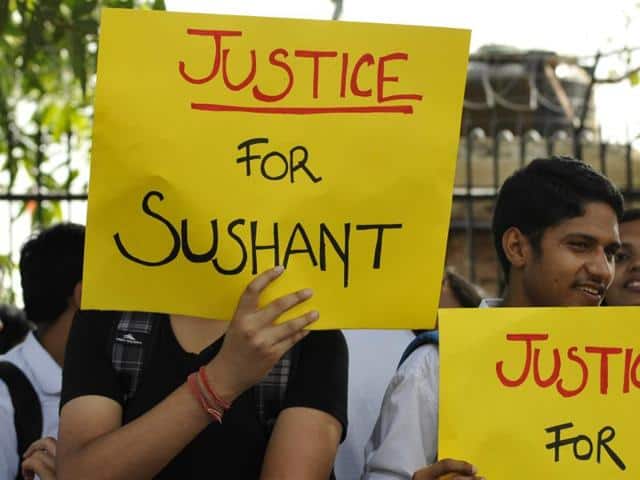
On 11th July 2017, a Delhi High Court bench comprising Justices Siddharth Mridul and Najmi Waziri made an acute oral observation on the failure of the Indian education system as a whole, while hearing the Supreme Court plea initiated in September 2016, regarding Sushant Rohilla’s alleged suicide. On the matter, which was transferred to the Delhi HC in March 2017, the bench made a scathing remark: “It (the education system) is completely dehumanised. It is a machine. The human element has been completely taken out. The contact between teacher and student is perfunctory… We seem to be mass producing clones… You must conform at all costs, else retribution is swift.”

The bench also remarked directly upon Amity Law University’s “element of callousness” in handling the sensitive issue, as Rohilla was a third-year student there, barred from sitting in the semester examinations due to low attendance. “The student reached out to you. He cried out for help. But did you respond?” the court asked of the varsity, which continued to defend its attendance norms as a basic system of checks and balances meant to establish discipline. This system, however, is not above offering assistance to its students and accommodating improvements where necessary, Amity also claimed. The varsity is affiliated to Guru Gobind Singh Indraprastha University (GGSIPU), which was given the  last chance to file an affidavit recording its stance on the subject.

Sushant Rohilla’s classmates took to social media with a fervour post his death, alleging his harassment and charging the teachers with apathy and negligence. So far, the outrage fuelled online has caused two of the professors to resign. Most significantly, it was a letter written by Raghav Sharma, another final year student of Amity and a close friend of Rohilla, to the then CJI TS Thakur, which caused this PIL to be instituted in court. In the letter, Sharma puts the blame squarely upon the shoulders of the Amity authorities, citing reasons including medical issues which first prevented Rohilla from attending the classes, leading to his lack of attendance, then a severe depression at being barred from the exams, and all of it culminating in a suicide by hanging, at his own house on 10th August 2016.

The court appointed amicus curiae has intervened after examining a “shocking” status report filed by the Delhi Police, which not only did not consider the examination of any person necessary with regard to the complaint but also insinuated that the suicide note may not have been written by Rohilla himself. Unconvinced, the court has asked for a transfer of the “compromised” investigation, to be monitored by the Deputy Commissioner of Police (South Delhi). The DCP must now file a detailed probe report before the next hearing on 8th August 2017.

So far, all the elements in the case seem to be working against Amity and the varsity’s officials involved. But most importantly, the court’s statement takes into account what the current education system and inhumane red-tapism tend to leave out—the worth of a student’s life. It is an essential point raised, and one which directly concerns all students pursuing or hoping to pursue a higher education in the country. Minimum attendance as a pre-requisite for marks and entry to exam halls has been a matter of much discontent and protests in the last few years in the University of Delhi (DU) too, with ECA and Sports quota students especially crying foul. Those against the mandate argue about the injustice of having to sit in class, even when unable to, for reasons ranging from serious health issues to a simple lack of interest in certain lectures. University students, after all, are responsible adults in the making. Why must they be robbed of the autonomy to choose and to make the simple decision of which classes to attend, and which to skip out? Only time will tell what the verdict on Rohilla’s case shall be, yet the court has made a vital statement in the initial hearing itself, giving hopes to the entire student community.

Image credits: Hindustan Times


Deepannita Misra
[email protected]


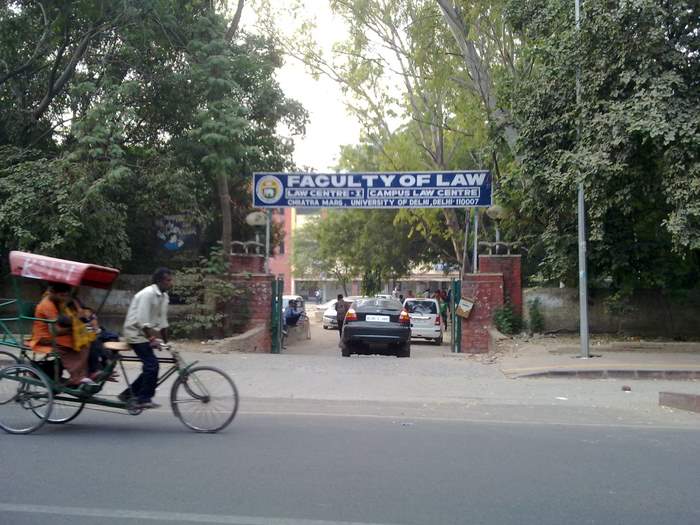
Putting a pause on the ongoing tussle between students and the Bar Council of India (BCI), the Delhi High Court has asked Delhi University to admit 2,310 students in the LLB course for the 2017-18 academic session.

Manmohan and Justice Vinod Goel, in an interim order, reasoned, “Don’t reduce the number of seats. Students want to study, let them study. DU has been teaching 2,310 students till now. You (BCI) decided to reduce the seats to half. We need time to decide the case. Till then let 2,310 study.”  

The bench has posted the matter for the next hearing on August 21st.

The court’s order came from a PIL by lawyer Joginder Kumar Sukhija, against the decision of the 800+ seat cuts. The petition asserted that by reducing the seats, public money, which was used to provide grant to the varsity, would not be put to optimal use. Other than that, a large number of students will be affected if the seats were reduced.

In August 2016, the BCI has asked Delhi University (DU) to admit a maximum of 1,440 students in its three centers LLB courses, and to shutdown colleges offering law courses in the evening shifts. The policy decision of shutting down evening colleges has been taken after the BCI reported that the law programmes offered in evening and night hours do not comply with rules that appropriate the quality of legal education that is imparted to students.

However, Delhi University opposed the reduction of seats for the law graduate course, on grounds that it had improved its infrastructure and increased the strength of its teaching faculty.

Earlier this month, BCI had also imposed a penalty of Rs 30 lakh on DU for not paying affiliation fees and continuing to teach without permission.

Following the seat cut proposal, many protests have been held across the campus against the proposal. While, this latest development is seen as a major relief to law aspirants, but whether or not there will be a seat cut in the next academic session will only be made clear after August 21st.


Image Credits: DU Beat

Niharika Dabral
[email protected]

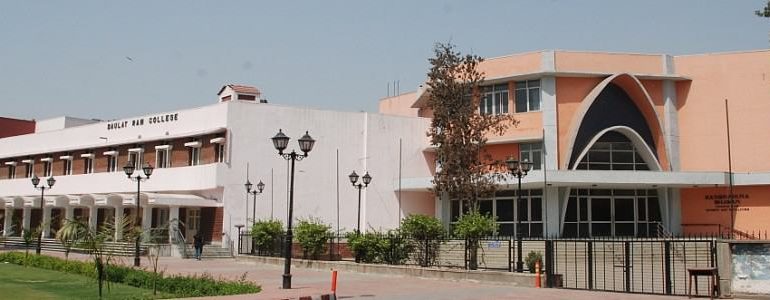
On Monday, 10th March 2014, the Delhi high court authorised the Daulat Ram College trust to appoint a new Principal of the college, instead of functioning under an acting principal. At present the college is being served by Dr. Daya Aggarwal, the acting principal of the college, who is the sister of BJP leader, Vijay Goel. The college moved to the court in order to seek evacuation of Dr. Daya Aggarwal, who was avowed as acting principal of college on February 2, 2013.

Delhi University had issued a notification regarding the appointment of a regular principal in the college on March 7, after an executive council meeting for the qualification. In response to which, Justice Shakdher disposed off the petition, stating that the college can now appoint a new principal.

The college trust accused that Dr. Aggarwal was “occupying” the post of acting principal without sanction or approval of the governing body while the University has been constantly interfering in appointment of the college principal and insisting the college trust to reappoint Dr. Daya Aggarwal as acting principal.

Her term was to expire in August. However, the trust alleged it was compelled re-appointment, regardless of the fact that she is not fit for the post. The college had to appoint an acting principal for terms of six months each on temporary basis and she was re-appointed to the post in August 2013 and then again in February 2014.
DU’s assertion to make Dr. Aggarwal hold the post despite being unsuitable for it, connotes that the university wants to exercise control over the college and encroach the autonomy of the college, stated Justice Rajiv Shakdher.

The college has also accused Dr. Aggarwal of misconduct and had bought many instances under the notice of university via letter and representations, but all went in vain. She is accused of not having the college accounts audited which led to University Grants Commission stopping the second installment of the grant to the college. She has also faulted in paying many hostel bills and salaries. She has flouted rules and transferred Rs. 4 crore, in the months of September and October, from student’s fee fund to pay teacher’s salary for two months.

Thus, after listening to both the parties, Justice Shakdher settled the dispute, asking the college to appoint a new principal, replacing the Dr. Aggarwal.