Tag

Global Politics

Browsing

Providing guidance to the students of DU since 2008 on matters of sex, dating, and intimacy, Amma is back again this week with her dose of advice.

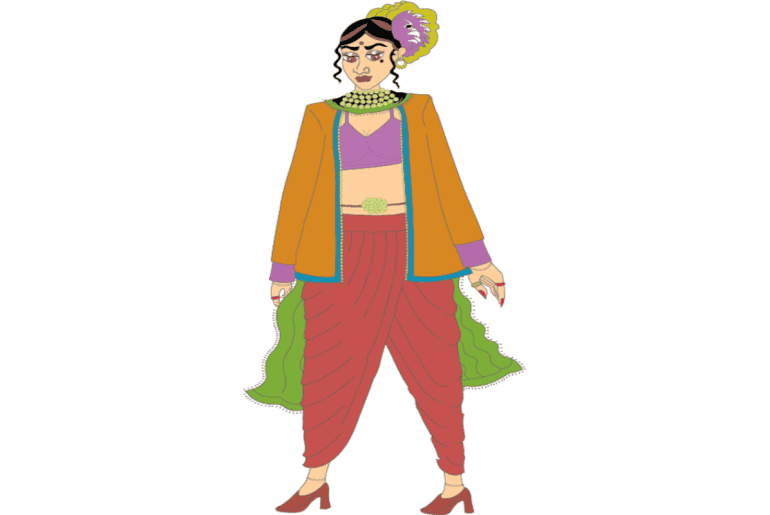
My partner does not care about global politics and conflicts. They believe thinking and caring are a luxury. How should I cope with this?


My dear Idli,


Understandably, you wish your partner cared about things that you care about. I see why they feel that caring about politics is a luxury—being able to actively think and debate about politics requires not just a level of education and access to information, but also stability in one’s basic needs. Many believe it doesn’t matter anyway, and that worrying about issues beyond their control is a wild goose chase, since they cannot change the circumstances in the world around them. Today, politics has become so polarised that these debates often only dissolve into empty rhetoric, personal attacks and acrimony between individuals. This lack of tolerance of opposing views is what makes these discussions seem futile, making people turn away and focus instead on more important things in their life, like family, friends and career, or just keeping themselves happy, and enjoying life. Well, added to this is a sense of disillusionment, that no matter who the sattadhaari is, their promises will always flop.


But my dear appam, what you must also know is that the opposite is quite true as well—truer still. Not caring about politics and conflicts around the world is itself a luxury. For many, politics is not a choice; it governs their lives, their rights, their well-being or even something as fundamental as their rights over their own bodies. We can choose to ignore the suffering of others, because of our privileged position in the society, where issues of poverty, sexism, casteism, climate change and other injustices don’t directly affect us; where we are not at the receiving end of oppression and marginalisation. In reality, everything is political—from the food you eat to the clothes you wear and to the media that you consume. So, one cannot be truly detached from politics, only blissfully oblivious. Political apathy is also dangerous. When you deliberately opt out of politics, let’s say, by choosing not to vote because you believe that your single vote does not matter at the end of the day, even while acknowledging that the system is flawed, you are actually turning your back on vulnerable groups, thereby reinforcing the status quo and pushing them towards a position of even greater disadvantage. Why let your voice go to waste when democracy and your position in society have given you both the right and privilege to speak and to create a more just, equitable and kind future? And Chikki, once you start paying attention, there’s no going back—your partner, too, would eventually realise that.


See, politics is important—even in a romantic relationship. A person’s political stance reveals a lot about them as a human being. Simply put, it is a mirror of their values, which will ultimately shape how they treat you in the relationship as well. Therefore, in my opinion, it is essential that you agree upon certain non-negotiable values. You cannot force your partner to think exactly like you or hold the same views as you, so respect differences. Communicate openly, give each other space and agree to disagree. However, you cannot agree to disagree on the non-negotiables—your core values. Protecting your peace and preserving your relationship should not come at the cost of giving up your values, for that will eventually only breed rancour between the two of you. Instead, hold on to what has shaped your identity, guided your decisions, and given your life meaning over these years. Staying true to these values will not only strengthen you, but also your relationship by bringing honesty and creating a space for deeper respect and understanding between the two of you.


Want to ask Amma a query? Mail it to [email protected]
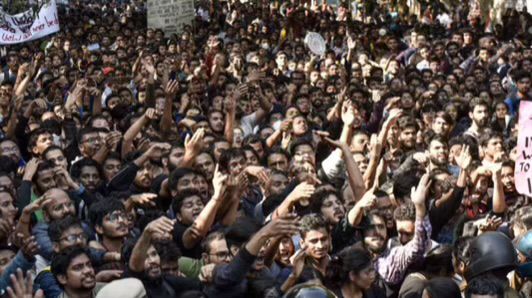
Indian students are active “psychogeographers” of global politics—shaped by world events yet reshaping them through solidarity, dissent, and everyday engagements beyond state-centric politics.


In the twenty-first century, the student is no longer confined to the classroom. The internet, transnational education, and global crises have transformed campuses into spaces where young students are constantly negotiating their position in the world. Indian students, in particular, have emerged as what can be called the psychogeographers of global politics—not merely charting the impact of world events on their lives but also redrawing the contours of political solidarity itself.


When war breaks out in Ukraine, or West Asia, or when climate change forces entire communities into precarity, Indian students do not experience these events as distant abstractions. They encounter them in their campus discussions, their social media feeds, and their diasporic family networks. In these moments, they are often portrayed as passive recipients of crisis—waiting for evacuation flights, and reeling from the aftershocks of geopolitical tensions. The student figure, in this narrative, is primarily vulnerable, caught in the cross-currents of power without agency.


Yet, to stop at this description is to miss the ways in which Indian students are increasingly reshaping the moral geography of global crises. The solidarity marches on campuses, the fundraisers for disaster relief, and the vocal demands for international justice reflect a deeper engagement. From Delhi University students issuing statements on Palestine, to Indian youth activists co-ordinating with counterparts in Europe and Africa, these acts of alignment reimagine students not as spectators but as agents who extend the terrain of politics.


The idea of students as psychogeographers rests on this duality: they are simultaneously mapped by crises and mapping new routes of resistance. The student who studies in Canada while organising aid for Manipur, or the one who prepares for competitive exams in Delhi while amplifying Palestinian voices online, is engaged in a form of border-crossing politics. They are charting emotional and political landscapes that escape state-centric diplomacy.


This agency, however, comes with its own contradictions. Many Indian students abroad struggle with visa precarity, racial discrimination, and economic vulnerabilities. Their solidarity is often curtailed by fear of state backlash—whether from host governments or from Indian authorities keeping an eye on dissent. On campuses at home, political polarisation and surveillance discourage free debate. Yet, despite these constraints, student voices consistently seep through. Even when formal protests are suppressed, the circulation of petitions and social media campaigns becomes a cartographic act—tracing new geographies of empathy.


It is important to recognise that students’ interventions do not always take the shape of loud political statements. Sometimes they manifest as the translation of distant suffering into local conversations—debating refugee policies, questioning media bias, or challenging the ethics of investments in arms. By reframing global crises through the lens of everyday student life, Indian youth ensure that politics does not remain the monopoly of statesmen but becomes the concern of citizens-in-the-making.


In this sense, Indian students are not just navigating global crises; they are re-scripting them. They move between the vulnerability of being acted upon and the agency of acting back. As psychogeographers of global politics, they leave behind trails of solidarity, dissent, and imagination that future generations will follow. And in doing so, they remind us that the classroom of politics is not confined to textbooks and lecture halls, but is spread across the uneven terrain of our shared world.


Featured Image Source – DNA India

Image Caption: By linking global crises to daily student life, Indian youth make politics a concern of citizens-in-the-making, not just statesmen

Richa Choudhary

[email protected]

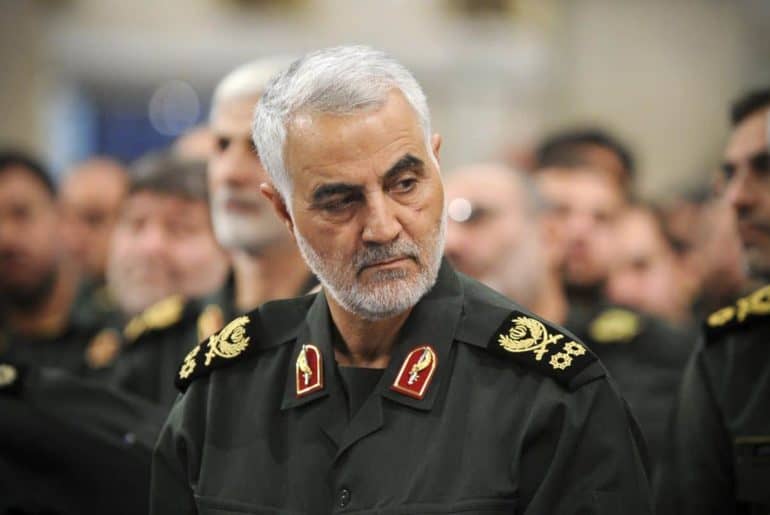
With the geopolitical engagements on a surge, General Qassem Soleimani’s death has posed challenges for Ministry of External Affairs of India, but not as just another nation, the late General’s cause has a strong vote from history and policy to substantiate the claim of support.

Ever since the George W. Bush administered Iraq Skirmish surpassed the thirty year long Vietnam War to clinch the title of the biggest geopolitical blunder by the United States; the Joint Comprehensive Plan of Action or Iran Nuclear Deal in July 2015 was deemed to be a progression towards stability in the Middle East and the world at large. But, the Donald Trump government’s withdrawal from this historic advancement in global peacekeeping in May 2018 escalated tensions through out the world including the United States.

Just three days after the entry into the ultimate year of the decade sets the world forth with World War 3 trending; despite the expert’s sacking the chances of one in the first place, the United State’s air strike on Iranian Military Base to assassinate Iran’s topmost official & commander of the Quds Force of the Islamic Revolutionary Guards Corps (IRGC) General Qassem Soleimani, the attack has aggravated tensions through out the Middle East ensuing severe repercussions for the entire world. With, the killing of a military officer like Soleimani who was viewed as a ‘hero’ inside the Iranian Republic, the United States identified him as a ‘terrorist’ dangerous for US Troops and Ambassadors through out the globe.

As, the man in charge of the proxy wars in Iraq, Syria, Lebanon and Yemen, General Soleimani was to be credited for limiting the influence of Islamic State of Iraq & Levant (ISIL)/(ISIS) in the area and played a crucial role in fighting terrorist from Iran, and more from Iraq, Afghanistan, Pakistan, and Lebanon. Soleimani was the chief architect in saving Basshar Al Assad’s regime in Syria whose survival was on the line and helped him take back the control of important cities & towns from ISIL, the process did cost thousands of Syrian civillians their lives and loss to public property.

But, General Soleimani’s presence wasn’t confined to Iran or the Middle East, the highly influential leader has been a strong ally of India at multiple fronts and occasions; exercising deep influence in administrative and cultural life of Iran, under his leadership India has continued to enjoy Iran’s support economically, strategically and generally. Iran continues to be the second largest supplier of Crude Oil to India with an average supply of 425,000 barrels per day. A poll conducted in 2005 found out that, 71% of Iranians viewed India’s influence positively, counting as the most favourable rating of India for any country in the world.

In the same year, India had voted against Iran’s interests at the International Atomic Energy Association (IAEA), casting hindrances on Iran’s claim of peaceful nuclear research. The Indian vote against Iran came as a surprise to Iranians as they considered India to be one of their closest friends with a strong historical linkage. Later at the diplomatic dialogue with the Iranian armed officials, India cleared it stance citing politico-military consideratios and it’s larger interest in the peace of the region. To this, the Iranian general positively responded by respecting India’s concerns and assuring India of Iran’s unaffected support and friendship. Further, it was General Soleimani who assisted India in operating with the Northern Alliance later despite the IAEA votings at Vienna.

These reasons might have probed the rejection of Trump’s claim with regard to plan of attacks extending to New Delhi, which wasn’t received to be credible with experts and former diplomats.

Soleimani and Iran have often even objected to Pakistan’s attempts to engage in activities and resolutions against the interests of India at international organisations such as the Organisation of Islamic Countries(OIC) and the Human Rights Commission. One of these was observed when Soleimani backed India at The International Court of Justice in Pakistan’s case against Kulbhushan Jadhav, an Indian Commander who is allegedly charged for spying for Research & Analysis Wing of India in Balochistan, Pakistan.

“Be it the negotiations on the Chabahar port or Islamabad’s case in the International Court of Justice (ICJ) against Kulbhushan Jadhav, he had been been a backer of India on issues of national interest,” says veteran defense expert Qamar Agha.

Soleimani was even instrumental in the construction of Chabahar Port which is expected to boost the Indian economy by giving passage for Indian Goods in Central Asia and imports from Iran & other states. The joint interest construction between India and Iran is resultant of the favourable policies by both countries in which General Soleimani had a huge role to play.

To honor this veteran general and ally India needs to be more proactive in the persian region for its economic and strategic interests and abandon its stance of neutrality. This might pose as a serious examination for New Delhi to balance between Tehran and Washington DC, the Ministry of External Affairs needs a very comprehensive action to withstand country’s honor and fulfill its interests.

Faizan Salik

[email protected]

Image Credits: Vox.com