DUSU elections saw 39.36 per cent turnout, up from last year but below 2023 levels. Voting was peaceful yet marred by littering, clashes, traffic, and EVM tampering allegations amid tight security and 21 candidates contesting.
The voter turnout for this year’s Delhi University Student Union (DUSU) election stood at 39.36 per cent, a decent rise from last year’s turnout, which stood at 35.2 per cent, but it still does not meet the rate of 42 per cent, which was recorded in 2023. This was amidst a 3-year halt in the conduction of elections due to the COVID-19 outbreak. Polling was conducted at 52 centres with 195 booths, where 711 Electronic Voting Machines (EVMs) were deployed.
Chief Election Officer Raj Kishore Sharma said polling proceeded smoothly across most colleges.
Out of the 1.53 lakh registered voters, 60,272 students cast their votes. At Kirori Mal College, the turnout was 32 per cent. Principal Dinesh Khattar said,
The college has successfully conducted polling, and the campus is clean… no defacement or waste lying around.
At Ramjas College, the turnout was slightly higher but still lower than the average at 37.52%. Principal Ajay Arora stated that,
Voting has been successfully held at seven booths.
Miranda House saw an active participation of over 2500 votes in the first phase. Polling in the college was conducted in two phases: from 8:30 am to 1:00 pm for day scholars and from 3:00 pm to 7:30 pm. Delhi Police deployed over 600 personnel, including 160 with body-worn cameras, while drones and CCTV surveillance covered sensitive areas.
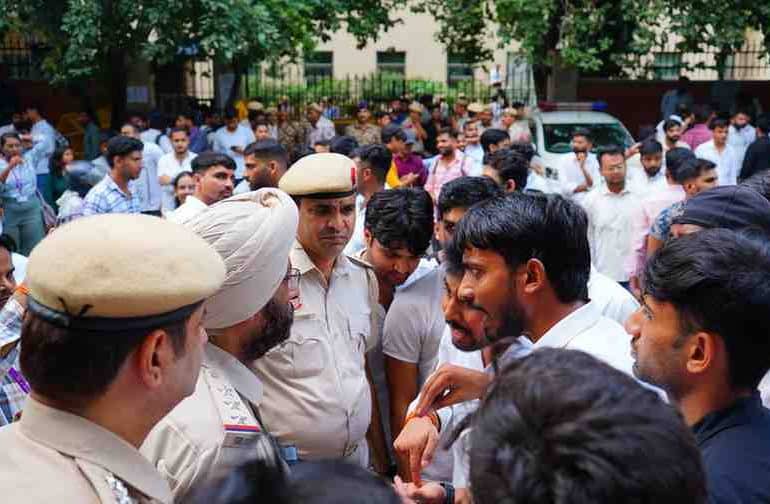
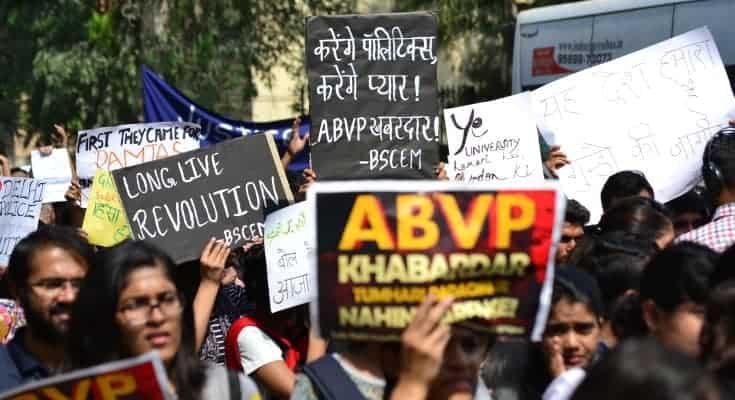
The election was conducted not without its hurdles; the area surrounding the campuses saw littering due to cards of candidates being distributed. Despite tight police control, clashes still occurred between rivals, and supporters of each faction gathered in huge numbers, resulting in road blockages and significant traffic congestion.
The elections also witnessed controversies due to allegations of malpractice by the National Students’ Union of India (NSUI)’s presidential candidate, Joslyn Nandita Choudhary, alleging that she observed blue ink on the EVMs near the name of Akhil Bhartiya Vidyarthi Parishad (ABVP)’s presidential candidate, Aryan Maan. Delhi ABVP State Secretary Sarthak Sharma responded by stating,
Just as the Congress blames EVMs after every electoral loss, NSUI is following the same pattern. Their desperation is evident from their fear of defeat and declining popularity among students.
This year, 21 candidates were contesting for the four main student body posts – President, Vice President, Secretary, and Joint Secretary. Of these, nine contestants were competing for the president’s seat, while the remaining were contesting for the other three positions.
Often perceived as the leader of reforms, be it academic or technological, the University of Delhi (DU) has been the birthplace of and a home to several reformative ideas. These ideas have changed the lives of students and have had an impact on the culture of the University in the past decade.
Change is the only constant. In this case, it is an apt description of the state of affairs in one of the most prestigious universities of the country. In the past decade, as India’s development story has gone through a sea of change, so has that of one of its premier universities. Some of the reformative initiatives taken up by the University have positively impacted the lives of students and improved the quality of education. In a nutshell, for a university established in 1922, innovation was not a luxury but a necessity in order to ensure that the varsity continued to thrive.
Antardhvani
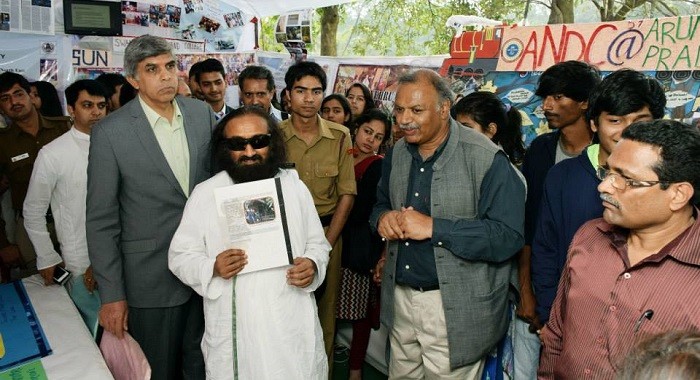
A cultural festival started in 2013, Antardhvani served as a pan-university platform for talent to showcase itself. The event was the brain-child of then Vice-Chancellor, Professor Dinesh Singh who wanted students to “march to the drumbeat of his or her inner calling”. It helped students unleash their inner creativity by performing at an event of a greater magnitude than any college fest. Rock band competitions, National Cadet Corps parades, stalls, and flower shows were all part of Antardhvani. Lucrative prizes worth more than INR 18 lakhs were given to colleges based on criteria like architecture and technology, as well as on various artistic parameters. The flagship event was discontinued after 2015.
Image Credits: The Univesity of Delhi
Cluster Innovation Centre
The Cluster Innovation Centre (CIC) was established in 2011. It was built to create an educational ecosystem that would teach its students innovation and allow them to think outside the box. CIC offers students bachelor’s degrees in Humanities and Social Sciences as well as in Mathematical Technology and Innovation. It has resources like an engineering kitchen, a robotics and embedded systems lab, a digital fabrication and prototyping lab, along with a computer science lab, an information technology innovation lab, and a library. With an alumni list extending from Oxford University to Google India, the institute has proven to be an excellent experiment of learning innovatively in the last seven years.
Image Credits: Cluster Innovation Centre
Commonwealth Games
The Commonwealth Games left behind an important asset for the University. Apart from the posh stadiums and sports arenas of the University which saw great upliftment in their infrastructure during this time, other basic provisions in the campus also got upgraded. Today, these amenities are used by the University for its academic and extracurricular purposes apart from housing some of the University’s top research centres. They are also used as the venue for the annual convocation ceremony.
Image Credits: Government of India
Delhi Metro
With the introduction of Delhi’s very own metro service, the Delhi Metro Rail Corporation gave the national capital a priceless gift in 2002. With subsequent phases of development, each part of Delhi-NCR became well-connected. It no longer matters if you live in the far ends of Shahdara, Gurgaon, or Faridabad; reaching college has never been this easy. Remarkably, the two main campuses of the university have their very own stations. Metro rides have become a regular part of student lives, so much so that we cannot imagine what we would do without them. The Delhi Metro undoubtedly changed students’ lives, one token at a time.
Image Credits: The Journal of Banking and Finance
Delhi University E-Journals
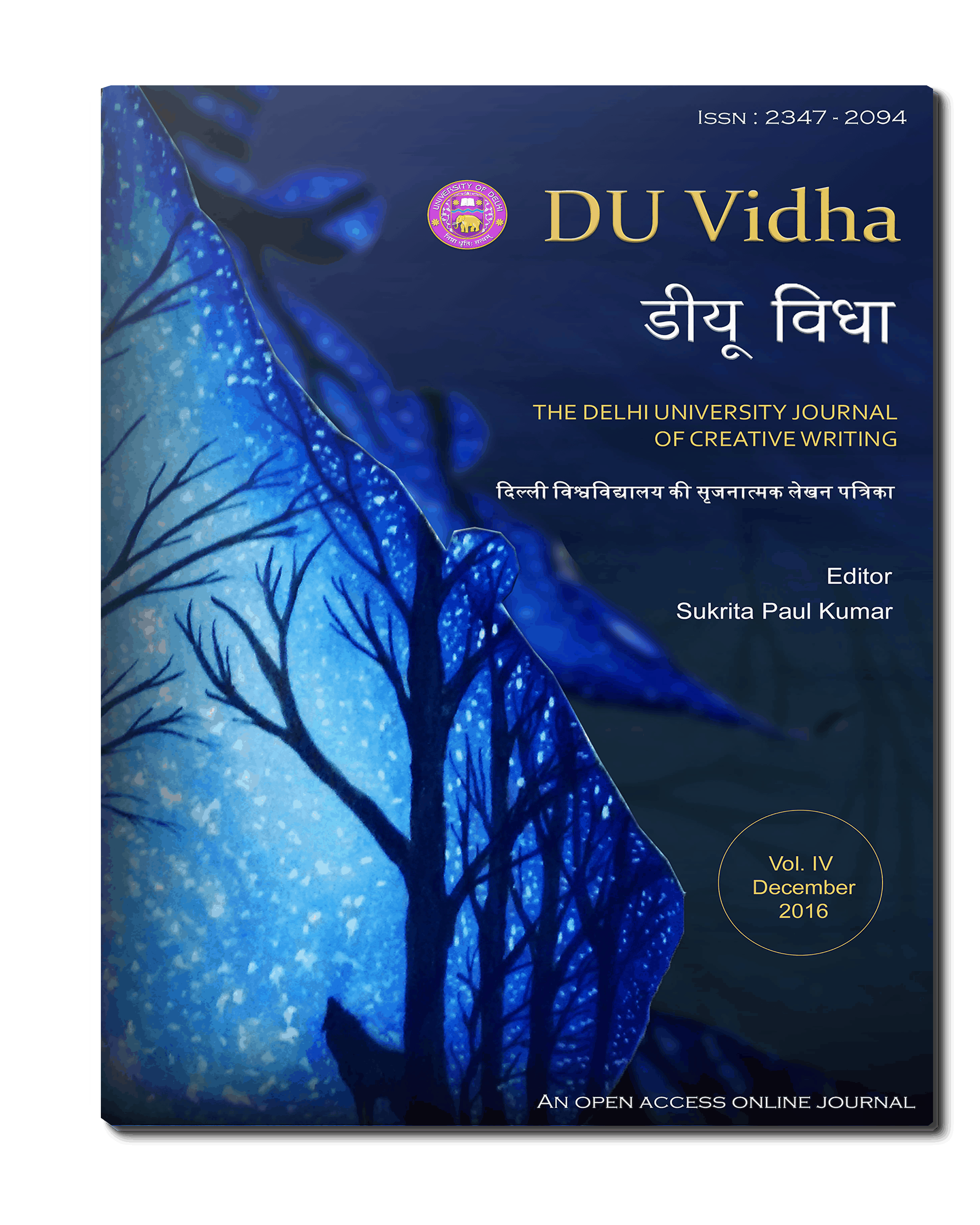
In the last few years, one of the major steps undertaken by the University in the direction of literary development of the students was coming up with various e-journals. These include the Delhi University Journal of the Humanities and the Social Sciences and the Delhi University Journal of the Natural Sciences. In addition to these, DU-Vidha is a bilingual journal for creative writing while the Delhi University Journal of Undergraduate Research and Innovation publishes original research work from student projects with the aim of disseminating academic articles. The University has put arduous efforts in its endeavor of bringing forth latent talent in the students into the limelight.
Image Credits: The Univesity of Delhi
Delhi University Website
The emergence of technology in the University completely transfigured its charm. The University of Delhi got its own website in the year of 1998, making it one of three south Asian universities to have websites of their own. However, the current website in use was designed during the tenure of Professor Dinesh Singh. The latest development in this direction is the examination department getting a website of its own in 2017.
Image Credits: The Indian Express
Electronic Voting Machines
In 2007, the use of electronic voting machines (EVMs) was incorporated into the Delhi University Students’ Union (DUSU) elections. EVMs were used for one of the first times in an academic institution in the country. It was a historic move following which the contesting parties started using technology while vying for attention and campaigning. In subsequent elections, EVMs began to be used in college union elections as well.
Image Credits: DD News
Entrance and Practical Exams
Examinations like the DU Joint Admission Test, the entrance examination for CIC, and practical examinations for courses like B.A. (Honours) Music have led to students being evaluated on the specific skill set that they wish to pursue rather than being dependent on vague and often unreliable board results. The Common Aptitude Test for English (CATE) conducted for students wishing to pursue B.A. (Honours) English, although discontinued later, is another example of a major change that aimed to make the University more student-friendly.