
Tag

#DU #Case #Suspension

Browsing

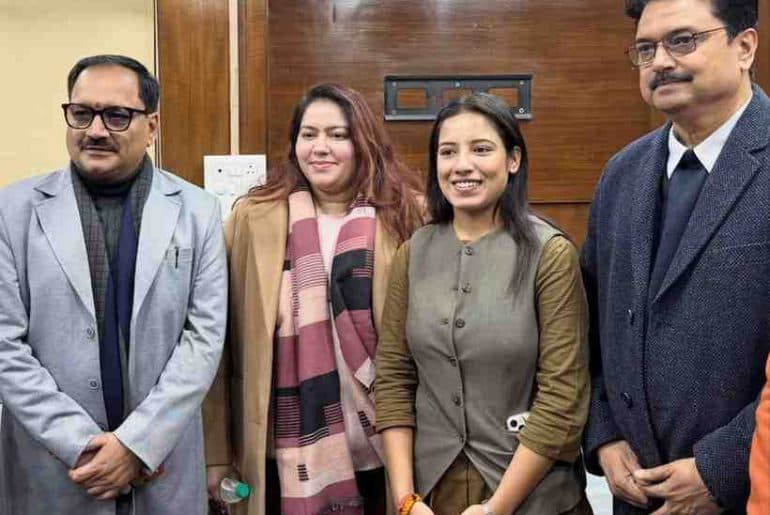
Previously suspended for slapping a professor in Dr BR Ambedkar College, the DUSU Joint Secretary has returned to office after the university revoked her two-month suspension early.

DUSU Joint Secretary Deepika Jha’s (ABVP) two-month suspension following her assault on Professor Sujit Kumar in October has been revoked as of January 7th. The suspension had come into force on November 14, nearly a month after the assault took place at Dr BR Ambedkar College. The delayed response from the University had earlier drawn condemnation from several teachers’ associations, including the Delhi University Teachers’ Association (DUTA), Delhi Teachers’ Front (DTF), and BRACSA, back in October.

Jha filed a request for revocation of the suspension on January 5, before the completion of the stipulated two-month period. Following a review of her conduct, the university-appointed committee revoked the order with effect from January 7, 2026.

Reacting to the development, Professor Sujit Kumar expressed his disbelief in an official statement to DU.today. He said, “Deepika Jha was suspended from the union during the examination and vacation period, in complete violation of Ordinance 15(B). Then, her suspension period was preponed without the fulfilment of the terms and conditions of the suspension order.”

Initially, the enquiry panel had recommended a three-month suspension period. However, the final order reduced the duration to two months. During the period, Jha was allowed to attend her classes and appear for the semester examinations held in December. The suspension was limited to her role as an office-bearer and barred her from entering any Delhi University campus in that capacity.

Criticising the decision, Rudrashish Chakraborty, Associate Professor at Kirori Mal College, described the order as a ‘travesty of justice.’ The former DUTA executive added that “The University administration has abandoned everyone to protect the goons of the ruling party,”. Others echoed similar sentiments, questioning both the delay in initiating action and the nature of the disciplinary measures imposed. 

The incident in question took place on October 16, 2025. Professor Sujit Kumar was acting as discipline convener, looking into a separate assault case at Dr BR Ambedkar College, when Jha and other members of the ABVP arrived at the college. During the meeting inside the principal’s office, Jha slapped Professor Kumar, later alleging that he had “smirked” at her. She later apologised for the act.


Read Also: DUSU Joint Secretary Deepika Jha Suspended After Assault on Professor 

Image Source: Instagram Handle @deepika.jhaa

Anjali Paruvu
[email protected]

The court upholds compulsory retirement of the assistant professor in 2018 sexual harassment case, affirming ICC’s findings.

The Delhi High Court has upheld the compulsory retirement of an Assistant Professor at Delhi University’s Bharati College, following multiple allegations of sexual harassment by students. In a strongly worded judgment, Justice Subramonium Prasad dismissed the professor’s plea challenging the findings of the Internal Complaints Committee (ICC) and the disciplinary action taken by the college’s Governing Body. The Court described the professor’s conduct as “so profane” that it declined to reproduce the objectionable Facebook and WhatsApp messages in its order. 

The court observed- 

Teachers shape the career of young aspiring students for a better future. The act of sexual harassment done by these very teachers, who are considered as our guides and mentors, against young female students who have just attained majority, has a deleterious effect on the psyche of such students.”

Four complaints-three from current students and one from an alumna were filed in February 2018, alleging sexually explicit messages and inappropriate conduct by the professor via social media. The situation came to public attention when a video of students confronting the professor about his behaviour went viral, sparking protests and demands for action from the student body. In response, the professor was barred from entering the college campus and placed on leave. The matter was formally referred to the ICC in accordance with the Sexual Harassment of Women at Workplace (Prevention, Prohibition and Redressal) Act, 2013 (POSH Act) and relevant UGC regulations.

The ICC, after examining the documentary evidence, digital records, and oral testimonies, submitted its report on August 28, 2018. The Committee found all four charges of sexual harassment to be substantiated and concluded unanimously that the professor was guilty of misconduct. The evidence and testimony of the complainants, the Court observed, “remained unimpeached.” The inquiry process concluded in July 2018. The Court noted that the delay in finalizing the report after May 2018 was due solely to the conduct of the professor himself. Following the ICC’s recommendation, the college’s Governing Body issued a show-cause notice to the professor in October 2018, asking why the penalty of compulsory retirement should not be imposed. After granting him an opportunity for oral submissions, the Governing Body accepted the ICC’s findings and resolved to compulsorily retire him with immediate effect. This decision was subsequently approved by the Vice Chancellor. 

Before the High Court, the professor challenged the constitution of the ICC, the procedure followed during the inquiry, and the conclusions drawn by both the ICC and the Governing Body. He claimed that the authorities failed to uphold the principles of natural justice and that he had not been given a fair hearing. However, the Court found no merit in these claims. Justice Prasad held that the ICC and Enquiry Committee had been duly constituted under Rule 7(7) of the POSH Rules. The procedure adopted, the Court said, was not arbitrary or unreasonable but rather aligned with legal guidelines and regulations.

The Court also noted that the professor had been granted ample opportunity to present his defence and that the Executive Authority’s failure to issue a detailed speaking order did not amount to procedural prejudice. The principle of audi alteram partem that no one should be condemned unheard was not violated. With all issues decided against the petitioner, the Court dismissed the writ petition, upholding the disciplinary action taken by Delhi University and affirming the credibility of the ICC process.


Read also: Bharati College Student Harassed by a Professor

Feature image credits- DU Beat

Madhav Choudhary 

[email protected]