Tag

Delhi

Browsing

With the state elections just around the corner, Delhi University happens to be a stage for political campaigning by different parties. In the university elections itself, many bigwigs come out in support of the students’ wing of their respective parties.

Besides, two of the most prominent politicians of Delhi happen to be DU alumni. The present Chief Minister, Sheila Dikshit, did her graduation in History Honours from Miranda House and Vijay Goel of Bhartiya Janata Party (BJP) is an alumnus of SRCC, who was also the Delhi University Student Union President in 1977-78. Congress has fielded Ragini Nayak and Amrita Dhawan for the upcoming elections, who have been former DUSU office bearers. Parties have been fielding young leaders to attract young voters.

Let’s have a look at the campaigning activities of major political parties in the University:

Aam Aadmi Party

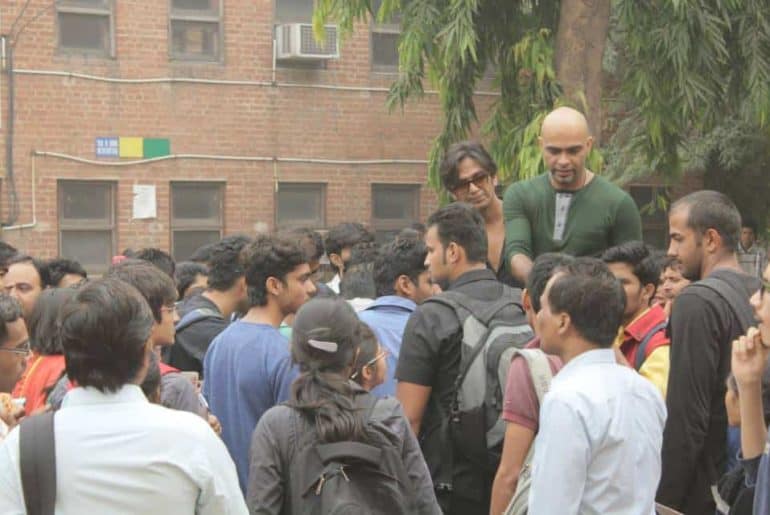
Aam Aadmi Party (AAP) is the most visible among all the political parties in its campaigning in Delhi University. Arvind Kejriwal visited St. Stephen’s College in August to interact with students. Many students from different colleges have joined AAP and are volunteering for the Delhi Assembly Elections. Yogendra Yadav addressed a rally on 30th October in the University. Recently, MTV VJ Raghu Ram could be seen campaigning for AAP in different colleges of DU and in IIT Delhi. Prashant Bhushan has also addressed students on various occasions.

Adding to this, in the party manifesto released on Wednesday, the party declared that if brought into power, they would open more colleges in the state and roll back the Four Year Undergraduate Programme (FYUP).

Bhartiya Janata Party
1391529_10202372890313042_87270023_n

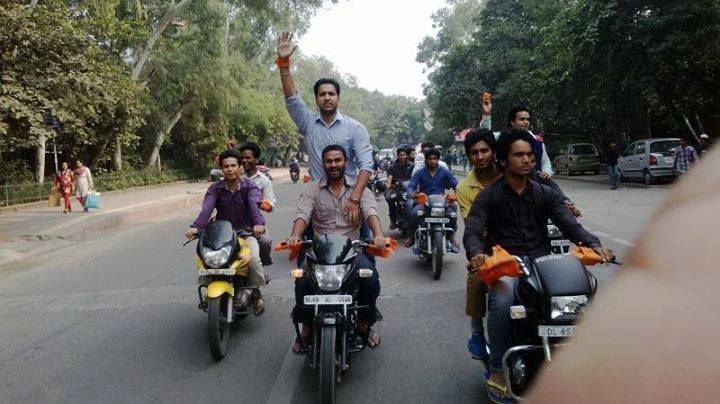
BJP has its share of young leaders who have been DUSU office-bearers. Nakul Bharadwaj, popular face of Akhil Bhartiya Vidyarthi Parishad (ABVP), the student wing of BJP, contested elections last year as well. ABVP has organised a bike rally to spread awareness about voting among the youth. ABVP has also initiated a campaign ‘Youth For Change’, to spread voting awareness. The emphasis on the youth is apparent in the campaigning by the party where it promises to open 15 new colleges and one university under the Atal Yuva Mission, if voted into power. They are also promising to exempt all taxes on computers, laptops, tablets and smart phones for college students.

Congress

National Students Union of India (NSUI) the students wing of Congress had organised a protest march against Vijay Goel. At least four ex office-bearers of NSUI are fighting elections from Congress ticket in the upcoming Delhi Assembly elections. With the release of the party manifestos, the Congress promises to increase the number of evening colleges across the University, a new university for health sciences and 5 more medical colleges. Besides, the state government had also proposed 90% quota for Delhi students in the state funded colleges of DU in October.

The Election Commission is leaving no stones unturned in roping in the young voters. It has started campaign with many NGOs to rope in the young voters and enrol students of various colleges to vote in the upcoming elections.

]]>

With just months to go for the state elections, in October, the Congress-run Delhi government had proposed a revolutionary plan in favour of the students having their domicile in Delhi. The plan offered an average of 68 percent reservation in 28 colleges of the University of Delhi. Not leaving behind in the race to polls, the Bhartiya Janta Party too joined the track by claiming the decision as being instigated by its own party agenda. Nonetheless, the stakes are high and whether its a serious reservation docket or a fantastical poll mantra is still a matter of debate.

If passed, this plan would ensure that not less than 90 percent of seats would be reserved in colleges fully funded by the state government and about 50 percent in those partially funded by it. With the state elections nearing and taking into context the huge number of seats being reserved, this might eventually be seen as a politically-driven manoeuvre or even more less, a mere rhetoric.

Though, even after a month, the decision is still being condemned by various student bodies and has flared up the reservation debate once again with many terming it as a directed political twist. “It is a populist stunt and a political gimmick.”, said All India Students’ Association’s (AISA) National President, Sandeep Singh. “The state government should better take interest in improving the primary and medium level education system.”, he added.

ABVP is too flowing in the same wind. “DU is a central university, and state goverment should refrain from using it for its own poll agenda.” said ABVP’s National Executive Member, Raj Kumar Sharma. When asked about the similar poll agenda by BJP, he made a clear distinction between the two parties saying that ABVP works in interest of students and has its own perception.

The Bhartiya Janta party too came out all guns blazing, with Dr. Harshwardhan, the Chief Ministerial hopeful from the party referring this to as indirect plagiarism. “Our party’s national president Shri Rajnath Singh ji has already raked up the issue several times and Congress has just taken a leaf out of his book.”, he said.

Though, Congress is getting support on this from the party’s students wing National Students’ Union of India (NSUI), with President Rohit Chaudhary fully supporting the plan. “Certain DU colleges are funded by the state government and hence Delhi students must have the advantage of reservation.” he said.

Aam Aadmi Party, the first time contender in the State elections refused to comment on the issue.

With varying approaches to the issue from the different contesting parties, it might be adhering to poll tactics keeping in mind the large vote bank of young voters in the stake.

Image Credit: Sahil Jain

Kai Chicken, a very oriental name that boasts of a wide ranging menu, but does it live up to the standards of us DU students?

Location: Kai Chicken is located about 10 steps down the lane from Chowrangee, right next to Bubble Tea Shop (which has shifted) this makes it very accessible. Even though their board is quite in everyone’s face, the clutter of Satya Niketan may force you to overlook this place.

Ambience: As soon as you enter this eatery, be rest assured you’ll forget that you are in Satya. The place is neat and clean, quite spacious- which comes as a surprise and we could not miss the powerful AC that gives much needed respite.

IMG-20130808-WA0004

Menu and Food: The most crucial aspect of an eating joint, its food. Sadly Kai Chicken does not fare too well here. We found the burgers to be bite sized, compared to the hogger’s delight the menu displayed. The wrap we ordered was mostly cold and seemed half heartedly done up. They do take into account a wide variety of non vegetarian food- mainly chicken and can prove to be a refreshing change for chicken lovers.

Service: It took more than a reasonable amount of time for our food to find its way to our table. This seemed even more unreasonable as there weren’t any other customers at the time. However, service at the counter is prompt and we have no qualms whatsoever. The option of home delivery is also there, so you can order Kai right to your PG.

Value for money: Here is where the hoardings get really misleading. They boast of a very student friendly price tag, but it isn’t all that friendly. The average cost for 2 for a meal can touch Rs. 400/- if drinks, main course and dessert were to be taken into account.

Unmissables: You can certainly not miss the ceramic- burger shaped jar- that houses ketchup sachets- very eye catching. In terms of food the Chicken bucket and Chicken fingers with the variety of dips are worth a try.

Now in DU, do as the DU kids do and explore!

So here is DUB bringing you one of its favourite Tibetan food joints which is definitely recommended for all the foodies out there!

DSC_0034

Location – (2/5)
This restaurant is located in the narrow streets of the famous Tibetan refugee settlement, ‘Majnu ka tilla’, which is close to both the Vidhan Sabha and Vishwavidyalya metro station. Accessibility can be slightly problematic due to the overcrowded roads and remoteness of the area. Students will have to shell out around 30-40 bucks for their rickshaw ride!

DSC_0032

Ambience – (3.5/5) The place is fit to comfortably accommodate over 40 people, and has a bright and sunny feel to it. The food joint is done up in a traditional Buddhist manner with loads of laughing Buddhas and dragons staring at you as you eat. The place can safely be referred to as ‘a small chunk of Tibet’ in the busy metropolitan of Delhi.

Menu – (4/ 5) The menu comprises of your everyday Chinese and Tibetan dishes; with their momos, noodles and thukpa being the crowning glory. Variety of Tibetan dishes like the Gyuma (fried sausages), Shabhaley (fried momos) and Thentuk (noodles with soup) are Tee Dee’s speciality. Their steamed bread and special apple beer can be a good companion to your meal.

Service – (3/ 5) The service is good with the restaurant not being too crowded. The staff though approachable but seemed slightly slow with their service.

Rates – (3.5/5) This restaurant is perfect for the perpetually broke DU kid as their rates are pretty low and the average cost for a meal for two people is around Rs. 400 with beverages included.

DUTA

The joint is open from 11 AM to 11 PM and has packing services as well. If one overlooks the slight accessibility issue, this place is great for a date or a day out with friends!

Image Credit: Jayati Bhola

dinesh singhRespected Mr. Dinesh Singh,

This letter is to congratulate you on your relentless pursuits to making Delhi University a world class university. I am fully aware that due to the “hurried” changes in the degree program, you have received more brickbats than bouquets, but this letter is an exception.

It has been around three years that you’ve been elected the VC of the best university in India. In your interviews you’ve maintained that the preparations for implementing the four year undergraduate programme (FYUP) started as soon as you held office. Even then you made the smart decision to implement the semester system, just to replace it with FYUP after two years. Your uncanny future planning is admirable, sir.

You’ve claimed rather vehemently that FYUP is going to increase the employability of students. I fully trust you when you imply that by studying non-core subjects more than core subjects in the span of 4 years, a pass out will be the preferred choice. I also believe you that by giving multiple exit points and still “benefiting” from the studies, a drop out with a B.A degree will get a job without really specializing in his 2/3 years of study.

Sir, I appreciate your concern for the students who wish to study in U.S.A after completing their graduation in India. Your decision to make structural changes (increasing the span from 3 years to 4 years to suit the USA model) rather than focusing on the quality of the structure (the quality of core disciplines, lessening the burden of non-core subjects) is admirable. Because you see, spending a year extra without learning extra is the goal, USA and all.

I understand you value quality education, that’s what FYUP is all about after all, isn’t it? Therefore I applaud your decision of making students study the disciplines that are in no way related to the field they want to major in. The fact that you’re making an English major aspirant from humanities background study biochemistry perfectly makes sense. Because the value of science foundation courses is so important in literature after all, that it would have been better to delete a Shakespeare text and replace it with physics.  Also, since not everyone has studied biochemistry at the high school level, college level bio-chemistry is going to be pretty much same to high school bio chemistry, so that everyone is able to study, thereby not taking college level studies a notch up. I perfectly see where you’re taking quality education with this.

You, respected sir have created an ideal university, where professors keep shouting and administrators turn a blind eye. Where students aren’t able to learn and nobody listens. Where cut offs keep rising and quality education keeps going downwards.

Congratulations sir. My heartiest wishes to you in your endeavour to achieve life, liberty and happiness, and perpetual deafness.

Yours sincerely
A student who being in second year is facing the misfortune of not studying in FYUP.

Image Credit: South Campus website

We, Delhiites, have certainly travelled in autos at least once in our life. This is almost as certain as the autowallah charging you “Meter se 10 Rupai extra.” As students, rather, as DU students who are late to the first class almost every time, travelling by an auto is day-to-day business.

So what are the basics that make up for a mundane auto ride from point A to B? First and foremost, whether the autowallah is ready to ferry you to your desired destination or not; on a good day you’ll find a compliant guy in about 3 attempts. Secondly, is your chosen autowallah ready to go by the meter; if you are really adamant about it and it is your lucky day, you’ll end up riding a DTC. Thirdly, and the focus of the article is the socio- political issue that the autowallah would shed light upon in his choicest words. The autowallah’s banter maybe the simplest of rants about the traffic with a garnish of his favourite cuss words or a complex sometimes right wing sometimes left wing talk about the state of our polity.

So I shall now narrate 2 stories of interesting rides around the city.

The first incident happened when my professor of Indian Politics took an auto to go someplace, he didn’t mention where. So being the last person to act as a social pariah he started chatting up the autowallah and the stories the autowallah had to share were rather interesting. The autowallah came from a better than middle class household from a state in the Hindi speaking belt. He claimed to have had acres of land and decent amount of cattle to his name. Yes, even to my professor it struck as a rather odd thing for such a guy to be driving an auto in Delhi and he enquired as to what went wrong. So, our autowallah in question lost most of his assets because he had decided to stand for the local elections. He lost all his money in campaigning, and buying off voters which means most of his expenditure was on “dhols, dhotis and daaru”. Indebted as he was, to raise his head above the debt and to make a living, he now drove an auto on Delhi roads. Though one can still wonder if the expenditure on dhotis and daaru had gone down for him or not.

The second case in point is something that happened when I took an auto to get to college the other day. Not only did the autowallah go by meter he also slowed down and pulled up at the curb when he had to answer his phone! Who in this dammed city does that?! When I appreciated him for that action he went on and explained about how he always went by meter and never acted as a “bhaokhaanewala driver”. He also added that two of his sons were studying in leading engineering colleges in the country and as proof of his honesty he did not merely keep the change when I paid him, he returned me the exact amount of change adhering to what his meter said. His auto was famous and revered in the city, he said as he had the unique number plate that read ‘0002’. That was a rather refreshing start to my day since it did not include a game of What Price is Right with an autowallah.

This city has presented all of us such quirky travel tales. To the extent that in 1971, the then TOI Editor took a taxi from his office to get home and what the taxiwallah said, he reported the next day as an example of how delusionalMrs. Gandhi had the common gentry with her ‘GaribiHatao’ slogan. When he settled in the back seat the taxiwallah remarked, “Sahab election kebaadaapaagebaithna hum peechebaithenge.” Needless to say, both of them stuck on in the same seats even after the elections.

So it has been rightly said that if you want to tap the pulse of our city take a ride or two in an auto and make sure that you don’t sit back reading a book or listening to music cause the autowallah bhaiya has a lot to tell.


Anugrah Gopinath
[email protected] 


Verve, The Street Play Society at Shaheed Sukhdev College of Business Studies is proud to present “MANTHAN 2013”, which aims to harness the power of street theatre to arise a sense of responsibility and cognizance about sensitive issues within the society. Over the past six years of its history, different colleges across Delhi have come together and performed street plays with various alluring themes at many public places, all with an aim to reach out to people and get them thinking. The largest and the most extensive street play festival in Asia, MANTHAN, is widening its expanse this year to a month long fest spanning across 3 cities-Delhi, Mumbai and Chandigarh. Manthan will incorporate ‘nukkadnatak’ performances from various college teams and professional groups on the plethora of social issues plaguing our nation. The highlight of the event is the unique socio-cultural initiative, titled the ‘Street Play to Schools’ programme, undertaken with the purpose of promoting Street Play culture in future college students and to create awareness at the same time. Spanning from 6th February – 15th February 2013, the school programme was host to a volley of excellent ideas and synergetic performances by reputed colleges in various schools across Delhi. The School programme had the following schools and colleges as its participants:

  • Bal Bharti School, Pitampura- Shaheed Sukhdev College of Business Studies and Lady Sri Ram College
  • Sardar Patel Vidyalaya- Daulat Ram College, Sri Ram College of Commerce
  • St. Mary’s School, Safdarjung- Atma Ram Sanatan Dharma College
  • Delhi Public School, Rohini- Hansraj College
  • Sri Guru Nanak Public School, Adarsh Nagar- Miranda House
  • Mira Model School, Janakpuri- Motilal Nehru College
  • Ahlcon International School- Hindu College
  • Mount Abu Public School- IP College
However, this is just the beginning. Taking off from the grand success of the school programme is the first-of-its-kind ‘Street play to NGOs’ programme. Through its launch, Manthan plans to touch the deeper roots of the society by performing street plays in slums in association with various NGOs across the Delhi-NCR region. The schedule for the performances at NGOs is as follows: 18th February 2013- Arya Anathalay, Daryaganj 19th February 2013- Bachho Ka Ghar, Daryaganj 20thFebruary 2013- Prabhaat 21st February 2013- Blind Relief Association Commencing from 25th February is the main event of the festival with each day modeled around a unique theme; plays relevant and pertaining to that particular theme will be performed on that day. At the conclusion of the performances, an open discussion about the theme will be held with the audience under the esteemed presence of eminent personalities from the field of theatre, performing arts, education, media, social and political activists, etc. The event is being promoted as a free-for-all event that promises entertainment and at the same time raises the specter of social evils haunting the nation and drives home a serious and meaningful message of bringing about social changes. Manthan’13 is privileged to present to you its title sponsor – Sun Foundation. An initiative of Vikramjit Singh Sahney, Padma Shree, Sun Foundation has brought self reliance and betterment to the lives of thousands of lesser privileged women and children through their initiatives like Surya Kiran Centres for Women, Taare Zameen Par for specially abled children and Save The Girl Child Campaign among others. Follow the link below to get a sneak peek into Manthan’s endeavor to usher in change. http://www.facebook.com/Manthan.cbs?fref=ts   Ek Khwaab Jo Maine Dekha Hai, Khud Hi Mein Janma Hai… Badlaav Ki Wo Soch Hai, Khud Hi Mein Dekha Hai.   -Manthan 2013. Aao, Ek Khwaab Ko Janm Dein.]]>
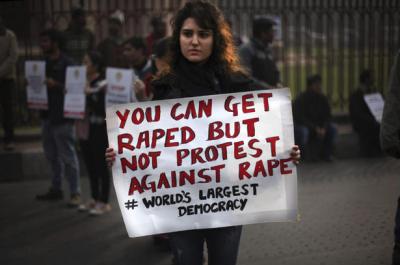
I live in a PG, close to college, because my house is slightly far and the travel is inconvenient. It took me a lot of explaining and convincing to get my parents to let me live separately. They’ve always been very protective and wary of the how unsafe Delhi is. But over the past month it feels like something has changed. I don’t think they’re wary anymore. I think they’re more scared than they ever were. And somehow its not just them, its everyone. Considering how ruthless people seem to have become, nobody wants to take “risks”. I’m used to traveling alone at night with my girl-friends. But over the past few weeks, every time we talk about it, there’s an eerie, uncomfortable feeling. It’s almost like it’s not the same place anymore. My friends tell me they don’t feel safe traveling anymore, be it by autos, metro or even cabs, even in broad daylight. My mom doesn’t want me traveling alone in the dark, even if it’s by cabs. Everybody’s vehemently talking about justice and the need for safety, autos are coming up with panic buttons and people are actually coming out to protest about the lax cops, the need for severe punishment and upping the security levels.

Amidst all this, there remains a section of our population which will always talk about women’s safety being in their own hands. And don’t mistake this for that section which wants women empowerment through ensuring all women are capable of self defense. I’m referring to the quiet significant number of people in our Indian society who believe that it is up to a girl to not be called fast, keep safe and live a protected life, by following the very norms which socialize Indian girls into subservient dummies who are easily suppressed by their male counterparts.

It’s not uncommon to hear neighborhood aunties talk about how “she’s always wearing provocative clothes” or “always hanging around with boys”, or “goes out at night”, with smug expressions and an unsaid agreement about how the girl is calling for trouble. If “Prevention is better than Cure”, then why does Prevention here, refer to girls following a certain code of conduct in order to not be raped or harassed. Why doesn’t it apply to boys, who need to be brought up respecting women and learning to control their desires. Isn’t that what socialization should be about? Shouldn’t the babas of the world be preaching to the boys to keep it in their pants, rather than telling the girls to fall at their attackers’ feet and appeal to them as her “bhaiyas”. Shouldn’t parents be instilling morals in their sons about how a girl’s clothes are not an index to her availability, rather than telling their daughters how she’s merely going to attract attention by dressing in a way which is even slightly off the conservative Indian code of dressing – cover everything. I’m not saying that every person in our society believes in such unfair notions, but a considerable number do. The city be made safer, rather than the girls be put under curfews and restrictions.

When flipping through the channels on TV while an aunty from the neighbourhood settled herself beside me, I randomly started watching some movie called “Tanu weds Manu”. In a series of scenes where two girls were seen smoking a doobie, and drinking from time to time, aunty-ji had already declared them as being bad girls, jinse “kaun shaadi karega? inke sath sab ek hi cheez karna chahenge.” I don’t mean to advocate smoking or drinking, but I DO know for sure if these were the male actors instead of the female ones, aunty would have hardly even noticed. I wonder how in such a judgmental society, where any deviation from the “correct” code of conduct is an invitation to be violated, how can one even think about equality? We do need a hike in security measures across the city very urgently, but at the same time, we as a society need to rethink the kind of morals and values we are focusing on, and where these restrictions and norms need to be applied. Though the world didn’t end on the 21st of last month, but the utter cruelty of the case that everyone knows I’m talking about makes it look like a part of humanity did. In a culture that constantly seeks to prove itself SO rich in values and SO moralistic, one begins to wonder whether being conservative is actually synonymous with being moralistic, or maybe are we just fooling ourselves.

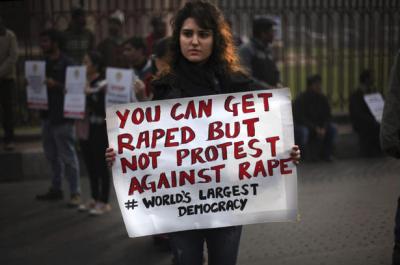
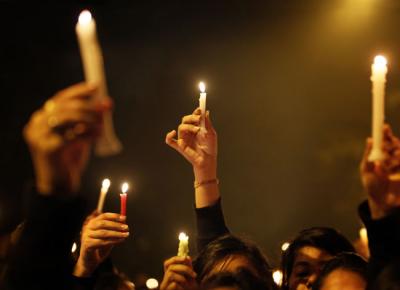
The recent uproar on the case where a 23-year-old girl was raped and thrown out of a bus, took a tragic twist with the demise of the rape victim, popularly known as Nirbhaya. The protests held at Raisina hill and India Gate were charged with anger and adrenaline, but her death brought with it an even stronger will to seek justice for and pay tribute to ‘India’s daughter’. After being transferred to Singapore’s Mount Elizabeth hospital on 27th morning, the nation collectively prayed for a speedy recovery. However, the girl succumbed to her injuries just two days later. Her death ignited a flame within the hearts of Indians across the world, and many movements were held across the country to send a message to the Indian law-makers that the war had only just begun. In New Delhi, Jantar Mantar was the prime spot where peaceful gatherings were organised to show solidarity. As Jantar Mantar has been a symbol of non-violent protests even in the past, it seemed to be the perfect spot for the citizens of the capital to gather and pay tribute to the brave girl who fought against the rapists for her life. “The crowd was very peaceful and calm. More than a sense of revenge, there seemed to be a solemn atmosphere. Despite the fact that there was a group of people yelling ‘Hang the rapists!’ at the top of their lungs, most present realised that the point of meeting at Jantar Mantar was to pay tribute to the girl who was raped as well as all the other women who have suffered due to shameless, savage minds,” said Ankita, a student of Lady Shri Ram College. As students continue to organise street plays and people come together to light candles in memory of the 23 year old medical student, the direction of these protests and marches seem to be aimed at a complete overhaul of the existing safety regulations and policies. This might just be the start of a new revolution, spearheaded by the dynamic and powerful youth of a nation infested with outdated laws and run by ageing leaders well beyond their time.]]>


The rape incident of a 23 year old student (Amanat, as the media has christened her) and the physical mutilation of both Amanat and her friend have once again exposed the underbelly of the nation’s capital. One among the many rapes to be reported in the city’s newspapers (three more reported from the city post this incident less than a week back!), this case was different only in the fact that it caught the imagination of the public. Social media was leveraged to spread the anger far and wide, public gatherings were organized all over the country and a lot of words were spoken.

The public rage since then has turned wild. On day 1 the large protest marches ran over the security barricades at the Home Minister’s residence. On day three, it escalated to Raisina Hill. Any person mildly active on Facebook could tell you what the country wanted – for the accused to be hanged to death! Or if given a choice, people would have them castrated, bobbitized, flogged and publicly stoned to death.

Lots and lots of young, educated Indians wish exactly that for the accused. And I write, hoping to provide a balanced perspective to the entire episode that has gripped this nation. I write to point out the most obvious legal hurdles in granting a death sentence to the accused.

At the outset, I agree that the incident this time around was gruesome. And it deserves a stringent punishment. But I disagree with the few who say that an example should be made out of these culprits. I disagree because I fail to see how this act is any more gruesome than that landlord who raped a minor, or the father and stepfather who alternately raped their daughter. All of this in the past week. Also, it is a statistically proven fact that making murders an offence worthy of capital punishment has not in the slightest affected their rates. Legal opinion is divided on how effective a change in law would be for tackling incidents of rape.

As the law in India stands today, rapes are bailable. And they never warrant a capital punishment. There is a loud clamour for changing these ‘archaic’ laws and there are reasons why the legislators haven’s sprung into action yet.

A grossly under-reported fact is that rape laws (much like dowry laws) are amongst the most misused laws in India. Section 114A of the Indian Evidence Act states “when sexual intercourse by the accused is proved and the question is whether it was without the consent of the woman alleged to have been raped and she states in her evidence before the Court that she did not consent, the Court shall presume that she did not consent” which in simpler words means that if a male has sex with female, she can file a rape case against him even if the act was consensual. The wordings of the laws have been often misused (or so is popular opinion, the law itself stands). The most common scenario would be one where the woman wishes to marry her lover post coitus and upon refusal, files a case of rape against him. The Supreme Court made the matter slightly more complicated by passing an order that ‘sex with the promise of marriage amounts to rape’.

Now picture this- a hot blooded India demands a change in laws, making rape non-bailable and worthy of capital punishment. The law is misused, even if by a minority (though the numbers are debatable) leading to the chargesheet being filed against an innocent. The person is slapped with a non-bailable arrest warrant and suffers in jail, at the mercy of our over-burdened, and hence slow, judicial process. The capital punishment clause can mean that the innocent could face a severe penalty for no fault of his bacause the wordings of 114A make it almost impossible to prove innocence.

We must not forget that the fundamentals of justice stress more that an innocent man should not hang rather than making all the guilty suffer. Hence, innocent until proven guilty! This is where it becomes so important that we treat laws with utmost care. Each word in an amendment must be carefully scrutinized for what it implies and what loopholes it leaves behind. It is all very well for the masses to shout “Hang the rapist” but it would be wiser for the educated to analyse why our laws say what they do.

Also, there is a fine line between empowering women and decapitating men. Though we feel the need to bring women up to par, it does not mean it shall be at the cost of men. The idea is not to tilt the scales, it is to balance it!

I would like to end by stating that I am not a law student and am not aware of the details behind all of India’s laws. However, my article is based on statements from the Indian Penal Code available on the internet and I assumed it to be wholesome. My intent behind this article was to bring a sense of sanity to this whole outrage that the nation feels. We must continue our fight against rapists, make our streets safer, give women their rights, and all that while not not getting emotionally blinded.

Arnav Das
[email protected]