Indian students are active “psychogeographers” of global politics—shaped by world events yet reshaping them through solidarity, dissent, and everyday engagements beyond state-centric politics.
In the twenty-first century, the student is no longer confined to the classroom. The internet, transnational education, and global crises have transformed campuses into spaces where young students are constantly negotiating their position in the world. Indian students, in particular, have emerged as what can be called the psychogeographers of global politics—not merely charting the impact of world events on their lives but also redrawing the contours of political solidarity itself.
When war breaks out in Ukraine, or West Asia, or when climate change forces entire communities into precarity, Indian students do not experience these events as distant abstractions. They encounter them in their campus discussions, their social media feeds, and their diasporic family networks. In these moments, they are often portrayed as passive recipients of crisis—waiting for evacuation flights, and reeling from the aftershocks of geopolitical tensions. The student figure, in this narrative, is primarily vulnerable, caught in the cross-currents of power without agency.
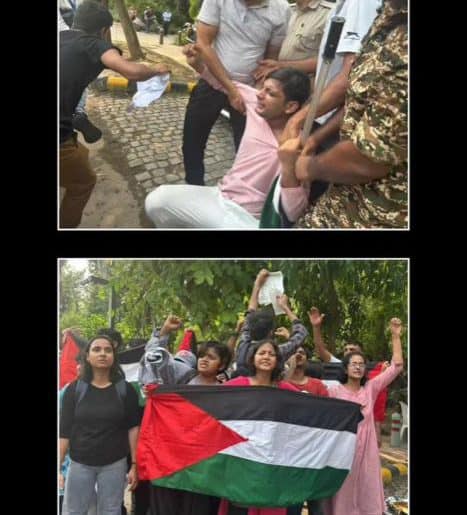
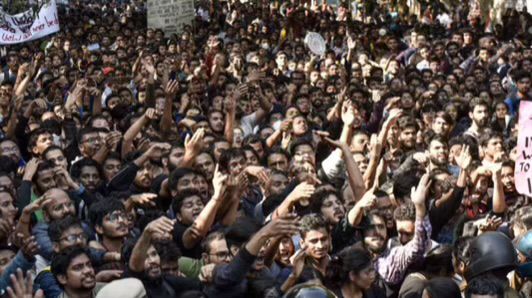
Yet, to stop at this description is to miss the ways in which Indian students are increasingly reshaping the moral geography of global crises. The solidarity marches on campuses, the fundraisers for disaster relief, and the vocal demands for international justice reflect a deeper engagement. From Delhi University students issuing statements on Palestine, to Indian youth activists co-ordinating with counterparts in Europe and Africa, these acts of alignment reimagine students not as spectators but as agents who extend the terrain of politics.
The idea of students as psychogeographers rests on this duality: they are simultaneously mapped by crises and mapping new routes of resistance. The student who studies in Canada while organising aid for Manipur, or the one who prepares for competitive exams in Delhi while amplifying Palestinian voices online, is engaged in a form of border-crossing politics. They are charting emotional and political landscapes that escape state-centric diplomacy.
This agency, however, comes with its own contradictions. Many Indian students abroad struggle with visa precarity, racial discrimination, and economic vulnerabilities. Their solidarity is often curtailed by fear of state backlash—whether from host governments or from Indian authorities keeping an eye on dissent. On campuses at home, political polarisation and surveillance discourage free debate. Yet, despite these constraints, student voices consistently seep through. Even when formal protests are suppressed, the circulation of petitions and social media campaigns becomes a cartographic act—tracing new geographies of empathy.
It is important to recognise that students’ interventions do not always take the shape of loud political statements. Sometimes they manifest as the translation of distant suffering into local conversations—debating refugee policies, questioning media bias, or challenging the ethics of investments in arms. By reframing global crises through the lens of everyday student life, Indian youth ensure that politics does not remain the monopoly of statesmen but becomes the concern of citizens-in-the-making.
In this sense, Indian students are not just navigating global crises; they are re-scripting them. They move between the vulnerability of being acted upon and the agency of acting back. As psychogeographers of global politics, they leave behind trails of solidarity, dissent, and imagination that future generations will follow. And in doing so, they remind us that the classroom of politics is not confined to textbooks and lecture halls, but is spread across the uneven terrain of our shared world.
Featured Image Source – DNA India
Image Caption: By linking global crises to daily student life, Indian youth make politics a concern of citizens-in-the-making, not just statesmen
Richa Choudhary