This analysis compares recent student-led uprisings in Bangladesh, Sri Lanka, and Nepal, highlighting how disillusioned youth challenged corruption, repression, and economic crises, emerging as catalysts for political change across South Asia.
South Asia has been facing unprecedented political instability in recent years. The commonality stems from an observation that these movements or uprisings are unorganised in nature and lack any cohesive organisational support or leadership. This establishes the ground for comparison between these countries besides being from the same region and being postcolonial countries. The role of students in movements has been crucial in various uprisings which have led to transitions of governments throughout the pages of history.
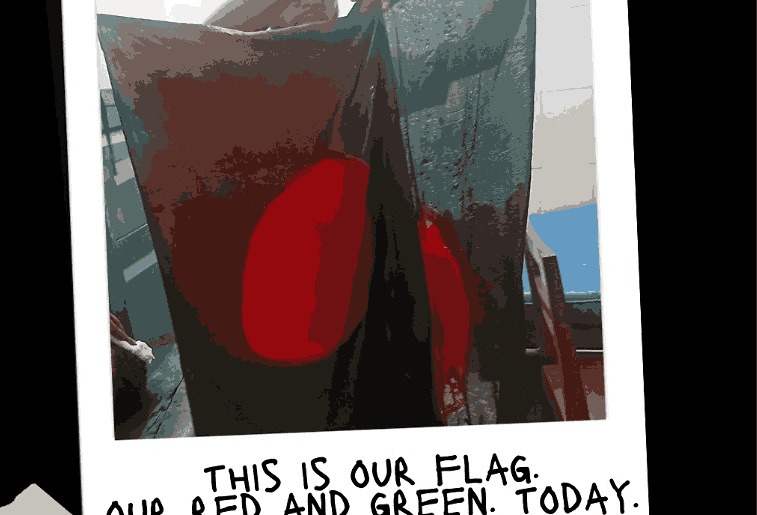
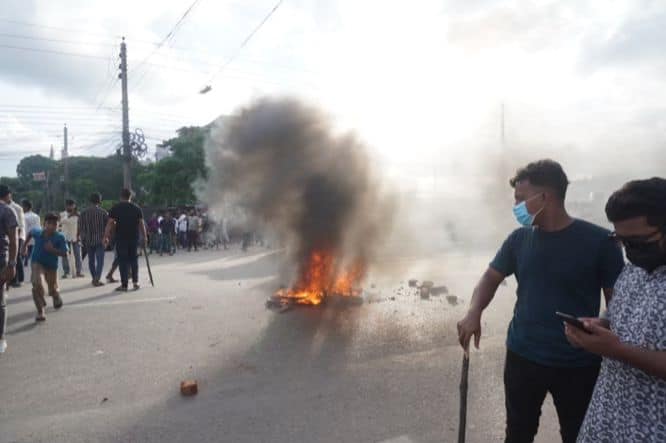
The July Uprising of 2024 in Bangladesh showcased the deeper dissatisfaction of students in terms of the lack of civil liberties, political freedom and robust social security for the majority, which was often overlooked due to the economic and technological progress of the nation. However, as the country’s economy thrived, the government appeared to believe this gave it free rein to suppress civil rights and freedoms, sideline opposition parties, and govern without regard for the nation’s laws or international democratic standards. This led to the creation of political outfits like Ganatantrik Chhatra Sangsad, or Democratic Student Council. Every revolution has an incident which serves as an immediate trigger to a larger uprising; in this case, it was the quota system in jobs giving 30% reservation to the families of freedom fighters that fought for the liberation of Bangladesh from Pakistan in 1971. The manner in which the government at the top, run by Sheikh Hasina, reacted made the situation even worse, which led to the killing of various student protesters, including Abu Salem, who was the lead coordinator of “Students Against Discrimination”.
Skyrocketing fuel costs, rapid depreciation of the rupee, and massive power outages had caused deep disgruntlement among Sri Lankans, especially the younger generation. When the nationwide power cuts reached more than 10 hours a day in late March, mass protests broke out in a number of regions in Sri Lanka, where demonstrators urged for the resignation of the country’s president, Gotabaya Rajapaksa. Sri Lanka’s Inter University Students’ Federation (IUSF) made an important contribution to the people’s struggle throughout the country. IUSF has around 70 affiliated student unions – about 95% of university student unions in the country, including those at all major universities. Youth and students, including the IUSF, played a similar key role in 2015 to defeat Gotabaya Rajapaksa’s elder brother, former president Mahinda Rajapaksa, upending the ‘unshakeable’ Rajapaksa regime during elections that year.
The most recent, widespread protests in Nepal, which are quite literally being termed as Gen Z protests, highlight the young and mostly university-going students as the pioneers of the uprising. The banning of social media apps like Instagram, YouTube,etc, triggered the same; however, it would be a grossly incorrect observation to term it as the key reason for the protest. The youth of Nepal see how their country has suffered from around 2 decades of corruption since the country transitioned from being a monarchy to a democracy and the power rotations between 3 leaders who have allegations of serious corruption cases over them, with their family and children openly enjoying luxurious lifestyles. On the other hand, average youth are suffering with a lack of employment, due to which they have to migrate for better opportunities, and on top of that, the unjust taxing rate is at 39%.
The students have a bolder voice because their dreams are still fresh and dear to them, and the ability to see hope as the silver lining amidst all the chaos gives them the unique ability to unite their peers and form an effective movement which straightforwardly communicates the grievances that they have and how they would no longer be tolerated.
Caption- Advocacy of students against injustice.
Divyanshi Dusad