Explore Atma Ram Sanatan Dharma College (ARSD), Delhi University, NAAC A++ accredited and ranked among India’s top colleges. Discover courses, fees, admissions, campus facilities, student life, alumni, and placements.
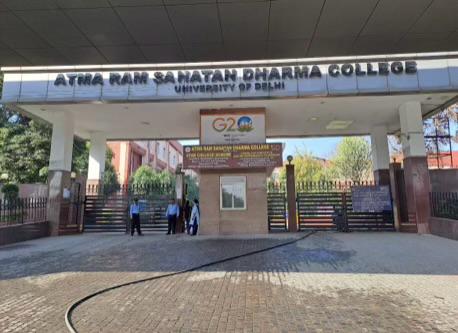
Established in 1959, Atma Ram Sanatan Dharma College (ARSD), affiliated with the University of Delhi (DU), is one of the leading co-educational institutions in India known for academic excellence and holistic development. Located in South Campus, Dhaula Kuan, the college combines strong academic programmes with innovation, research, and community engagement.
ARSD College is accredited with an A++ grade by NAAC and holds the highest NAAC score (3.77) among all Delhi University colleges to date. Recognized by the UGC, ARSD has consistently ranked among India’s top higher education institutions — securing 5th position in the NIRF College Ranking 2024 with an exceptional research score of 94.84, and featuring prominently in India Today 2024 for Arts, Commerce, and Science streams.
With a focus on inclusivity, skill development, and sustainability, ARSD offers a transformative learning experience supported by modern infrastructure, dynamic faculty, and a vibrant student community.
ARSD College Infrastructure & Campus Facilities
Located in the heart of South Delhi, ARSD College features a sprawling green campus equipped with state-of-the-art infrastructure, digital facilities, and sustainable initiatives. The entire campus is Wi-Fi enabled, fully CCTV-monitored, and includes smart classrooms, seminar halls, modern laboratories, and research-oriented spaces.
Under the Star College Scheme, new equipment worth ₹44 lakh was procured, facilitating 64 in-house research projects involving over 200 students. The college also added 110 new computers (7th generation) and three new computer laboratories to enhance its IT ecosystem. An Audio-Visual Studio has been established for e-content creation, and lectures with reading material are now accessible on the college website and YouTube channels.
The ARSD Library serves as a comprehensive knowledge hub with a collection of approximately 1,27,000 books, along with DULS, NLIST, DELNET, and ONOS e-resources. The library acquired 1,869 new books, 23 periodicals, and 39 magazines in 2024–25 and is fully automated with SOUL 3.0 Library Management Software and RFID technology. Dedicated facilities like JAWS software, Zoomax Luna 6, and Evo 11 assist differently-abled students. With seating for over 180 readers and 35 computer terminals, the ARSD Library remains one of the most resourceful in Delhi University.
Sustainability is central to ARSD’s campus planning. The college has installed solar lamps, energy sensors, and tactile pathways for universal accessibility. It is currently in the process of installing solar panels to further its eco-friendly goals.
In recognition of these efforts, ARSD received the District Environment Championship Award 2024–25 for South-West Delhi and was declared an Eco-SDG Champ 2024 by the Ministry of MSME, Government of India, for exemplary contributions to sustainable development practices in higher education.
Courses Offered at ARSD College, Delhi University
Atma Ram Sanatan Dharma College (ARSD) offers a diverse range of undergraduate and postgraduate programs across Arts, Commerce, and Science, catering to students with varied academic interests. At the undergraduate level, the college provides B.A. (Hons) courses in subjects such as Economics, English, Hindi, History, Political Science, and Sanskrit, alongside B.A. Programme combinations in Humanities and Social Sciences. Commerce students can pursue B.Com (Programme) and B.Com (Hons), while science aspirants have the option of B.Sc. (Hons) and Programme courses in Physics, Chemistry, Mathematics, Computer Science, and Electronics.
The fee structure for undergraduate courses in 2024–25 ranges from ₹13,915 for general B.A. and B.Com programmes to ₹14,815 for B.Com (Hons) and certain B.A. (Hons) courses. Postgraduate offerings include M.A. programs in English, Hindi, and Political Science, and M.Sc. programs in Physics, Chemistry, and Mathematics, following the University of Delhi curriculum with emphasis on research, projects, and hands-on learning experiences. With its robust academic framework, ARSD College ensures students receive high-quality education that blends theoretical knowledge with practical exposure, preparing them for successful careers and further studies.
Scholarships and Financial Assistance at Atma Ram Sanatan Dharma College
Atma Ram Sanatan Dharma College (ARSD) provides extensive scholarships and financial aid to support students from diverse economic backgrounds, ensuring that meritorious and needy students can pursue higher education without financial constraints. The college’s Fee Concession and Book-Aid Committee recommends students for fee concessions, book aid, and scholarships every academic year. In 2024–25, a total of 807 students were granted fee concessions, while 450 students received assistance through the book-aid facility. Additionally, 20 meritorious and deserving students were awarded scholarships of ₹5,000 each under the Alumni Association and Taneja Foundation schemes. Special sponsored concessions were also provided to 20 students, with 16 receiving ₹5,000 each and one student receiving ₹2,000, supported by Dr. Meena Dadu. These initiatives, combined with merit-cum-need-based awards and government scholarships, reflect ARSD College’s commitment to inclusive education, empowering students to achieve academic excellence while fostering equity and social responsibility.
Extracurricular Activities & Student Life at ARSD College
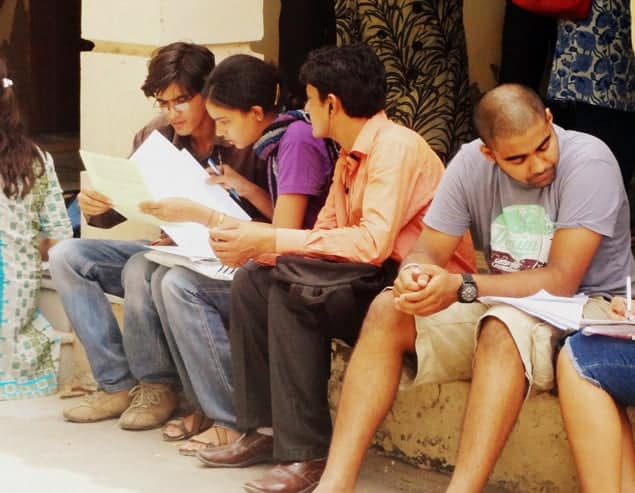
ARSD College boasts a vibrant student culture with numerous societies and clubs that nurture creativity, leadership, and social responsibility.
The Cultural Society includes Saarang (Music), Kalasree (Classical Dance), Outbreak (Western Dance), and Stellar (Fashion), offering platforms for students to showcase their talents. The annual fest TIDE is a major attraction in Delhi University’s cultural calendar.
Rangayan, the Dramatics Society, organizes the annual theatre festival Rangsheersh Jaidev Natyotsav, while Arteysania promotes arts and crafts through exhibitions and workshops. The Eco Club fosters environmental awareness, and Enactus ARSD empowers over 70 student volunteers working on 4 social entrepreneurship projects, creating 15 entrepreneurs and impacting over 10,000 lives.
Academic and debating societies like Nimbus (English) and Vedanta (Hindi) hold weekly debates and the annual Ehsaas Parliamentary Debate. The Equal Opportunity Cell (EOC) ensures accessibility for differently-abled students through inclusive workshops and collaborations with organizations like IDEA and the Society of Disabled and Rehabilitation Studies.
Social outreach initiatives include the NSS Unit, which conducts blood donation drives, self-defense sessions, plantation campaigns, and digital literacy programs; and the NCC Unit, which builds leadership and discipline through training under 7 and 6 Delhi Battalions.
Societies like YUJ (Yoga & Wellness), Women Development Cell (WDC), Pixelation (Photography & Videography), The Multilingual Creative Writing Society, The Gandhi and Ambedkar Study Circles, and The North East Welfare Committee together make ARSD a hub of diversity and inclusivity.
The college also publishes the Udyachal magazine and newsletters Samanvya (Hindi), Synergy (English), and Vaanijya Doot, encouraging creative expression and critical thought.
Admissions at Atma Ram Sanatan Dharma College (Delhi University)
Undergraduate Admissions (UG)
Admissions to ARSD College are based on CUET (Common University Entrance Test) scores, conducted by the National Testing Agency (NTA), and managed through Delhi University’s CSAS-UG portal.
Eligibility requires completion of Class XII from a recognized board, and seat allocation is determined by CUET subject combinations and scores. There is no age bar, and students with gap years are equally eligible.
Postgraduate Admissions (PG)
Admissions to PG programs are through CUET-PG, followed by CSAS-PG counseling on the DU portal. Allotments are made based on rank, eligibility, and course preferences, with final admission confirmed after document verification and fee payment.
Recognition & Rankings
ARSD College stands among India’s top-ranked institutions for higher education, consistently recognized for its research, sustainability, and innovation.
- NAAC Accreditation: A++ Grade (Score 3.77 — Highest in DU)
- NIRF 2024: 5th in India (Research Score 94.84)
- India Today 2024 Rankings: 5th in Political Science, 7th in History, 8th in Commerce, 9th in Arts, and 15th in Science
- District Environment Championship 2024–25 (South-West Delhi)
- Eco-SDG Champ 2024 for Sustainability Initiatives
Notable Alumni of Atma Ram Sanatan Dharma College
Atma Ram Sanatan Dharma College (ARSD) has produced distinguished alumni who have excelled across diverse fields such as cinema, media, politics, and corporate leadership. Among its celebrated graduates is Rajkummar Rao, a National Award-winning actor renowned for his versatile performances in Indian cinema. In the field of journalism, Sudhir Chaudhary, Editor of Aajtak, stands out as a leading media professional. The college has also nurtured political leaders such as Sh. Neeraj Shekhar, former Member of Parliament in the Rajya Sabha, who has contributed significantly to public life. In the corporate sector, alumni like Umesh Upadhyay, President and Director of Media at Reliance, exemplify the college’s commitment to developing capable and visionary professionals. These accomplished individuals reflect ARSD College’s focus on holistic education, academic excellence, and leadership development, reinforcing its reputation as one of Delhi University’s premier institutions.
Internships & Placements at ARSD College
The Placement Cell of ARSD College plays a pivotal role in bridging the gap between academics and industry. It provides students with career opportunities, internships, and corporate exposure through collaborations with leading recruiters.
Since 2019, ARSD’s Job & Internship Fair has grown into one of Delhi University’s most successful student-industry engagement events, attracting participation from across Delhi-NCR and beyond. The cell conducts seminars, workshops, and counseling sessions to enhance employability skills such as communication, leadership, and teamwork.
Top recruiters include Deloitte, KPMG, EY, Wipro, and TresVista, among others, offering placements across finance, consulting, IT, and management sectors.
Through mentorship and training, the Placement Cell empowers students to navigate the competitive job market with confidence and professionalism continuing ARSD’s legacy as a top-performing college within Delhi University.
Image Credits: Ayushmaan for DU Beat
Neeraja Unnikrishnan