
Tag

21Under21

Browsing

From founding Menstra to the UN’s CSW70 and the New York Times, Niyamat Kochhar isn’t just changing the world, she’s building the machine that builds the machine.

“I want to build the machine that builds the machine” has been the philosophy which has guided Niyamat Kochhar’s work, from founding Menstra, a project aimed at addressing period poverty and menstrual waste, to serving as a member of the Youth Committee of the 70th Commission on the Status of Women (CSW70): she has been actively engaged in advocacy, engagement and social entrepreneurship.

Niyamat credits her upbringing and the experiences and opportunities at school for laying the groundwork for her foray into the social advocacy field. She sees her work in the field as a source of fulfillment and her experiences only strengthened her resolve to create an impact. “The more people I interacted with, the more I realised this is what I want to work on.”

Since starting out in Grade 8, she has accomplished a lot. Aside from her involvement in Menstra and CSW70, she has also served as a Global Teen Advisory Board member for Girl Up, a UN Foundation Initiative, organised HerCode, a coding camp for girls from marginalised communities, and connected with activists, young leaders and policymakers globally. She was recently featured in a New York Times article on women and leadership.

A pivotal part in her journey was her experience at a STEAM camp in Kochi, hosted by Girl Up and the UN Foundation, where she had the opportunity to meet women from different parts of the world. Meeting people of diverse backgrounds, and learning of their unique struggles and adversities – such as her roommates who had shared their experiences with civil war and daily unrest – was for Niyamat a testament not only to women’s grit and determination, but also the possibilities of what people could achieve if they had equitable access to the tools and resources only readily available to a chosen few.

Her experiences as a first-year in JMC has given her a similar exposure. Interactions with her professors and her fellow students have simultaneously helped expand her understanding of women’s experiences, and reinforced her commitment to her mission of equitability and gender justice.

With considerable accolades and experience under her belt, Niyamat has big plans for the future. She aims to scale Menstra further and provide support to 10,000+ menstruators including trans and intersex people to secure biodegradable menstrual products, and adopt efficient strategies for disposing menstrual waste, and engage volunteers worldwide.

Niyamat Kochhar possesses a sense of clarity and composure that can make one forget they’re talking to so young a person. Her varied roles as advocate, strategist, and leader in national and international spaces requires effort and rigour, but what carries her through the inevitable challenges and stresses is her passion and faith in the work she does. 

“Building the machine” for Niyamat, refers to the work all of us can do to create a better world; either by building the tools which will directly impact people’s lives, or by laying the foundations of love, empathy and support. This is what Niyamat Kochhar strives to build.

Profiled by: Mangalya Singh
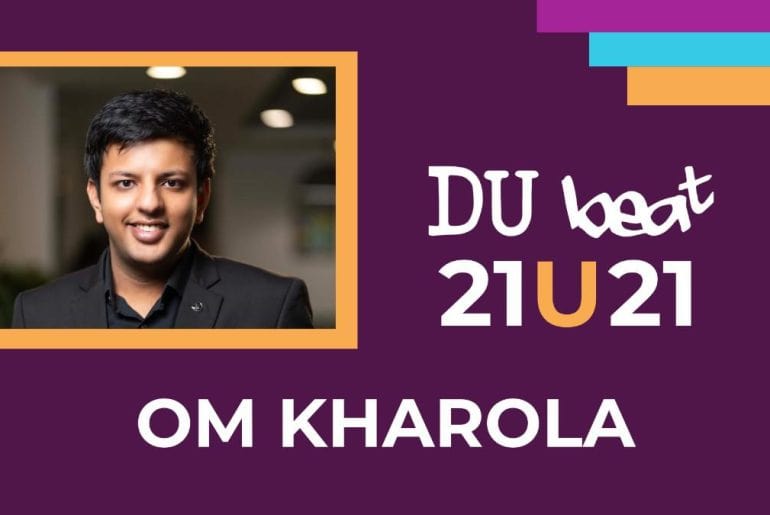
 

Grandmaster of strategy on and off the board, Om Kharola has turned chess into a life philosophy, winning Asian gold, cracking IPMAT AIR 8, and consulting at L.E.K.

Om Kharola is an 21 year old high-achiever who is an amazing chess player who has represented India at the World Youth Chess Championship, exceptional aptitude in academics and a strategy consultant at L.E.K. Consulting. He is a final year student in Shaheed Sukhdev College of Business Studies.

Chess has been foundational to Om Kharola’s life, it has in his own words “..training me to analyze complex positions, anticipate second-order consequences, and stay composed under sustained pressure.” He has played chess competitively from school to his college, earning him multiple state championship titles across Delhi and Maharashtra, securing a silver medal at the Under-17 national championship, and the distinction of being the highest-rated chess player in Uttar Pradesh. He has also represented India at the World Youth Chess Championship and won both team Gold and individual Bronze at the Asian Youth Chess Championship in Sri Lanka. More recently, he emerged victorious at the Gamers Without Borders Chess event in Saudi Arabia, the world’s largest charitable esports event.

Despite chess tournaments being highly demanding, Om Kharola has maintained a delicate balance of sports and academics. Through discipline and long term planning, he has maintained 8.58/10.00 CGPA up to the 5th semester. Furthermore, chess instead of being a distraction has in fact strengthened his mental framework, allowing him to perform better academically. This is highlighted by the fact that he has secured an All India Rank of 8 in the IPMAT (Integrated Programme in Management Aptitude Test) Indore examination, competing against over 25,000 candidates for one of India’s most challenging commerce entrance tests. He has also been admitted to the ISB Young Leaders Program, a prestigious deferred MBA pathway that accepts approximately 50 pre-final year students annually through a rigorous evaluation of academic excellence, leadership potential, and clarity of purpose.


Career wise, he is an Analyst at L.E.K. Consulting since January 2025, where he has rebuilt location details for over 1,000 contract records, sanitized 200+ expert interview transcripts, and is leading the firm-wide transition from Tableau to PowerBI at the analyst level. His previous roles include serving as a GMAT and GRE Quality Control Specialist at Experts’ Global, where he oversaw the creation of over 4,000 questions, and as Lead Product Strategist at Enzo Prep, where he led a large-scale data migration and revamped customer support systems. He has also contributed to international development initiatives in Africa and Asia, designing market entry strategies and exploring partnerships with NGOs across multiple countries.

Om Kharola shows how even a sport can teach one skills which are transferable to all domains of life. Chess has given him tools that have allowed him to succeed in his academics and career. 

Profiled by: Rewa Rawat

Rinchan Lyall Robert started her college magazine with twenty rupees, a Canva template and a folded sheet of paper. Today, that modest experiment has grown into the largest student-run collective of its kind. 

Rinchan Lyall Robert had always wanted to start a college magazine and it’s Stephen King’s fault. “He got his start writing for a college newspaper, which always stuck with me,” she grins.

But when Robert finally stood outside the iconic Venet Hall at Jesus and Mary College, the logistics of compiling, printing and distributing such a magazine felt impossible. Things changed in February 2024 when she first read a friend’s zine and realised a single folded A4 sheet was not nearly as intimidating.

And so the JMC Weakly was born.

She had no drafts ready. The first issue was quickly assembled with poems from friends, a review of Pink Curtain, and when she ran out of ideas for the final page, she added what would soon become the publication’s signature feature—the Editor’s Note. The whole project cost her hours of work every week, but only twenty rupees to print.

“I would skip lunch every Monday and spend the money on printing and giving out my Weakly to anyone interested,” she laughs. “People offered to pay me, but I was just so happy to be doing it.”

Art had always been central to Robert’s life. Raised in Allahabad by a mother determined to keep her children off their phones, she and her siblings grew up painting, sewing and devouring magazines. When she later moved to Mumbai, Robert embraced every extracurricular outlet she could find, even starting a small book club with friends and the support of her English teacher. Years later, things came full circle when she interviewed that same teacher for a Delhi Zine project.

Today Robert is the co-founder of the Delhi Zine Collective, a student-run initiative that designs and distributes zines—essentially miniature magazines—through collaborations with students and organisations. Each issue might contain personal memoirs, whimsical ideas or political reflections, usually selling for no more than twenty-five rupees.

Robert, however, was never interested in making money. “I just loved doing it so much,” she says.

Things began when she showed her fellow quizzer friend Borishan Ghosh an early issue of JMC Weakly. He quickly built a website, and through quizzing networks and word-of-mouth, the simple idea grew into a collaborative publishing project.

From the beginning, the duo decided the money would be put to good use: a base amount to cover printing and fund future issues, with the rest donated to charity. Over time, the collective has raised funds for causes ranging from Palestinian relief to winter clothing drives for children.

Despite the growing magnitude of the project, Robert rarely thinks about its reach. When asked to pick a favourite zine from their expanding catalogue, she hesitates. “They’re all my children,” she laughs. After a moment, she recalls an early essay from The Kabootar Dispatch that explored the author’s relationship with time.

“So many people wrote to us saying they thought they were the only ones who felt that way.”

For Robert, that moment captures the heart of the project —helping people realise they have something worth saying. As she tells participants in their workshops, everyone is secretly a good writer. They just need to give themselves permission to start.

Profiled by: Anjali Paruvvu

Quietly confident and impact-driven, Rucha has learned that great leadership means knowing when to let go, and she’s taking that wisdom straight to Boston Consulting Group.

Success, for Rucha, is not about doing all of it, but about knowing when to let go.

Rucha has an understated confidence when she talks about leadership, and it is refreshing to hear her speak about it without succumbing to the need for control. “Excellence is not about doing all of it yourself,” she says, as if she has learned it from experience. In a world where over-achievement is celebrated, Rucha’s approach is refreshing, to say the least. She believes in showing up every day, trusting your team, and realizing that balance is not about balance but about degrees of it.

Rucha’s journey towards impact-driven work was not something she stumbled upon during college. She has been on this journey for quite some time. She says, “During the pandemic, when things were quiet, I was building passion projects like Moontime and TailorMade. What stuck with me was not the act of giving, but its limitation. Charity is often a stopgap measure, not an actual solution.” While she was uncomfortable with this, she was able to see it more clearly over time. What was once an idea turned into an approach, and then to what can only be described as a business model for impact. What was once an intention turned into a strategy for creating impact.

That shift was not without its pressures. She confesses to moments of panic prior to significant milestones in her life, the kind of which announces its presence unwelcomely and cannot be reasoned with. However, over time, she has been able to analyze failure with great precision, separating what was in her control from what was not. She has been able to de-personalize failure and turn it into something useful.

Perhaps the greatest test of her leadership was when she decided to start a project from scratch. It was not about building something new; it was about building support around an idea that was not yet proven. It was about convincing others to believe in something uncertain. It is an exercise she credits with building her most.

As she prepares to embark upon the next stage of her life with Boston Consulting Group, Rucha finds herself at a juncture where the possibilities feel more expansive than daunting. To her, the idea of being a consultant is not the end goal; it is the next step in the journey of learning. The end goal remains the same: to one day create something of her own in the impact space.

For now, she is content with doing what she has always done: showing up, learning, and trusting that the way will reveal itself as she walks it.

As vibrant as the sunbirds she spots in Lodhi Garden, Saloni Sharma bridges liberal arts and AI, researching human intimacy with technology while making complex ideas beautifully simple.

“Are there sunbirds in Lodhi?”, a query to which Saloni Sharma smiles brightly and nods an affirmative response, exuberating the essence of a sunbird herself – small, bright, colourful, and full of energy. With academic achievements that have remained consistently prestigious and an imperishable curiosity, she is intellect, charm, gentleness, and humility all packed into one person. Someone small with a presence that adds so much colour, much like the sunbirds of Lodhi Garden, where, as the fresh rays of golden hour wrapped around her skin and hair, she expresses, “everything you are doing is contributing to something bigger…whatever I’m doing is real, it has bigger implications. So, that gives me a sense of responsibility.” 

An understanding that humans are not atomic, individualistic beings, but rather all contributors to the universe we live in, in one way or another, is motivation to strive in all endeavours, academic or otherwise, according to Saloni. Her experience in the fields of debating and public speaking has taught her more than simply the art of persuasion and communication. Everybody has those things that they want to do, but the fear of failure and the discomfort of unfamiliarity are paralysing, that is, until one looks at Saloni’s point of view. She reminds those who intend to take up a new project or participate in something that lies outside their comfort zone not to place the weight of expectation of success on their shoulders. “I want to experience it once.” One would want to experience as much as possible in this short yet incredibly cathartic experience called life. So, take every new step as a learning opportunity that is to be hindered neither by the desire for perfection nor the fear of failure.

“[Intellectualism] is something very human, something all of us experience.” Saloni explains that a true “intellectual” is able to explain the most complex topics in the simplest ways. What someone says should resonate with their audience if it is to make an impact. If the information one shares fails to do so, their intellectualism is flawed. Saloni’s statement that intellectualism is conveyed with simplicity stands especially true in her own case, as she displays a deep understanding of philosophy and political theory and can convey it with a great deal of gentleness.

Being the co-founder of AICommons, Saloni has linked liberal arts and technology, connecting sociology and artificial intelligence. Currently pursuing research on AI and intimacy, exploring the emotional dependence and romantic attachment people can develop to their AI bots, Saloni seeks to understand the philosophy behind why people would choose to connect with code over people. “It’s dystopian. It’s sad and scary that it’s happening.” Human beings value organicness and authenticity, which makes Saloni question why and how that can be found in AI bots. Through her research and her ongoing dissertation, she hopes to find answers to these questions. Intelligent and bubbly, and bursting with colour, it is as if a sunbird of Lodhi Garden has epitomised. 

Profiled by: Souparnika

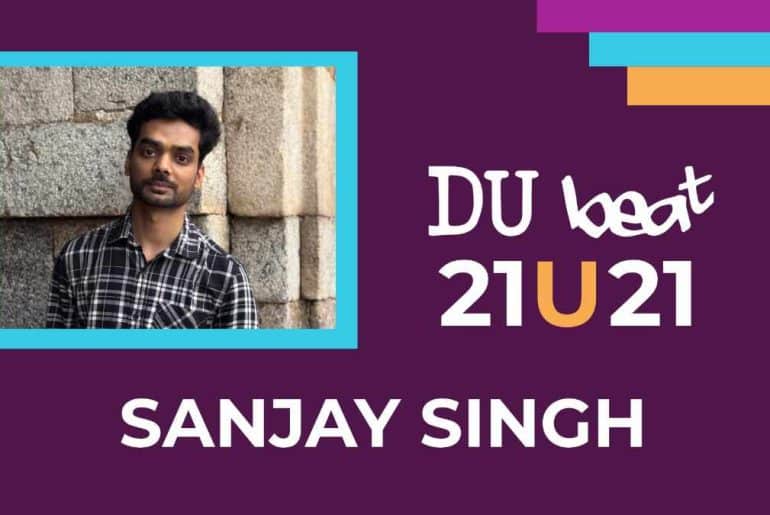
From auditing CBI systems to mentoring 2,000+ students, Sanjay Singh proves cybersecurity is about protecting people, not just machines, one vulnerability, one learner at a time.

Sanjay Singh is a proactive and accomplished cybersecurity professional who has built an exceptional portfolio of achievements. But what stands out most is how he balances deep technical work with a genuine passion for helping others learn. 

On the technical side, Sanjay has done some serious work. He has discovered two Common Vulnerabilities and Exposures which means he found real security flaws in actual applications and got them officially recognized. He conducted a security audit for the CBI, identifying 14 vulnerabilities in an upcoming government website. He has trained with the Gurugram Police and Amroha Police, getting hands-on experience in digital forensics, cyber laws, and threat intelligence. He also earned his Google Professional Cloud Security Engineer certification while interning at ZeroRisk Labs, where he worked on securing cloud infrastructure.

But what really makes Sanjay different is how much he gives back. He emphasizes explaining security concepts in simple, accessible ways, particularly for students beginning their journey. He has mentored over 150 students through one-on-one sessions on Topmate.io, and his impact was so visible that he got featured on their landing page and even on a Times Square Billboard in New York. He founded Coding Saathi, a community platform where he has mentored more than 2,000 interns through live sessions and hackathons. 

Earlier, he built four Android apps that together crossed 3 million downloads, showing he can think like a product builder too. He implemented influencer marketing strategies and optimized performance, gaining comprehensive experience in the app development lifecycle. He has authored research papers on machine learning and cybersecurity, “Adversarial Attacks on Machine Learning Models in Cybersecurity: A Systematic Literature Review” and “Machine Learning for Cyber Defense: Comprehensive Survey of Datasets and Techniques for Network, Host and Application Based Cyber Attacks.” He keeps pushing himself through platforms like TryHackMe, where he has completed over 30 rooms covering everything from Linux to Metasploit.

Academically, he has received the Shaheed Sukhdev College of Business Studies Best All Rounder (PG) Annual Student Award in 2025, acknowledging his holistic excellence at Shaheed Sukhdev College of Business Studies. He also received the Student Achiever’s Award in the Special Category from Sri Guru Gobind Singh College of Commerce, in 2024 for running the Coding Saathi community and mentoring over 1,000 students within six months.

At his core, Sanjay is driven by curiosity and a need to act. As he puts it, he is the kind of person who volunteers to take the reins instead of waiting around. Sanjay Singh views cybersecurity not merely as a technical discipline but as a field that secures people, not just computers. His motivation stems from a drive to explore, initiate, and make tangible impact. He characterizes himself as someone who volunteers to take the reins rather than waiting for others to act.

Profiled by: Rewa Rawat

Founder, researcher, and policy thinker, Shivalee Duara is rewriting what undergraduate ambition looks like, leading a consulting venture, ICSSR research, and national competitions all before graduation.

At an age when most are still navigating the complexities of undergraduate life, Shivalee Duara, a B.A. (Hons) Economics student at Daulat Ram College, University of Delhi, has already established herself as a formidable leader in the startup and policy ecosystems. With a current CGPA of 8.69 and ranking within the top 10 of her department, Duara’s academic rigor is matched only by her entrepreneurial drive.

Her most significant venture, YIOS Consulting, was born from a desire to democratize opportunity. As Founder and CEO, she leads a team of 10 associates and over 80 interns, providing strategic, financial, and marketing services to early-stage startups. Under her leadership, YIOS has successfully onboarded and delivered projects for four startups—including two featured on Shark Tank India—such as Cup-Ji, Curve Electric, Rapid Rasoi, and Chainge. Her role as a Project Head and Manager across these ventures has been characterized by “exceptional performance” and “efficient leadership,” ensuring that deliverables ranging from sanitary pad packaging to e-bike rental growth models are met with precision.

Duara’s impact extends deep into the realm of economic research and policy. She currently serves as one of only three students selected for an ICSSR-funded collaborative empirical research project on solar energy deployment pathways. This expertise culminated in her presenting a research paper at the prestigious International Conference on “VISION 2047: PROSPEROUS & GREAT BHARAT,” organized by Swadeshi Shodh Sansthan and the Indian Council of Agricultural Research (ICAR).

Her professional portfolio is further bolstered by high-stakes internships at premier institutions. At the Federation of Indian Chambers of Commerce and Industry (FICCI), she analyzed bilateral trade relations for Australia, Brazil, and Vietnam, and researched non-tariff barriers impacting Indian tea and textile exports. Similarly, at the Indian Council for Research on International Economic Relations (ICRIER), she developed quantitative models to evaluate the Market Access Initiative (MAI) Scheme and an export potential model for Sri Lanka.

Her thought leadership is evidenced by her publications. Duara has authored research papers on agricultural credit, reproductive health laws (MTP Act 2021), and the economic repercussions of the French snap elections, two of which are published in the International Journal for Multidisciplinary Research Review and Studies. She also contributed to the North East Cell’s academic journal at Lady Shri Ram College, highlighting her commitment to her roots.

A National Winner of the “Excelsior 4.0” brand strategy competition by IIM Lucknow and Devyani International, and a Second Runner-Up in the SRCC “Ace the Case” competition, Duara consistently proves her mettle in competitive arenas. From serving as Chairperson of the Global Association of Economics Education (GAEE) India to her role as Joint Secretary of Purvasha at Daulat Ram College, she is not just a student of economics; she is an active participant in shaping its future.

Profiled by: Richa Choudhary

Driven by consulting, anchored by family, Tamanna Gupta turns pressure into fuel, balancing fierce ambition with warmth, empathy, and an unshakeable belief in solving real people’s problems.

The city was cold and dark, and the atmosphere was just silent enough when Tamanna Gupta, in a late-night conversation, talked about how the support of one’s family plays a crucial role in the achievement of one’s goals. “The more your family is supportive of you, the easier the path is,” she remarks as she shares just how important a role family bonds can play on the path to success. The environment you find yourself in shapes you and greatly influences how you turn out as a person, and how you set and achieve goals. The whole process of working towards your goals and trying to stand out can get physically and mentally exhausting. This is yet another reason family is an indispensable element when one embarks on the journey to fulfil their goals and accomplishments. Tammana, who tackles multiple interests and commitments at once, whether that be internships with foreign companies or responsibilities as president of Miranda House Consultancy Firm, says that family is one of the best ways to avoid burnout. 

“It might seem very old-fashioned, but having a cool conversation with your parents really helps you escape a lot of burnout and exhaustion.” In addition to a profound and pure love for her family, Tamanna, according to herself, “lives, breathes, and eats consulting.” Commerce is in her veins to the point she has confidently declared, “Science was never an option.” To Tamanna, consulting is not just a business endeavour; it is about solving the problems of real people with utmost understanding and empathy. The quantitative and analytical approaches economics and finance allow you to take greatly drew Tamanna to this field. Through a wide array of achievements in different realms that still somehow tie back to finance, economics, and commerce, it is clear that her passion runs deep – winning case competitions, publishing a research report in the monthly economics magazine of IIM, Rohtak, and delegating to the Harvard Project for Asian and International Relations all act as a testament to the same.

While it is easy to let pressure leave one crippled and tarnish the quality of one’s performance in any field, Tamanna sees it as an asset. “The experience, the exposure, the happiness, the knowledge, the pressure that every competition brought to me were really meaningful.” The combination of new stress and knowledge acts as a kind of test Tamanna enjoys. With her combination of passion, hard work, intelligence, and approachability, she is set to conquer whatever she puts her mind to. Her incredible work ethic is admirable. However, her love for her family and readiness to sacrifice her own comfort for someone else’s needs softens the “girlboss” exterior. She is undoubtedly hardworking and passionate, but at the same time, tender and kind.

Profiled by: Souparnika