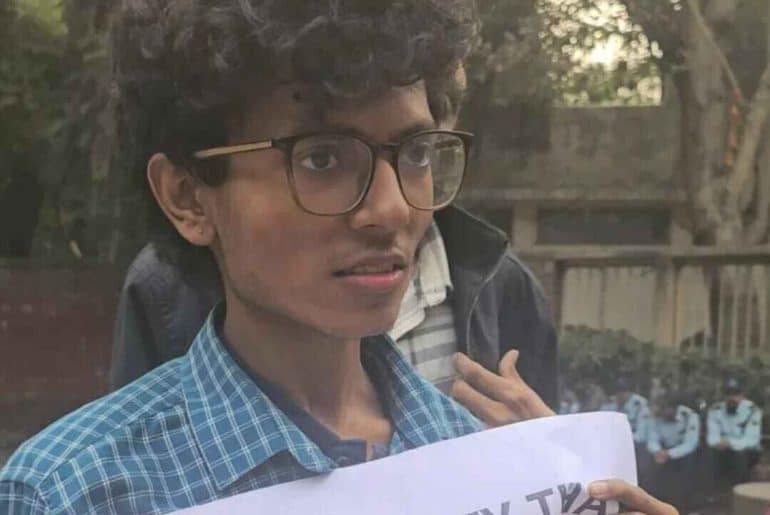
DU student activist Rudra has been reported missing; fears of illegal detention rise amid reports of custodial torture and police crackdowns on activists.
Concerns are mounting over the disappearance of Rudra, a 20-year-old student of Philosophy (Honours) from Zakir Hussain College, Delhi University, who has been untraceable since the morning of July 18, shortly after arriving in the capital. His disappearance follows a disturbing pattern of alleged illegal detentions and custodial torture by the Special Branch of the Delhi Police, involving seven other student activists earlier this month.
According to friends and fellow activists, Rudra boarded the Howrah-New Delhi Duronto Express from Kolkata on July 18. He contacted a friend around 7:40 AM, confirming that he had arrived at the New Delhi Railway Station. That call was his last known communication. Since then, there has been no word from him, and his whereabouts remain unknown.
In an interview with Maktoob Media, Rudra’s friends stated,
Rudra is a very bright student and a diligent activist who has the best interests of people at heart….. What has been happening is an unprecedented attack on resisting voices, and a direct fascistic attack on democracy.
With no information from the police or authorities, Rudra’s family and comrades fear that he has been detained incommunicado—similar to the six previously missing student activists, who were eventually found to be in police custody days later. These detentions, unacknowledged at the time, have since been linked to allegations of severe custodial torture.
The Campaign Against State Repression (CASR) issued a statement,
While in custody, the activists were subjected to torture that directly violates the right to life and dignity under Article 21 of the Constitution. They were stripped naked, beaten, electrocuted, and subjected to degrading treatment including having their heads submerged in toilet bowls.
The six previously detained individuals include Gurkirat, Gaurav, and Gaurang from bsCEM; Baadal and Ehtemam from Forum Against Corporatization and Militarization; and Samrat, a psychologist from Haryana.
Rudra’s Class Representative issued a statement to DU Beat:
Although he was not very regular to the class, he read a lot. He posted about the articles he read on social media. It seemed like he was affiliated to the communist student activist groups. As CR, I’ve talked to him regarding assignments and tests. He was particularly quiet.
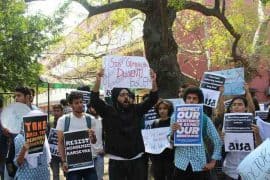
Human rights organisations and student groups have condemned what they describe as an orchestrated crackdown on student activists, involving arbitrary detentions, lack of due process, and third-degree custodial torture. According to multiple reports, the seven released activists were held in undisclosed locations and subjected to degrading and violent treatment.
Currently, any details regarding Rudra’s whereabouts are still awaited.
Read Also: bsCEM Student Activist Gurkirat Detained by Delhi Police on 16th July: Released Later Same Day
Image Source: Maktoob Media
Madhav Choudhary