After the release of admit cards following the continued confusion regarding the timetable for the upcoming May-June semester examinations, DU students now experience discrepancies in their admit cards as well.
On Tuesday, 5th May, Delhi University officially started rolling out verified admit cards for the upcoming semester-end examinations in May and June, which can be downloaded from the Samarth portal as usual. However, there is no doubt that the pre-examination air at Delhi University (DU) is always full of chaos, confusion, and more often than not, uncertainty.
Amidst constantly shifting examination dates, the perpetual stress that accompanies upcoming exams, and the Delhi heat beating down upon them, it is a tough time to be a student at DU. Further, many students are even facing issues with the recent rollout of the examination admit cards by the University administration.
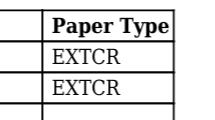
According to a post by DU Today, instead of the usual paper types (DSC, GE, AEC, SEC, VAC, etc.), many admit cards have the “EXTCR” category shown in the “Paper Type” column. For some, this is true for every course for which they will be giving the exam, and for others, this is true only partially. Students are unsure what this category truly implies and why the usual categories have been replaced in this manner. Some are concerned whether giving their final examinations will be affected in any manner due to such a change in their admit cards.
It is also highly probable that this occurrence is merely an administrative lapse or technical glitch and will soon be rectified. Students who are facing this discrepancy should consult their respective college administrative offices or faculty to understand the next steps to be taken, if any at all. Such technical glitches have been unfortunately common for quite some time now. Last year, some admit cards had allegedly shown “ER”, creating confusion and panic. Students had also faced other technical discrepancies, such as missing crucial information or unclear details mentioned on the card.
In addition to the above, many students’ admit cards have not yet been verified by their colleges despite there being an official statement stating that “all students can now download their admit cards.” Also, students enrolled in Delhi University’s School of Open Learning (SOL) have reportedly not received their hall tickets yet.
Read Also: Delhi University Releases Updated Tentative Datesheet; Examinations to Start from 16th May
Image Source: Valuable-Drag-8111 on Reddit
Manya Marwah