Author

Shikhar Pathak

Browsing

Amidst the festive fervours of the electoral season, laden with processions, celebrations, and dynamism, the critical question persists: does the participatory spirit of DUSU elections still survive?

The month of September adorns the nation with a wide range of festivals, every weekend bringing to the fore another tile of the cultural mosaic that pieces Dilli together. True to its microcosmic nature, the University of Delhi steps into the season of retreating clouds with the festival of election, the jashn-e-satta. Streets dazzling with the chaos of participatory measures, music concerts and bhandara-like freebie stalls floating through the lanes, processions flow not in devotion to gods but allegiance to people, to democracy. The satya-ki-galiyan and kamla lanes turn into epochal grounds of jubilation, marked profoundly with the political propaganda of all the competing factions. In a nation that has borne the curse of giveaways for decades, the students don’t usually get driven away by the gluttony of political theatrics but rather opportunistically immerse themselves into the joy of the ‘free’. What’s left behind is the debris, not just of the material, but also of promises and initiatives that ought to have lived in these streets instead. 

The Delhi University Student Union (DUSU) elections might appear loud, chaotic, or even the prodigal child of Indian politics. However, dismissal on those grounds strips away the political and intellectual imperatives it holds that are almost reflective of the paradoxes and possibilities of Indian democracy. German philosopher Jürgen Habermas situated democracy within the ‘public sphere’, the space where political opinions can be cultivated in the social arena through discussions and deliberations that fuel publicised discourse, which then influence governance and political action. Universities, when functioning optimally, represent a similar sphere where students formulate and refine their political beliefs and opinions. 

At Delhi University, the DUSU elections transform everyday spaces into stages of political practices. The chai-ki-tapris near the colleges, the packed metros en route to academic spaces, and the student accommodation areas, all echo discourse on the political season. Albeit often divergent and contrary to each other, these discussions ensure that at least a certain degree of participation seeps into every stakeholder. Habermas’ construction of the ‘public’ holds profound relevance here: democracy cannot just be reduced to institutions of governance; it lives in the spaces of everyday discussions, the ‘public sphere’. And so, the cacophonous chaos of DUSU is not a distorted version of democracy but plausibly one of its most authentic enactments. 

Carole Pateman’s theory of participatory democracy further strengthens this view, drawing upon earlier proponents of the same, in Rousseau, Mill, Cole and others. The refined theory argues that democracy cannot just be reduced to the act of casting a vote; it needs to sustain an active involvement in the decision-making and pre-electoral processes. Participation itself, she argues, is of educational value; it empowers citizens with the ability to deliberate, claim rights, and hold accountable their chosen representatives. The pre-election canvassing, the student interactions, and the presidential debates; all lead one to appreciate the didactic model of participatory democracy that DUSU elections embody. 

However, the data speaks in a different code. While the voter turnout has witnessed a steady increase every year, it still stands at nearly half the voter turnout of the general elections of the nation, brewing questions for the voters: Does the participation from students restrict itself to the performative phase of the pre-election phases? And by extension, does the practice of deliberation and accountability dissipate once the vote is cast, creating a void where participatory temperament once held ground?

However, to see the elections through the lens of Pateman and Habermas allows for knowledge of only fractional perspectives of the election season. Gramsci’s reflections on hegemony extend into all institutional spaces, and inevitably into Delhi University as well. National and regional parties treat the DUSU elections as training and testing grounds, investing significant capital into shaping the candidates and their public perceptions. While some of them practice it overtly, others do it from behind drawn curtains. Thus elections, even in hyperlocal forms, risk reproducing the dominance of the privileged classes, with the apparently subordinate groups in agreement with it in most cases.

The sub-localised nature of the elections also attempts to ensure that the political arena remains a fluid space, wherein every movement births a counter-movement that finds expression—campaigns led by the diverse groups, independent candidates, and collectives might not always lead to electoral victory, but they do succeed in establishing a narrative alternative to the popular discourse. In essence, the DUSU elections uphold a central paradox of practicing democracy; they become simultaneous mechanisms for reproduction and contestation of prevailing ideologies. 

Despite embodying the features of a participatory democracy, the DUSU elections fall short in most other avenues. The passive disengagement from a larger section of students, reflected in the less than 40 percent voter turnout, reveals the inconsequential temperament attached to the votes. This creates an enigma, wherein participatory measures exist, but their effectiveness lies in the students realising their own agencies. In the noise of campaign slogans and the clutter of posters, then, lies something far more enduring: the rehearsal of democracy itself. To participate in DUSU is to learn, however imperfectly, what it means to be a citizen in the largest democracy of the world.

Image Credits: DU Beat

Shikhar Pathak
[email protected]

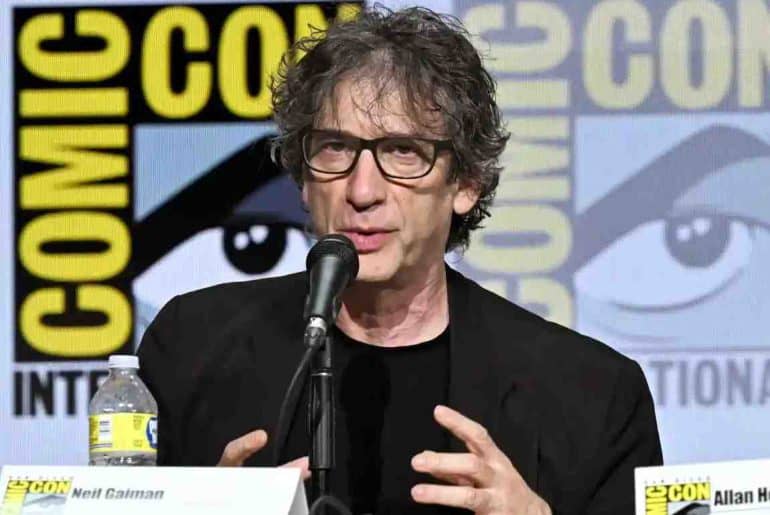
Behind the Blue Curtains of Canons and Classics, a dive into the Industry saturated with combined ensnare of Elitism and Misogyny, contextualising the recent accusations against acclaimed author Neil Gaiman and more.

TW: The Article has mentions of Sexual Abuse and Related forms of Violence.

‘On a day like today it’s worth saying, I believe survivors. Men must not close our eyes and minds to what happens to women in this world.’

stood a tweet by erstwhile proclaimed feminist and literary icon Neil Gaiman in September 2018, a solidarity to the MeToo Movement; what remained catastrophically unknown was that half a decade down the road, the author too would face allegations of a heinous degree. 

The accusations trace back to February 2022, when the author, infamous over the internet for breaking the COVID protocols and fleeing to his private island, returned to New York and met Scarlet Pavlovich, a 23-year-old drama student, for the first time. Pavlovich, who by then had become a close confidante to Gaiman’s wife, occasionally also babysat their son. On the 4th of February 2022, Scarlet arrived at the author’s residence for her periodic babysitting requirement; however, the folds of the incidents that day became reflective of what lay behind the apparent charade of the women-rights-activist power couple that Gaiman and his wife portrayed to be.

Fractions of short conversations later, transversed what Pavlovich describes as “a subtle terror,” when the author, in the guise of making her relax at the property, sexually assaulted her. A queer woman with a history of childhood sexual abuse, Scarlet’s attempts to resist proved vain when, despite making Gaiman aware of the same, he refused to stop. 

‘An author who specialises in depicting tales and narratives of those traditionally marginalised in literature.’ was the prima facie that prompted a 15-year-old me to pick up the hardcover edition of Gaiman’s most popular publication, American Gods, at the bookshop; a diverse cast, in relation to ethnicities and sexualities, was a primordial characteristic. For an author who was celebrated for his portrayal of Lucifer as a woman, the allegations reveal a hard-hitting truth about the masquerades of the literary industry.

In July 2024, a British podcast titled Master covered stories of two women accusing Gaiman of sexual misconduct. What followed was several other women accusing the author of coercion, assault, and sexual violence, with the youngest being 18 years old. In due respect and solidarity with the survivors, the article doesn’t delve into graphic details and instances to prevent even an accidental misinterpretation of their ordeals; within the limits of the same, it can be divulged that the author also engaged in non-consensual forms of BDSM, child grooming, and misappropriation. 

Seven years past the MeToo movement that initiated tremors of humanitarian changes within differing industries, the literary industry continues to nurture and foster the sexual predators under its aegis. The phenomenon, however, is not that of modern day; back in the 20th century, the sexual crimes of authors like Roald Dahl and Ernest Hemingway were covered up by publications and largely went unaddressed, while the authors remained celebrated as pioneers in their respective fields. Despite the contemporary presence of the far-reaching internet, while the cinematic industry witnessed the demise of directorial and acting careers of prominent faces, the literary industry continues the practice of whitewashing the crimes. A 1080×1920 pixels PR-Curated Instagram Post Apology ensures that the authors continue to have an ever-expanding success; YA authors like James Dashner and Jay Asher of The Maze Runner and Thirteen Reasons Why continue to enjoy the fame despite the allegations, ironically being celebrated for covering similar topics in their respective books.

Two weeks after MeToo allegations were pressed against celebrated Indian author Chetan Bhagat, his 2018 publication ‘The Girl In Room 105‘ made a bestseller debut upon its release. In an industry and audience that actively propagates to push down female authors for acts measurably minute compared to their male counterparts, the rampant sexism becomes reflective. When the likes of Colleen Hoover, Veronica Roth, et al. get justifiably cancelled, but authors like Junot Diaz continue to enjoy an increased honour and appreciation despite being sexual predators, the industry and our active role in protecting the male elite writers can be realised.

A rampant reasoning towards the continued success of the apparent celebrities despite the sexual assault cases lies in the idea of ‘separating the art from the artist,’ an ideology that inherently feeds into the clutches of patriarchy and elitism. Idol worship and the inherent heroism that propagates, albeit subconsciously, due to the consumption of media, becomes the foremost reason why art cannot be separated from the artist. In more than a few cases, our interpretation of the art prevents us from acknowledging the crimes of the artist, often leading to a counter victim blaming and protection of the culprit. The general public’s lack of support for Tanushree Dutta and Vrinda Nanda when they pressed charges against Nana Patekar and Alok Nath, respectively, on the grounds of the latter being the idealistic heroic characters in the cinematic verses, is reflective of the same tendency. Similar instances were witnessed on a global scale when misconducts came forward against Kevin Spacey and Bill Cosby.

To then consume media often becomes an imperatively challenging aspect, one that involves a deep-rooted understanding of the backgrounds and behaviour of the curator. The aforementioned, in retrospect, becomes a challenging situation. If, as consumers, we fail to undertake the apparent herculean task of the same, a bare minimal approach that largely appears to not be the norm of vocalising dissent against the perpetrators, boycotting and calling out publications that aid them, and solidarizing with the victims is the least proportional change that could be undertaken in the largely misogynistic and elitist status quo that literature presents itself to be. 


Read Also: DU Vice Chancellor faces heavy backlash following his endorsement of ‘Modi vs Khan Market Gang’

Featured Image Credit: Google

Shikhar Pathak

[email protected]

Beyond the Glitz of Charity and Equality, lies the corporate culture-ification of social service, where Insta Digits hold greater value than Impact, misinformation prevails, and the crimes of establishment remain unchallenged.

In my Freshman Year at DU, canonically as a rebel-tired-of-societal-obligations, enthralled by the hunger to usher a change in the patriarchal and chauvinistic ideals that run the world, I found my haven in Girl Up. Within the four walls of Inclusivity, Intersectionality, Impact, and UN Affiliation, I discovered my abode until I witnessed each one of them crumble to the ground of status quo appeasement.

In order to uphold absolute respect for and safeguard the identities of the sources, their respective Girl Ups will be kept anonymous throughout the report.

The Official Website of the Organization states that GirlUp is a girl-centered leadership development initiative, focusing on equity for women in spaces where they are unheard and unrepresented. Idealistically, an organisation such as that would have resulted in tremors of change within the societal structure and standards. However, on account of the absence of the same, GirlUps fail to endorse that despite holding a beautiful core belief. Within this report, an attempt has been made to analyze the issues about them by surveying DU students, who either are or have been part of the initiative.

While the UN initiative, at its core, focuses on transforming the lives of the underprivileged and advancing Gender Justice, their local chapters are provided with a target of 5 projects within a year, the completion of which would provide them with certifications from the UN, and so, their foreground turns into Social Media awareness. Social Media, albeit an impactful tool, is restrictive, and when combined with underdeveloped ideas, could often lead to the contrary results. Similar was the case when, a GirlUp from a reputed North Campus college, posted about how Imane Khelif had failed the gender eligibility test, while in fact, the test results were never revealed. And while DU societies are known for their secularism and separation from religion, the aforementioned GirlUp posted stories celebrating the inauguration of the Ram Mandir of Ayodhya, depicting an unwarranted appeasement of the prominent status quo.

The activism, “conveniently, focused at favouring the status quo, also depicts an appropriation of cultural icons”, was quoted by one of the sources, further stating how the GirlUp of their college, curated a post for Dalit History Month, focusing more upon Mahatma Gandhi, while little was discussed of the renowned icon, B.R. Ambedkar. Another person recalls how, in the aegis of a project titled Manorama, centred upon the lives of marginalized women, their GirlUp created videos of awareness, however, the representation was affixed on people from privileged backgrounds, antithetical to the core of that project.

The Five Project policy restricts their participation to mere play of Social Media, and so all their resources are directed towards social media management and garnering the required views and numbers, to an extent that the Social Welfare aspect of the projects takes a backseat, fading into oblivion. 

“The Certificates are promoted as ornaments of the CV, and become a primordial tool to encourage people to join, often in ways similar to affiliate marketing tactics”

claimed a source who held a core member position at two GirlUps. 

Thus, Tokenism in the guise of Activism gets promoted, and so even when members join in with an ignited sense of bringing a change, the vicious cycle of likes and follows traps them into its ploy.

A combined effect of the same is short-term projects, the long-term impacts are overlooked, in attempts to be one step closer to the UN certification, a ‘brownie point’ on the CV. The projects thus turn into half-baked attempts given the time crunch and limited resources that need to be employed to cover 5 such projects year long. 

“..for a project, we collaborated with the Robin Hood Army and a GU chapter, (and unlike RHA) the GU kept stating the need for certificates, in the absence of which their members would not show up.”

recalled another student about their experience with  Girl Up, indicating how “passion gets eroded, and Social Media numbers take over.”

“During the Pujo, when all the organizations I was affiliated with, allowed a short leave, the Girl Up I held a Position of Responsibility at, refused.’

divulged a member of a reputed GU of South Campus, elaborating upon how the workload situation spirals deeper,

 ‘…and when I was severely ill for a month, instead of being accommodating, I was compelled to take up projects, and attend hours long meeting over petty issues that could be solved over chat.”,

Adds one student reflecting upon how an organization that emphasizes upon the prioritization of mental health, conveniently forgets the same; often creating obstructions in the professional, and otherwise, life of the members.

The parable of the mismanagement runs profound, a staggering specimen was presented when in a GU, a core member  was removed from their position over disorderly conduct; however, along with them, the person who brought the incident to light was also suspended on the grounds of agitating out of spite, 

“..the anonymity I was assured was disrupted, it was turned into an IntraSoc gameplay, and while discussions with both the parties involved were held, I was removed without even a 30 days deadline.”,

exhibiting how the organization failed at both a professional and personal ground.

GirlUps at its core, starts as a medium to generate change in the world, however, in the midst, it undertakes a trajectory of first-world charity; oblivious to the intersectionality and struggle, a route towards becoming a multilevel market tactic of UN certification, a place that largely deviates from its core principle. Per Contra, quite like how the United Nations tries to project a certain optimism for humanity, on a rampant retrospect, GirlUp is capable of bringing about the change that it aspires to see, given it actually works for it.

Read Also: What is the cost of my dissent 

Featured Image Credit: Google

Shikhar Pathak

[email protected]

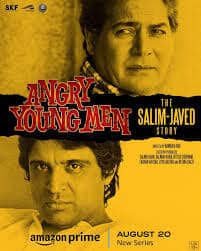
Angry Young Men dives into the lives of the celebrated writer duo -Salim-Javed, whose Dostana changed the Andaz of the Indian Cinematic Plane, however, it barely scratches the surface of the magnificence of the minds behind it; resulting in a warm filter bubble of sycophancy.

Kitne aadmi the? 

Sardar do, Salim aur Javed !

The aforementioned quote precisely encapsulates the colossal impact the writer duo of Salim Khan and Javed Akhtar had, and continue to have, on the Indian cinema and landscape as a whole. Whether it is the ‘Soja, warna Gabbar aa Jaega’ that is frequented by mothers around the country, the gratifying ‘mere paas maa hai’, or the hysterical ‘Mogambo khush hua’; each one of us carries a slight amount of Salim-Javed in our veins, perennially referencing their iconic dialogues and characters, often blissfully unaware of their origins. With short, albeit crisp lines that resonate with people against the backdrop of dimensions, divisions, and geography, the duo commenced a dramatic tectonic shift in Indian Cinema. However, ‘Angry Young Men’ fell short of truly encapsulating the grandeur the duo holds. 

The documentary, produced by Excel Entertainment, Tiger Baby Productions, and Salman Khan Films—all managed by family members—feels like an extended family video. It highlights the achievements of Salim-Javed and features members of the film industry celebrating them. However, it offers little insight into the creative minds behind their impressive two-time blockbuster streak of ten films. The show was driven by nostalgia, relying heavily on dramatic effects and long soundtracks. The struggles dragged on endlessly compared to the brief bursts of success, probably just to garner a sense of faux sympathy for the duo. It would not be an exaggeration to state that the Old Koffee with Karan episodes or the renowned Jeena Issi Ka Naam Hai episodes, did a better job at creating an echo chamber of appreciation than the way this series aimed to.

‘Main Phenke Hue Paise Nahi Uthata’, the first part of the tri-episodic documentary, follows Salim Khan, a young man in his twenties who arrives in the city of dreams. While his good looks guaranteed him the stage name of ‘Prince Salim’ and a constant infamous comparison to James Dean, the lack of exceptional acting abilities type-casted him into the role of the stereotypical good-looking minor character, which slowly descended to cameos, advertisements, and B-Grade movies. In the decline of his acting career, he met Javed. In an almost Kismat Konnection, they met at the sets of Sarhadi Lootera, where Salim was a small-time actor, and Javed the clap boy-turned-dialog writer, and thus began their Dostana.

The Second Episode ‘Mere Paas Maa Hai’ revolved around this freshly minted partnership that shook the confined fortress that Bollywood bigwigs established it to be. From Rom-Coms like Geeta aur Seeta and Andaaz, the duo progressed towards Zanjeer, a marvel that ensured they’d forever be famous. While Javed claims that the Angry Young Man prototype, which embarked from the creation of “Vijay”, an anti-establishment, eat-the-rich rational person, was not influenced by the socio-political situation of the country, the stark shift in the interest of the nation from the Romantic Chocolate-Boy heroes to the Angry Young Man, mirrored the angst that the young nation experienced. In a political turmoil embarked by staggering unemployment, deprivation of resources, and a widening economic gap between the classes, ‘Vijay’ became the Messiah that rejuvenated the spirit of insurgence amongst the people. However, while the documentary continues to celebrate the character built and its expanse on cinematic history, it barely divulges into the socio-economic and political impact brought about, and centres around hollow hero worship of the character, and its creators by renowned celebrities. 

The Last episode of the series is probably where the lines of PR and praise vanished, a large chunk of the episode focused on white-washing the public perception of the duo. A preposterous narrative of ‘Pyaar toh ho Jaata Hai’ reverberated through the episode to justify both Salim and Javed’s failed marriages due to adultery. Their short-lived separation was broached without revealing its causes, with any shortcomings artfully obscured, while the discourse continued to bandwagon their combined star-power. 

The mere mention of their names brings about prominent epistemological moments from the Indian cinematic trajectory, the petrifying portrayal of ‘Gabbar Singh’, the riveting morality clash between ‘Vijay’ and ‘Ravi’ in Deewar, the dual role in Don et.al. The Show focused on the success of these films and their underlying impact on the lives of Salim-Javed, however, the intellect of the writer duo was left untouched. Of how their brainchild Vijay, a morally grey character, became the fan favourite in a nation that doted on righteous moral-compass-driven leads, how they helmed one of the first female-led movies in the country with Seeta aur Geeta, of how mundane conversations and dialects were picked by them and mutated into momentous and unforgettable dialogues; a lot was left unsaid and superseded, and thus, brewed on what can easily be described as a long-form ‘Viral Bhayani’video. 

READ ALSO:Imran Khan And the Long Gone Bollywood Love-Era

Featured Image Credit:Amazon Prime Videos

Shikhar Pathak

[email protected]

For a society that is deeply consumed and engrossed in sports and related forms of media. We often let our ideas and beliefs intrude into the fields, generating episodes of dismay and daunt. Similar appeared to be the case at the 2024 Summer Olympics.

The Paris Olympics 2024 held the stature of being much more than a multisport convention; rather, it became an event reflective of the socio-political situations and the subsequent ideas that flow in the world. Whether it was the transphobia over the internet, the staggering victories of athletes from lesser developed nations, or the unfazed participation of a convicted child rapist, Olympics’24 moved beyond the grounds of sports to a playground of humanity.

The distressing trajectory of Vinesh Phogat is probably the clearest mirror of societal undertaking that could be deduced from the sports event. From being mislabeled as ‘anti-national’ for protesting against an alleged sexual predator, to being subjected to witch hunts of media trials, she became a personification of female rage. A fury, when wronged and provoked, translates into an agitation against the wrong. Her unwavering resilience in the face of a system pulling her down was solidified, as she became the first wrestler to defeat Yui Sasaki internationally. She finally stepped her foot into the battle for the gold.

However, like most realities of female anguish, her journey witnessed an extinguishing swivel when she was disqualified, for being overweight by a meagre amount of 100 grams. The dispiriting visuals of Vinesh cutting her hair, in an attempt to lose the weight, raise a salient question about the nutritionists under the aegis of the Government of India and, therefore the inadequacy of the sports management facilities of the Country.

In a nation that should have lauded and amended their refusal to believe her words, labelled her loss as ‘karma’. A reflection of how societally, a large strata of the population is traversing towards a path of leader-worship being prioritised over nationalism.

For anyone who believes that the current generation is more accepting and broad-minded than the previous, the Olympics’24 suggested the contrary. The closeted racism and transphobia of the Gen Z came out in the open upon the victory of Imane Khelif, as the factually incorrect data of her being a transwoman was widespread on the internet. A mirror to how society readily propagates fake news, immense enough to ruin a person’s career and life, given that Imane belongs to the homophobic nation of Algeria, as long as their beliefs and ideas are supported.

To box with binaries and mislabel someone scantily because of the alleged lack of sense of femininity, shows how, despite the years past, we remain affixed to the age-old ideas of the sexes. From prominent public figures like Donald Trump, Elon Musk, and Rowling, to people amongst us posting on the gram against her, each of us becomes a perpetuator of the dismay she underwent. The netizens rushed to support Vinesh, questioning how a ‘man’ like Imane is allowed to compete while she was disqualified. They submitted to the idea of performative faux-feminism. To put down one woman, to uplift another, a subshoot to the Madonna-Whore complex.

The participation of convicted child rapist, Steven Van De Velde, depicts that while the administrative board of the Olympics might hold a disqualification over a meagre 100 grams or the alleged secularism policies that called for a hijab ban, they would allow a person who raped a 12-year-old to compete. Despite the backlash from people around the world, Van De Velde’s qualification shows that moral grounds seldom get respected and people committing crimes of colossal detestation will continue to be protected and prosper. On the contrary, those not subscribing to the societal hierarchical structure would continue to bear the brunt of crimes they didn’t commit.

The Olympics’24 also had its fair share of heartwarming moments, from Chinese gymnast Zhou Yaqin’s endearing medal-biting moment, the trifecta of the javelin throw being achieved by people of colour, or the bow to Rebeca Andrade on the historic all-people-of-colour podium of gymnastics. But Vinesh’s retirement from wrestling, the shattering impact on Imane’s esteem from a generation that boasts of their efforts for mental health, and various other fallacies outside the field of sports, largely reflect upon the flaws that we, as a society, sustain and propagate. Leading to the origination of an environment wherein alleged sportsmanship takes the backfoot, and propaganda leads the game. 

Read Also:

https://dubeat.com/2024/08/17/the-olympics-fostering-political-smokescreens/#google_vignette 

Featured Image Credits: The Economic Times

Shikhar Pathak

[email protected]

The Delhi University Admin Cycle of ad-hoc replacement strikes at LSR, as reputed teachers from departments get replaced. What follows is absolute silence from the college administration.

After the ad-hoc replacements of Mr. Samarveer Singh at Hindu College, and Dr. Itisha Nagar at KNC, the unsettling trend continues, with Ms. Pushplata Kumar from LSR being the most recent case. 

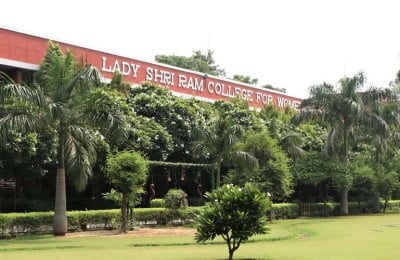
On 20th July, 2024, the esteemed Department of Journalism, at Lady Shri Ram College(LSR) suffered a crucial setback when the news of the non-retention of Ms. Pushplata was received. This comes as a part of the continual cycle of Delhi University, wherein the ad-hoc professors are being granted permanent status, while some ad-hoc professors are being replaced from their posts. However, the lack of transparency in the process, alleged political powerplay, and unjust temperament had sparked concern and discontentment amongst the students, at the loss of such qualified and cherished academicians. Protests by both DUTA and the students, have not resulted in any change in the opaque procedure undertaken by the University of Delhi.

Ms. Pushplata, who had been teaching under the aegis of the Journalism Department of LSR for 9 years as an ad-hoc professor, experienced a similar situation when her non-retention was notified. This comes as a shock to the students, most of whom credit her for their ignited interest in the subjects of Advertisement, Public Relations, Media Industry Management et al., and as a constant source of guidance in their career trajectories. Given the brevity of the situation, DU Beat reached out to students from the Department, and under the guise of Anonymity, they spoke about the unjust mannerism under which the department functions, the replacement of Pushplata Ma’am, being one of the many commented one of the Students, expanding upon the mismanagement within the Journalism Department. They further stated that most of the guest lectures and talks under their tenure were held by Ms. Pushplata, and through the exceptional network she had within the industry, she would also provide aid for students to obtain better career opportunities.

Since 2016, LSR has been the top college within DU for Journalism; for 5 consecutive years, and in 2020, the top four positions within Journalism were taken by LSR, so when the teacher(s) are giving such exemplary results, then their non-retention comes up as a greater dismay,

Another student from the department spoke about the zeal she developed within them for the subjects, sharing that,

She taught us the practicality of the subject, taught us how we can move beyond the scope of televised advertisements, and work for change. Ma’am made sure we attended film festivals, and introduced us to people from the industry, so that we could realize and work on the scope of our careers.

These testimonials from students become a vital point, in correlation to the fact that these decisions have a direct impact on the academic lives of the students, and thus, their consensus and feedback should be an important parameter before undertaking a drastic step like this. 

The students took to social media to raise their opposition against this drastic step. This is a remarkable moment, given the “reduced sense of political temperament amongst the newcomers”, as alleged by an alumna of the college. In conversation with DU Beat, one of the students mentioned how this apoliticism of the students is a reflection of the improper supervision of the admin and the senior management of LSR,

Here at LSR, one can see the difference when a student enters here, and exits. They don’t bother talking about their concerns, for they know nothing would happen and a ‘Blame Chain’ would be formulated.

The incident at LSR further adds to the chain of questions about the opacity and unjust mechanisms used by the colleges and selection committees. And a perplexity about the lack of consensus from the students regarding a decision that not only has an impact on the reputation of the college, but also the academic (and otherwise) lives of the students. 


Read Also: https://dubeat.com/2024/07/05/dus-faculty-of-law-postpones-end-term-llb-exams-hours-before-the-scheduled-date/


Featured Image Credits: DU Beat


Shikhar Pathak

[email protected]

Sorry, the old RaGa cannot come to the PressCon right now. Why? Oh, cause he’s dead. Let’s explore his journey from the Prince of Political Dynasty, to Pappu, and then Beyond.

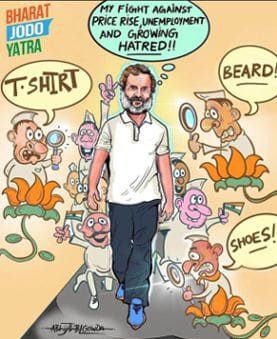
Perhaps one of the most interesting things about the General Elections of 2024 was the escalated and expeditious participation from Generation Z, a large strata of whom finally got a direct vote in the election of the Government. This participation was also rooted in the Twitteratis and their constant political pundit-esque commentary that remained persistent throughout this apparent festival of democracy. From the viral “Dimple Bhabhi Hatiye…” tweet to the pookie-fication of Narendra Modi, nobody escaped the brunt of the internet folks. A leading player in the battle for the seat of prime minister was Rahul Gandhi, who displayed a staggering transformation. From him being posted to the edits of ‘Daddy’s Home‘, his subsequent babygirlification and portrayal as the Batman of Indian political scenario et.al., RaGa seemed to be a Twitter favorite; pre, midst, and post the election season. And this, comes as a surprise for someone who has long been ridiculed by both, the politicians and the masses, as ‘Pappu’.

When the National Democratic Alliance, on its third subsequent win, boasts about a new era of Modi 3.0, it is notable that this also embarks the beginning of RaGa 3.0. Something that is even more remarkable is how every epoch of his political career draws a direct parallel to the state of the current opposition in the country. In retrospect it might appear to be a vague statement, however, this opinion piece attempts to substantiate the same, and for that, the political trajectory of Rahul Gandhi needs to be analyzed in a trifactorial manner.

In a political climate that was being conditioned for Priyanka Gandhi to be the new face of the Indian National Congress, with the re-emphasization of her parallels to Indira Gandhi, the launch of Rahul Gandhi as the face of INC was a rather unanticipated change for the politicians and the masses alike. In a direct parallel to Rajneeti (the 2010 Prakash Jha Directiorial’s) Samar Pratap, played by Ranbir Kapoor, ‘a foreign returned relatively less-known to-and-of the political scenario‘ heir was placed into the position of a party supremo. However, that is where the parallels end, while Samar goes on to become a force to reckon with, RaGa displayed a relatively inconsistent political profile. His political prowess at that time focused largely upon as the ‘uniter’ of the nation, working on reducing the caste and religion-based divisiveness in the country. Subsequently, he won from the ancestral seat of Amethi and was popularised as the Yuva Neta, and harbinger of justice, by the media. However, despite this popularised imagery that he had cultivated around himself, he refused to hold positions of power within the INC and rather struck to the youth wings. The launch of RaGa drew a parallel into the INC as it witnessed a rejuvenation of the Gandhi Parivaar within the leadership positions, after 14 years of absence, albeit in an indirect mannerism with Manmohan Singh being the Prime Minister then.

Post the smooth and apparent surged political prowess, the era of Rahul Gandhi 2.0 comes into play with the elections of 2014 and beyond; the General Election of 2014, posed a drastic change in the climate of the Indian Political Scenario, wherein the 10-year streak of the INC was fiercely shattered by the National Democratic Alliance and its figurehead, present Prime Minister Narendra Modi. The dramatic downfall of the INC marked the beginning of RaGa as the undisputed King of Bloopers and the face of Indian Political Memes, the person who was hailed as the Prince of the Politically Dynastic Gandhi Parivar was now ridiculed as ‘Pappu’, and worse. The lack of a proper redressal mechanism from the INC upon the same, and RaGa’s subsequent infamous statements like the ‘potato-gold‘ alchemy theory, the hug in the parliament, misgendering of the Speaker, et.al., cemented the NDA alliances claim of the ‘Shehzada’, in attempts to mock his lack of proper developmental work despite the privilege he was equipped with. A subsequent political debacle also surrounded the Indian National Congress, as it witnessed the lowest-ever tally of 44 seats post the 206-seat mark they achieved in 2009.

Post the 2019 stint of the National Democratic Alliance, and its subsequent chants of Abki Baar, 400 Paar; the public expectation from the erstwhile political bigwig declined, and an absolute majority of the present ruling party was largely accepted and anticipated. Despite the anti-heroic downfall that the INC witnessed, he kept walking (quite literally) and conducted two Nyay Yatras, which is speculated to have become a source of connection between the common man and the INC, and the reason for its subsequent victory in certain places. His newfound oratory skills and social media tactics labeled RaGa as the herald of the change of the apparent de-Modicisation and Democratization of the country. The connection that he attempted to build at a grassroots level, and better redressal skills, led to a surge in the INDIA vote bank, and a subsequent declination in the expected votes for the NDA.

However, RaGa’s relatively newer 3.0 trajectory did not stop there, the 1st July speech in the parliament, ended the era of his silence and negligence regarding the political climate and the flaws of the NDA, as he delivered a speech outlining the very same. The Speech won him further accolades over social media, as the netizens proclaimed that the tectonics of the Indian Political Scenario witnessed a shift that day, the void of an improper Leader of Opposition seemed to be filling. This is followed by his recent visits to places that have been impacted by violence and improper governance like Manipur, Assam, site of Hathras Stampede, loco pilots of Delhi, et.al. This is a clear indication of a political consistency, which he is infamously unknown of. The transition from Pappu to the Leader of Opposition, depicts a shift in the political ball game of the country, a probable subdued indication of the resurgence of the INC, and a new arena into his political trajectory. However, it remains long to be seen whether this political conundrum turns out to be a sham, or has Prime Minister Narendra Modi finally found an able competitor.

Read Also: Saffron Politics: A Path To Majoritarianism

Featured Image Credits: X

Shikhar Pathak

[email protected]

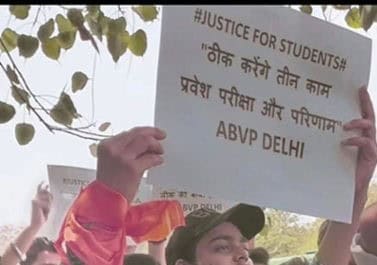
Student political groups, under the aegis of Akhil Bhartiya Vidyarthi Parishad (ABVP), hold nationwide protests against the irregularities in the NEET UG and UGC-NET examination organized by the National Testing Agency (NTA).

The cancellation of the UGC-NET examination, in continuation of the alleged paper leak of the NEET examination in the centers of Gujarat and Bihar, has furthered the academic debacle that NTA finds itself surrounded by. The NEET UG exam, which was conducted on May 5, 2024, had its results released on June 4, 2024, which was 10 days prior to the initially programmed date. The early results were met by protests over the alleged aberration and paper leaks, as 67 people achieved a perfect score of 720, with 7-8 students from the same center. In consequence, petitions for retests were filed in the Supreme Court, wherein the body approved the retest of 1563 students within a short span of the retest being on June 23rd. This was followed by the alleged claims of a paper leak and the Supreme Court’s refusal to postpone the counseling process for the same. On June 19, 2024, the National Testing Agency canceled the UGC-NET exam for 2024 after its alleged successful conduct on June 18, 2024, followed by questions raised about the integrity of the examination.

Amidst this scholastic wreck, the opposition of the nation raised questions upon the ruling party, wherein Rahul Gandhi held a press conference addressing the debacle and stated that:

It was being said Prime Minister Modi stopped the Ukraine-Russia war and the Israel-Gaza war, but he is either not able to stop exam leaks or doesn’t want to.”

The backlash and protests are nationwide, and even from within the Sangh Parivar, wherein its student wing, Akhil Bhartiya Vidya Parishad (ABVP), questioned the integrity and credibility of the NTA. In an interview with Indian Express, its National General Secretary, Yagyawalkya Shukla, raised opposition to the same by stating that:

There is a perception of mismanagement by NTA. How is it that question papers are reaching 15–20 minutes late in certain centers? How is it that 7-8 students from the same center get 100% marks? How did 67 students get 720 marks? There is a question mark on NTA’s credibility.”

Shukla, in regard to the government’s apparent silence and delayed responses, further added:

Aur jab praja ke taraf se sawaal hai, to sarkar ke taraf se jawab hona chahiye.

The General Secretaries of ABVP held a meeting with, first the chief of NTA, and then the present Education Minister, Shri Dharmendra Pradhan, discussing issues pertaining to grace marks and demanding an internalized as well as CBI probe against the accusations. (Source: Harsh Attri, State Secretary, ABVP Delhi)

ABVP further organized a protest on June 10, 2024, at the NTA Office in Delhi, against the irregularities and corruption in NEET UG results and other paper leaks. The student organization demanded a CBI inquiry against the aforementioned. Different wings of the student organization from varied parts of the nation have held daily protests against NTA and its incompetency in holding NEET UG and UGC-NET, as stated by Harsh Attri, the State Secretary for ABVP Delhi. He further mentions how ABVP would continue to take steps such as the present ones if the distortion around the examinations conducted by NTA continues to take place.

Read Also: Delhi University to Introduce Biannual Admissions Next Year

Featured Image Credits:  ABVP Official Instagram Page

Shikhar Pathak

[email protected]

An event by the student group ‘Brahmins of DU’, sponsored by the University of Delhi, was supposed to be held on May 10, 2024, i.e., Friday. However, the event faced protests from the left-bloc of student politics, alleging casteist and discriminatory sentiments, causing the event to be consequently canceled.

In the continual skepticism over the democratic nature of Delhi University and the inherent ‘saffronization’ and ‘brahmanization’ that is allegedly being promoted by the university, there was yet another DU-Admin-sponsored event organized by the student wing, ‘Brahmins of DU’. The university-wide association announced an event titled ‘Brahmins and the Tapestry of Hindu Civilization: Weaving Bhartiya Heritage and Calling Astikas to Fulfill Rșiṛṇa  that was programmed to take place on May 10, 2024, at the Conference Center of the North Campus, along with a campus-wide ‘Shobha Yatra‘ on the same day.

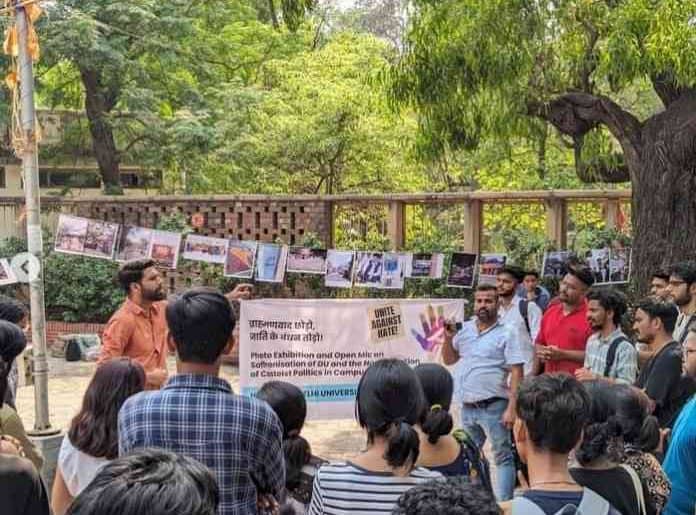
The event received widespread backlash from the student community, citing its alleged casteist approach. This was further vitalized by claims from Professor Abha Dev Habib, an Assistant Professor at DU, who, in conversation with EdexLive, cited a recent example of how events are being ‘policed’ and ‘restricted’ and a poetry reading session on the Palestinian crisis that was supposed to be held on April 15 was canceled by the university ‘without citing any valid reason’. In opposition to the event by ‘Brahmins of DU’, the Students’ Federation of India (SFI), under the umbrella of Humans of DU, organized a parallel event on the same date, i.e., May 10, 2024, at the Arts Faculty. The event organized was a photo exhibition and open mic themed around the ‘Saffronization’ of DU and against the ‘Normalization of Casteist Politics on the Campus’. Students university-wide joined the event in solidarity with the cause and presented their ideas, pieces, and writings, and the words of prominent Dalit writers like Omprakash Valmiki were also echoed.

Aditi, State Committee Member SFI Delhi, adds about how the undertakings in the university are a “direct reflection of the societal tapestry of our country”, expressing her fear over an ‘uncertain future’ wherein incidents like the “recent TISS debacle could be replicated in Delhi University”. She further states that, with opposition events like this:

 we will not let them destroy the dissent, debate, and other progressive nature of our campus.

Besides SFI, the All India Student Association, AISA, also made a post on Instagram condemning the event, stating:

Their ideologies promote hatred, discrimination, and division, which directly contradict the values of equality, solidarity, and social justice.

While the SFI Event was an alleged success in presenting their opposition to the events and undertakings held by the group Brahmins of DU, the event organized by Brahmins of DU did not materialize. In a consequent press release, SFI states that fervent backlash and dissent from “progressive student pressure groups” and political bodies compelled the administration to call off the event organized by ‘Brahmins of DU’ eventually.

Read Also: TISS Scholar Suspended for Two Years Due to ‘Anti-National Acts’ and Protests Outside Parliament

Featured Image Credits: SFI Official Instagram

Shikhar Pathak

[email protected]