Type “street play” on Google and the first link, a wiki page, describes it as ‘a form of theatrical performance and presentation in outdoor public spaces without a specific paying audience. These spaces can be anywhere, including shopping centres, car parks, recreational reserves and street corners.’
Over the years there has been a deviation from this long established and rooted definition. Street plays have been reduced to a mere competition. In fact and in principle, they are still carried out in front of a large, unpaying audience (more so in the DU circuit) but the purpose is not completely served because they are not reaching out to a large proportion of audience who are equally affected by say, sexual harassment, corruption, consumer rights, reservation etc which are common topics of nukkad nataks.
‘Aaghaaz’, The Education Tree initiative is an attempt to revive the lost essence of street theatre or nukkad nataks and take them to the masses. The Education Tree is a student organization with an agenda to support and facilitate all manifestations of education. Under their initiative, they have collaborated with the dramatics society or dramsocs (as they are popularly known) of several DU colleges like Hansraj, Shaheed Sukhdev College of Business Studies, Sri Guru Gobind Singh College of Commerce, SGTB Khalsa College, IP College for Women, Daulat Ram College, Maitreyi & Shivaji College and given them the opportunity to perform their annual productions at various public venues like Sarojini Nagar Market, Adventure Island, Delhi Haat(INA), Satya Niketan Maket & GK-M Block etc, in schools like DPS, Bal Bharti, Rukmini Devi Public School & Maharaja Agrasen Model School and at NGOs like Salaam Balak Trust & Prayas and at the same time disseminating valuable information to the common people from all ends of spectrum.
With their core belief in the utility of nukkad natak as a tool of education, The Education Tree believes that the revolution begins at the corner of YOUR street.
Follow them on facebook http://www.facebook.com/theeducationtree?ref=ts&fref=ts]]>
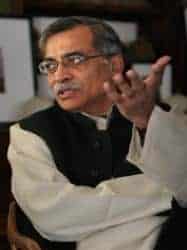
The incandescent afternoon of March 20, 2013 could be seen as the nature’s sense of humour in the form of ingenious irony. Indraprastha College for Women witnessed the 9th Annual Public Lecture, endowed by Indraprastha Girls Sr. Secondary School, on “Are We a Blind Nation?” conducted by Rajiv Vora, Chairman, Swaraj Peethe Trust.
The chief panel comprised of Babli Moitra Sraf, principal, IP College, Rajiv Vora, Narayan Prasad, Chairman, IP College and Geeta Gupta, Pricipal, IP School. Rajiv Vora, a staunch Gandhian, assertively narrated the chronicles of our nation in the last century-the carpel that conceived the perennial principles like Swaraj, Freedom and Justice. Keeping Swaraj at the centre, he linked it with various aspects of our nation, ourselves, and everything else. Quite graphically, Mr. Vora carved a vicious circle before the keen audience, stating that non-violence is the only way to achieve Swaraj, which further leads to freedom from the circle of life. Righteously enough, Swaraj, according to Rajiv Vora, is that term that shall inspire people to sacrifice in the face of a dire situation as it had done once before during our freedom struggle. Referring to the present scenario, he said that we are no longer able to distinguish between justice and injustice, moral and immoral, and sinful and pure-the lines between them thinned into oblivion. Mr. Vora emphasized that our nation is not an adequate reflection of its people and we are in need of struggle at all the levels, but the question is are we ready for one?
As for us being a blind nation, it is a devastatingly sad truth. There is no ideal that ensures that the last and the first person strive together, in the words of the Gandhian. He went on to explain the majority of young listeners that the nation is stagnant with its people cowering in fear of the powerful and living at the mercy of the strong. There is complete absence of Swaraj; synonymous to independence, fearlessness and justice. We have no vision. We ARE a blind nation. But the lecture did not end on a pessimistic note as Mr. Vora showed us the solution to the prevalent problem in Swaraj and its religious practise. The session concluded after a round of questions, answering to which Mr. Vora said that we need to shun complacency and fuel the fire within us.
After all, the nature’s sense of humour was disapproving-we are a blind nation and it was an incandescent afternoon.
Picture Credits: www.phayul.com
Shreya Bhardwaj
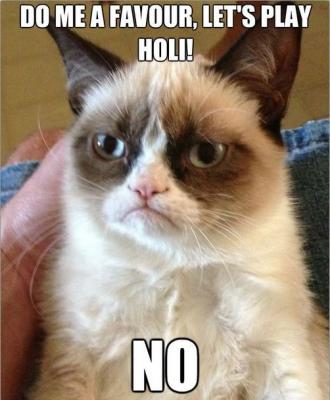
The festival of colours is just around the corner and the country seems to be stocking up on colours and balloons already. A festival with a tagline such as “Bura Na Maano, Holi hai”, what could possibly turn into hooliganism, right? Wrong. Holi sees more than its fair share of rowdy-ism and some not-so-good moments. Here’s a list of the things that irk us mortals while the rest of the Indian populace rolls around in all sorts of stuff.
- Eve Teasing: Everyone knows it happens but they’re all too high with joy to put an end to it. It’s the perfect excuse for the not-so-friendly neighbourhood lecher to touch the pretty damsel he’s been eyeing for way too long at all the wrong places. If she protests, pat comes the reply, “Bura na maan, holi hai jaaneman”. It doesn’t help being surrounded by people who’re drunk on bhaang either.
- Bhaang Intoxication: That brings us to the next problem. It’s the one time during the year when you can be publicly intoxicated and nobody can say anything because well, “Holi hai, yaar. Aaj toh banta hai.” And it’s no secret that ‘Bhaang’ stands for anything but just that. And that’s where the rowdy-ism exacerbates; people get into fights, wreck public property, the usual.
- The water balloons: Now, for those who’ve been at the receiving end of these, and most of us have at some point or the other, it’s been painful. But what’s more annoying is the fact that the onslaught starts well in advance of the festival and it tends to be indiscriminate. It could potentially ruin your entire day.
- Dirty Holi: It may be called the festival of colours but it isn’t just limited to colours. There are all sorts of stuff that are used ranging from eggs to mud and grease. And God knows that they just won’t come off.
- The sweet delicacies: Indian festivals are known for the awesome food that accompanies it. There has to be some incentive to tolerate all the annoying relatives, no? Holi is synonymous with the mouth watering Gujjias. Who can resist binging on them when there’s a platter laid out in front of you? But the reason they are on this list despite the shared love for them is because they don’t really let you forget the binging all that easy. ‘A moment on your lips, forever on your hips’, is that not what they say?
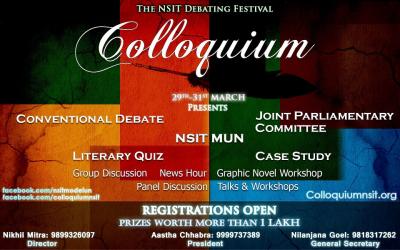
The schedule for Colloquium -The NSIT Debating Festival is ready! And it definitely promises to be a great Easter Weekend.
29 March (Day 1)
- 9:30 a.m – 10:00 a.m. : Opening Ceremony and registration for all events
- 10:00 a.m – 11:30 a.m. : Panel Discussion – Round Pegs in Square Holes – In the midst of easy jobs, fast money, posh lives, where dreams, goals, aspirations, wish fulfillments all topple over each other, many people get unknowingly trapped in the rat race for corporate jobs and conventional careers and are never able to take some time out to introspect and find what they are destined for. Having chosen to question the status quo, we at Colloquium 2013, want you meet some very ordinary people whose stories serve as a beacon for all to follow one’s dreams. The round pegs in square holes, Padma Bhushan awardee Dr. Mallika Sarabhai, bestselling author Mr. Ashwin Sanghi, notable social activist Ms. Kamla Bhasin and the renowned social worker Mr. Anubrotto Kumar Roy, popularly known as Dunnu Roy.
- 11:30 a.m. – 3:30 p.m : Netaji Subhas Memorial Debate (The Conventional Debate) – Colloquium’13 brings to you the centre stage of all debating events, here is your chance to battle it out in a fierce war of words to prove your point.
- 12:30 a.m. – 1:30 p.m : Author’s Isle – Session with Ashwin Sanghi – Come and meet from the man himself. Ashwin Sanghi takes the listeners through the exciting journey of his award winning novel ‘Chanakya’s Chant’ and his latest work, ‘The Krishna Key’.
- 1 p.m. – 3:30 p.m : Literary Quiz – Attention to all the voracious readers out there. Now is a chance to encash your insatiable appetite for reading. The quiz is open to undergraduate & postgraduate students and the top three teams will win the prizes.
- 4 p.m. – 6 p.m : Comic Speak – “Growing up, all of us have had a fascination… for comics and cartoons.” Extending our pent up passion for comics, this workshop aims at exploring the nitty-gritties of the narrative works in which a story is conveyed to the reader using sequential art. We are proud to present, as the first speaker of this one of a kind event, none other than Pran Kumar Sharma, the leading pioneer of Indian Comics and the creator of ‘Chacha Chaudhary’, followed by Akshay Dhar of Comic Addicts fame.
- 9:30 a.m. – 5:30 p.m : NSIT Model UN (Day 1) – We are back with the second edition of the NSIT Model UN. The following four committees will be simulated.
- 9:30 a.m. – 5:30 p.m : Joint Parliamentary Committee – Joint Parliamentary committee is an ad hoc committee of the Indian parliament investigating ongoing national issues of utmost urgency and importance. The participants will get an opportunity to simulate a JPC, represent a ministry, take a stand on the topic in question and debate to build viable solutions.
- 9:30 – 5: 30 p.m : NSIT Model UN (Day 2)
- 10 a.m. – 2 p.m : Crack the Case – The participants will be presented with a predicament pertaining to an existing business. The team(s) that are able to present the most creative and effective solution to the problem, win the coveted title.
- 2 p.m. – 3:30 p.m : Newshour Debate – This event gives you the chance to assume the role of an eminent personality and discuss a burning issue, pitching in your ideas and opinions.
- 3:30 p.m. – 5 p.m : Judgement Day – Say you were Hitler or Jack the Ripper, how would you defend yourself? Play one of these characters and save yourself from your doom.

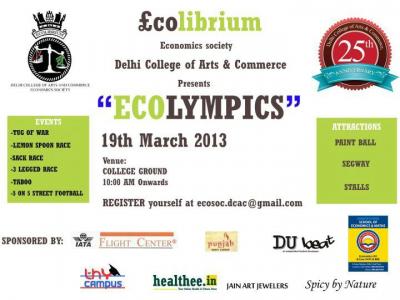
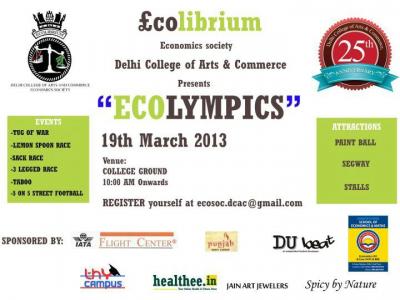
While Economics departments of other colleges go about organizing their departmental fests, Ecolibrium, the ecosoc of DCAC has come up with a new refreshing idea of`Ecolympics: sports day with a twist’ as they like to put it.
Ecolympics, to be held on 19th march, 10 am onwards in the grounds of DCAC seeks to bring together students, teachers and staff of the college for a fun filled day. With competitions like lemon race, tug of war, sack race, 3 legged race, taboo and 5 on 5 football, participants will not only get a chance to revisit and relive their childhood days but also a chance to win cash prizes worth Rs. 12000!!
The main attractions of the day however, will be the popular Paint Ball and the Segway. For those who don’t know, Segway is a two-wheeled, self-balancing, battery-powered electric vehicle and a fun ride.
To complete the day, there will be some good food too, to fill all those hungry stomachs after a day of jumping around.
In their attempt to make 19th a crazy and memorable day for the participants, Ecolibrium has received immense support and encouragement from their sponsors Jain art jewelers, Healthee.in, Sangeeta Bedi School of Economics and Math’s, DU beat, IATA Flight Center, Punjab sweet corner thy campus and Spicy by Nature .
“We are expecting a participation of at least 150 people given all the excitement it has created among the students” Says Siddharth, Vice president, Ecolibrium.
Here’s a day dedicated to fun, freedom and of course spirit of sportsmanship spirit!
We, Delhiites, have certainly travelled in autos at least once in our life. This is almost as certain as the autowallah charging you “Meter se 10 Rupai extra.” As students, rather, as DU students who are late to the first class almost every time, travelling by an auto is day-to-day business.
So what are the basics that make up for a mundane auto ride from point A to B? First and foremost, whether the autowallah is ready to ferry you to your desired destination or not; on a good day you’ll find a compliant guy in about 3 attempts. Secondly, is your chosen autowallah ready to go by the meter; if you are really adamant about it and it is your lucky day, you’ll end up riding a DTC. Thirdly, and the focus of the article is the socio- political issue that the autowallah would shed light upon in his choicest words. The autowallah’s banter maybe the simplest of rants about the traffic with a garnish of his favourite cuss words or a complex sometimes right wing sometimes left wing talk about the state of our polity.
So I shall now narrate 2 stories of interesting rides around the city.
The first incident happened when my professor of Indian Politics took an auto to go someplace, he didn’t mention where. So being the last person to act as a social pariah he started chatting up the autowallah and the stories the autowallah had to share were rather interesting. The autowallah came from a better than middle class household from a state in the Hindi speaking belt. He claimed to have had acres of land and decent amount of cattle to his name. Yes, even to my professor it struck as a rather odd thing for such a guy to be driving an auto in Delhi and he enquired as to what went wrong. So, our autowallah in question lost most of his assets because he had decided to stand for the local elections. He lost all his money in campaigning, and buying off voters which means most of his expenditure was on “dhols, dhotis and daaru”. Indebted as he was, to raise his head above the debt and to make a living, he now drove an auto on Delhi roads. Though one can still wonder if the expenditure on dhotis and daaru had gone down for him or not.
The second case in point is something that happened when I took an auto to get to college the other day. Not only did the autowallah go by meter he also slowed down and pulled up at the curb when he had to answer his phone! Who in this dammed city does that?! When I appreciated him for that action he went on and explained about how he always went by meter and never acted as a “bhaokhaanewala driver”. He also added that two of his sons were studying in leading engineering colleges in the country and as proof of his honesty he did not merely keep the change when I paid him, he returned me the exact amount of change adhering to what his meter said. His auto was famous and revered in the city, he said as he had the unique number plate that read ‘0002’. That was a rather refreshing start to my day since it did not include a game of What Price is Right with an autowallah.
This city has presented all of us such quirky travel tales. To the extent that in 1971, the then TOI Editor took a taxi from his office to get home and what the taxiwallah said, he reported the next day as an example of how delusionalMrs. Gandhi had the common gentry with her ‘GaribiHatao’ slogan. When he settled in the back seat the taxiwallah remarked, “Sahab election kebaadaapaagebaithna hum peechebaithenge.” Needless to say, both of them stuck on in the same seats even after the elections.
So it has been rightly said that if you want to tap the pulse of our city take a ride or two in an auto and make sure that you don’t sit back reading a book or listening to music cause the autowallah bhaiya has a lot to tell.
Anugrah Gopinath
[email protected]
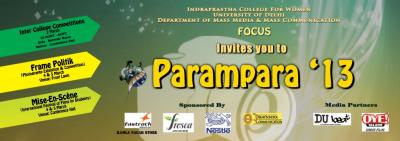
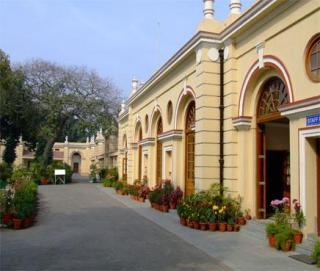
Every year, the Department of Mass Media and Mass Communication, Indraprastha College for Women, University of Delhi, organizes its annual media festival, Parampara. This year, PARAMPARA will be held from 28 February, 2013 to 5 March, 2013. Day 1 and Day 2: 28 February & 1 March, 2013 The festival started with On-the-Spot Filmmaking Competition, where student teams make their film in a span of two hours. These films will be then screened among an audience comprising of more than 300 film enthusiasts and judged on the basis of content and technical concepts. Day 3: 2 March, 2013 Day 3 includes various Inter-College Competitions like the VJ Hunt, Q-MAT (Quiz on movies, advertisements and Television)and Debate. These competitions invite students to rattle their brains, knock on their creative side and win attractive prizes. Day 4 and Day 5: 4 & 5 March, 2013: Day 4 starts with the inauguration of ‘FRAME POLITIK’, a photography competition cum exhibition, featuring both competitive and non-competitive sections. Students will be judged by esteemed jury members. This will be followed by the 9th edition of MISE-EN-SCENE, the annual International Students’ Film Festival. It includes the screening of movies made by students and judged by an esteemed jury. The resounding success of the last editions gave students an opportunity to catch a glimpse of the works of some noted filmmakers. In the past, we have screened movies by film makers like Mr.AnandPatwardhan, Mr.RohitShetty, Mr.Anand Gandhi, Mr.AnuragKashyap, Mr Mike Pandey and Mr. Anwar Jamal. This year, we are going to screen ‘Twittamentary’directed by Tan SiokSiok and ‘Beware Dogs’ by SpandanBannerjee. The college has previously had entries from colleges and universities both at the national and international level, including London Film Academy; School of Liberal Arts, Pakistan; Film School Zlin, Czech Republic; Hamburg Media School, Germany; Savannah College, United States of America; Film and Television Institute of India, Pune; L V Prasad Film & Television Academy, Chennai etc. Students’ films are screened in the long films and short films sections, in the fiction, non-fiction and animation sub-categories. ]]>
JFK once remarked in the pink of his health, “In free society art is not a weapon…. Artists are not engineers of soul.” Nonetheless, the two aspects function synergically. It may seem as a puerile analogy but an Artist is to the society what Tom is to Jerry; incomplete without one another. This is where Indraprastha College’s Literary Fest held on February 27, 2013 took off to explore new links between “The Artist and Society.” The starting hours witnessed the paper presentation competition which saw everything from the juxtaposition of Charles Dickens and Chetan Bhagat to the stereotypes about pornography. In the paper presentation, one of the topics, Censorship, controversy’s favorite child and the parasite that derives its strength both from an artist’s creation and society’s admonishment, was resounded in a new tone and as we all know, the worst part about censorship is **************. The Paper presentation competition was followed by a small spectrum of competitions: Poetry and Fiction Writing, the only time you had the liberty to claim that a bird was a human being or to explain how human emotions and snails are alike, Book-Jacket Designing as half of the world judges a book by its cover, and Crossword for teachers. The results are still awaited. It wouldn’t be wrong to say that the creme de la creme segment of the Literary fest was the session with the guest speaker, Jeet Thayil of Narcopolis fame. Narcopolis, his debut novel, had been nominated for the Man Booker Prize 2012. Fully game to sedate the audience in a lyrical fashion, Jeet Thayil began by reciting his poems. His reference to Jim Morrison and Horses Latitude easily owned some people. Subsequently, he read one sentence from his novel-a sentence that spanned six and a half pages. Jeet Thayil’s advice to budding poets was quite simple-“DON’T DO IT! WHAT’S WRONG WITH YOU!” Lastly, he entertained questions of general as well as of personal nature from the curious lot and later signed the copies of his book before the session ended.Everyone was still in a daze after he finished because of the pinch of heroin he must have added to his words when no was looking. Shreya Bharadwaj [email protected]]]>