Author

Ankita Baidya

Browsing

NEP 2020 is envisioned towards creating an inclusive education to all by bridging the abiding spaces in the society. Yet, it seems to just be a façade of progression. The policy is ought to introduce the much needed practicality into the mainstream education but what is the correct way to go about it? Is it going to be an actual consideration of voices of all the stakeholders or will it be a theoretical approach to a ‘practical solution’?


The National Education Policy (NEP) 2020 has a vision towards transforming the Indian education system into a global knowledge superpower. It lays down the veracious purpose of the education system, to develop virtuous human beings having rational and critical ability, empathy and solicitude, creativity and the power to go beyond but what is the cost to implement this? Will this be uniform for each child living under the same sky or a question of ‘subjectivity’ would arise?

NEP address to the practical knowledge and skills like carpentry etc but see now the things is that our government schools do not even have quality teachers how can you equip them all in such a small time frame, so first government should be focusing on ground development rather than looking on to the entire nations prosperity.

-Malvika Choudhary, Delhi School of Journalism

The irony of this policy is such that it is a step towards changing the theoretical approach into practicality but the policy itself sounds too theoretical than pragmatic. While observing the NEP 2021, inclusivity is a major factor of the entire policy. Yet, there are provisions that might look like encompassing all the sections of the society. However, in the actuality of this realm, it is only pushing the way towards widening the gaps of disparity. It is as if a kid falls down, gets hurt on the knee and starts wailing; rather than using a bandage to heal the wound, they are being given licorice in pursuit of ceasing the tears. The question is not about if these provisions are good or bad but about the “tomorrow” that the nation is trying to build.

The problem in NEP is that it scarcely mentions of affirmative action in the form of reservation for the socially oppressed anywhere in the document moreover it also talks about financial autonomy for the government which will lead to rise in fees and so more exclusion of the students.

-Aman, Ramjas College, member of Students’ Federation of India (SFI)

The NEP emphasizes on the sitch of inclusivity and universal education. However, granting the status of autonomy is only going to widen the gaps. Autonomous colleges and universities can introduce independent rules and regulations and curtail the transparent admission processes which guarantee the seats to the marginalised sections. Further, they can enjoy the liberty of introducing expensive self-financed courses. This step does not speak inclusion, instead, is screaming omission.

The National Education Policy (NEP), 2020 is a policy aimed at commercialization, privatization, centralisation and saffronisation of the education system in the country. In the garb of granting ‘autonomy’ to educational institutions, the NEP gives unbridled power to the institutions to implement fee hikes as per their will. It turns education from a responsibility of the state and a social service, into a profit making enterprise. This will further lead to education being inaccessible and a debt trap for the coming generations and the present.

-Prabudh Singh, graduate from Zakir Hussain Evening College, member of SFI

Adding to this, the policy emphasizes on the need to set up a ‘Gender-Inclusion fund’. On the surface it seems to be bringing an end to the unjust practices against the girls and transgender but as a matter of fact what is in it for them? Will it bring solace to the wronged genders or will it welcome even more adversities than it is already present?

This fund will be set- up to provide equitable quality education to the transgender students and girls, especially belonging to the socio-economically disadvantaged groups. However, this step would require the transgender students to come out and identify themselves in the public eye. We are living in a progressive country but not progressive enough to even provide security to this section through penal laws. From a classroom to the roadside tea stall, slurs are normalized against trans people then how are we supposed to believe that a fund is going to solve these deep-rooted problems? Are we supposed to turn a blind eye towards the underlying issues and focus on the surface?

A trans student dressed up as a boy for every single day until he finished his final school examination and secured a seat in a foreign land. It was then that he recognized himself as she/her. It took her nearly twelve to fourteen years to come out in the public eye since she has the sense of security of leaving the country so how are we supposed to accept the fact that by introducing a fund, by providing bicycles, provisions of sanitation and quality education, the long-lived stigma will come to an end? Is this enough to turn the thorns into roses when the country finds it normal to laugh them out?

Certain aspects of the NEP might have long term detrimental effects, after lapsing the short-lived happiness. It is a good decision but not a thoughtful one. The gender inclusivity fund is a good start per say, but at some point these students will be exposed to the vulnerability that our society hides. A system has to be incorporated that would not throw these students under the bus and would provide them from basic needs to quality education.

-Sanya Gupta, a student of Kamala Nehru College

Furthermore, the policy talks about introducing similar inclusion funds for other marginalised sections. These funds are in the talks for their holistic wellbeing in addition to equitable and quality education. These steps look good on paper but are they a promise to a long-term happiness or just a fantasy of seventh heaven? Not to mention, how are we supposed to address the issue of ‘roti, kapda aur makaan’ on the pile of discriminatory laughter and societal stigma. On top of all these, the perplexing situation arises about the source of the funds, given that we live in a country with quite a number of marginalised groups. Even if they are introduced, how is the question of transparency in terms of usage of the funds is going to be answered? These funds seem to be a wolf in a sheep’s skin. From exposing to a greater vulnerability to a possibility of widening the societal gap, this policy needs to be rethought from the perspective of the wronged ones.

The NEP-2020 is set to be implemented completely by 2030. Given that India has the second largest population in the entire world, not only is it a strenuous task but also mapping the various tangibles for over 250 million students, next ten years seem to be quite a less number.

NEP 2020 is very promising in theory, but its implementation is way difficult, especially in a country like India which ranks second in population. Surely, there’s a long way ahead for the Indian education system to grow and develop under the NEP, 2020. There is a need to shift from mugging up facts and figures to encourage creativity and practical experiences.

-A Professor of University of Delhi in conversation with DU Beat

Besides a problematic implementation, it needs to account for all the tangibles that come along with it. The most quintessential stakeholders of this policy, the students, believe that the demerits of the policy might overpower the actual vision which in turn could lead to a massive failure if not addressed. Nevertheless, this policy might be the much needed change to one the largest education systems of the world but which lines are we ready to blur in order to achieve the top rank?

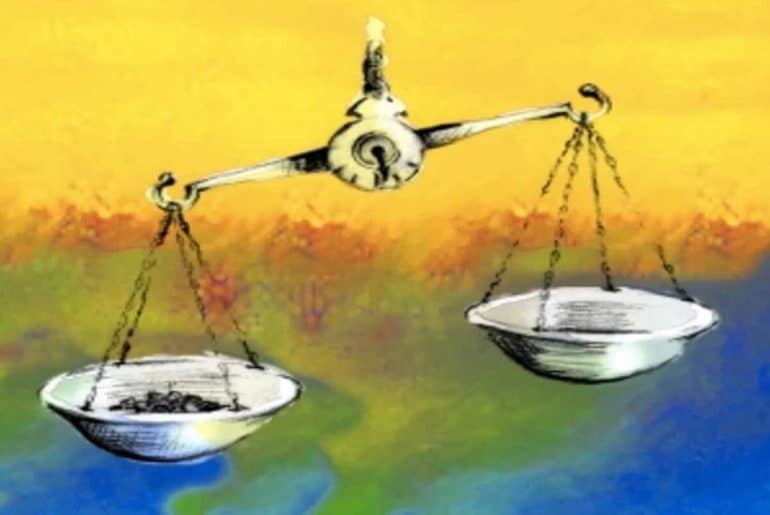
Featured Image Credits: itstimetomeditate.org 

Ankita Baidya
[email protected]

From the medical system to the education system, everything has been completely exposed to vulnerability from the time pandemic has hit this nation. The year of 2020 was a time that people want to erase from their memories and it was this year where students were counting on the system to show them the light. However the road ended on the question of whether the quality of Education was a subject of disparity or if the education is bounded by the deceptive morality?


The country was reeling from the mayhem that was caused by the second wave when the question of lakhs of students’ future was on the line. Even when the country is faced with adversities, it is the strength of the Education system that helps it out of them. Yet, the actions under the worst possible situation suggests otherwise. The class 12th students of the batch of 2020-21 were thrown into the burning flames of their truest nightmares when the education system decided to replace the boards with another evaluating mechanism in view of the pandemic. Well scrapping off the examinations might have been a blessing in disguise for some but it did snatch away the sleep for most. There is no legitimate system that could have replaced the transparency and the coherence of formal examinations. The question here arises, is our nation equipped enough to dwell into an ambiguous method in the “hope” of transparency?

CBSE had apparently released a notice according to which school must not give marks more than the maximum school average of the past 3 years. When a student called up the management regarding an explanation for grading disparities, he was blatantly told that since they needed to maintain an average, marks of some students were reduced to increase the scoring of others. This just exposed the “too good to be true” evaluation pattern.

-Kartik Chauhan, first year student, Hindu College, University of Delhi

The Central Board of Education (CBSE) is one of the largest boards in our country and yet it failed to honour the brightest minds and recognize the ones who needed help. The evaluation system adopted wronged so many students on so many levels. However, not only was the criteria overlooked but apparently the masses have moved on and all is forgotten for the “good”. There was hardly any transparency as to how the marks were awarded to each student. It was as if the marks were just blatantly awarded on the basis of nothing. All that mattered was the school average and the school performance but was this more important than the careers of the thousands?

If a blatant outlook was not enough to release the results, the “under the table” work had a big role to play in jeopardizing the entire educational structure. I personally love to go on a shopping spree but never knew that prestigious marks were for sale at an exquisite price. Not to mention that the deal was that of the janpath and sarojini markets, ‘no bargain, only fixed price’. Students, who are believed to have tender-creative minds, were exposed to the vulnerabilities of gambling. Students, teachers, authorities, each one of them gambled the marks and after all this, aren’t we equipped enough to understand who was always on the winning side.

In conversation with Aashna Belur, a first year student, while pointing out the dirt of this system, stated that some schools took it as far as to compensating their track records for a particular subject. She explained that if the track record of science has been better than humanities, so this year the school bridged a balance by increasing the average of humanities and decreasing the science average. She further added that this in turn would benefit the schools when students take admission in view of such “spectacular” performances. She felt that it is a complete mockery of the education imparted, which in the end is only fuelled by business, profits, and a corrupt regime.

There were students who scored 90 all along, ended up getting a 70 and then there were students who scored 70 but ended up scoring above 95. Moreover, there were students who were consistently a top scorer in a particular subject but ended up getting lower than what they scored which again does not add up.

-Aashna Belur, first year student, Shri Ram College of Commerce, University of Delhi

What irks me is the fact that schools took it to another level in pursuit of their personal gains. From “honest” online examinations to an aid to the salaries, are ethics of education just something to follow theoretically? Is morality just a relative term? When a hard-willed student is asking their mentors to show them a way to survive, they are simply asked for the financial assistance and leave the rest on this “transparent” mechanism. This makes me question the years of hard-work that went into earning the school passing certificate. Was it worth enough to have put in the hours only to pawn it off to a corrupt system?

In conversation with Soumya Arora, a first year student, told DU Beat about the laid-back attitude of the CBSE towards her repeated plea to correct her marks in the final report card. The school “may” have uploaded the wrong marks and wrote several mails to the authorities about the same. Nevertheless, the higher authorities were also ignorant towards the issue. Despite following all the formal protocols, she was left with an abundance of disappointment. Being a student of the University of Delhi now, she ascertained the fact that the pressure this marking scheme had on the tertiary level educational institutions, knew no bounds. This led to an impetuous outlook towards the marks awarded, along with a complete collapse of an honest system.

Feeling totally helpless and drained by the sheer ungracious and casual behavior by the country’s one of the most popular education boards, we wrote an RTI (Right To Information) and even sent a mail to Delhi’s Education Minister, Mr. Manish Sisodia expressing our concern. It has been more than a month since the Delhi colleges have begun and my issue regarding the loss of marks to date stands unresolved. This just makes me worry that if this is the state of our country’s education system now, then I surely don’t know what does the future holds for all the coming generations.

-Soumya Arora, first year student, Jesus and Mary College, University of Delhi

Be it the school or the board, everyone showed how the marks of lakhs of students was least of their concerns. The “financial support” taken by many of our mentors in lieu of our grappling academic situation threw the deserving ones under the bus. When all that mattered to the student was their class 12th marks in order to get into their dream college; all that mattered to the authorities was the question of pride and prestige.

A non-transparent system was placed which pushed the high achievers down to an unwanted rank and the ones who were ought to repeat and rectify themselves have suddenly found a seat at the premier colleges. The guilty pleasure that the country enjoys by forcing everyone into the political scenario is euphorically unexplainable. The ones in power are authorized to shape the nation onto the right path. No activity came to an absolute halt so why did the students’ future suffered? I feel dejected to say, but the question is not about the future of the nation but to serve a temporary satisfaction to the public. It takes only days to change a first page headline to a third page story and so all the dishonest ways were rightly forgotten after awarding the “virtuous” marks.

The students winded up getting crushed under the weight of the undeclared ownership of their marks. When help was needed to heal the wound, a candy stick was offered to shut the whining mouths. These students have cut a big fat cheque in the name of those who promised them an alternative to their “success” but will this achievement take them to newly found heights or would it pierce a hole to show them back on the right track?

Read Also: Think beyond 12th Board Results and Delhi University

Featured Image Credits: Uday Dey via The Times of India

Ankita Baidya

[email protected]

Casteism has been lurking in our systems as a product of historical grievances. From condemning the actions to being the perpetrator, is this deep rooted caste bias finding new ways to make itself comfortable?


Yet in another turn of events, a student from scheduled caste, hailing from the Jawaharlal Nehru University (JNU), had to face the atrocities of casteism. The victim, Sagar Kumar, was subjected to physical brutality over refusal to copy the assignment of the alleged attacker, Shubham Kumar. In a conversation with Dalit Desk, Sagar explained what he faced.

On 28 November, at night 11, I was studying in my room while Shubham came in and asked me to do his assignment to which I refused and told him the teacher can fail me for this. Several times he insisted but I refused. Thereafter he hurled Casteist slurs at me and started abusing me and beat me. Adding, I am mentally traumatized after this incident; strict action must be taken against him.

-Sagar Kumar told Dalit Desk.

According to the report by Birsa Ambedkar Phule Students Association (BAPSA), JNU, Shubham Kumar has been abusing Sagar Kumar for the past one year. This has put the latter through a great deal of purgatory and physical trauma. This incident is a reminder of the prevailing status quo arising out of casteism. BAPSA found Sagar Kumar with a high blood pressure. He was shivering in fear for his life while his voice was cracking. A complaint of the aforementioned incident has been lodged at National Commission for Scheduled Caste, Vasant Kunj Police Station, Equal Opportunity Cell (JNU) and Chief Proctor of JNU. The creamiest brains putting it out at the most premier institutions of the country makes me wonder, if we are too invested in literacy that educating the consciousness has taken a back seat.

The shameless shout out for impunity by Shubham Kumar only exposes the fault lines of the self-proclaimed island that JNU is.

-BAPSA, JNU

The irony of the entire situation is the fact that we condemn the very actions that we see being perpetuated around us by our own people. From using the casteist slurs to mocking the minority in the name of comedy, we are witnessing a degree that is pulling us towards the breaking point. Institutional casteism is on the rise and this incident comes as no shock. A recent study suggests the lofty prevalence of casteism in higher educational institutions but the constancy of this sitch is quite overwhelming. What irks me is the smell of normalcy around it. Unless the blood oozes out of the situation, the discriminatory and defamatory acts are subjected to negligence. How can these deprecatory and belittling instances thrusted aside while condemning them?

The very existence of the grievances cell for the marginalised section in the educational establishments proves the existence of these preferential and unjust acts. Creation of these cells to seek redressal has pulled curtains over the actuality of the situation. This has made it easier to achieve those estranged dreams in the crippling shadows of the same. Meddling with casteism does question the political agenda and its pernicious relationship with it. A peculiar pattern can be observed in the same regard, even at the places of education. Meenakshi Yadav, the representative of Student Federation of India (SFI) from Lady Shri Ram College spoke to DU Beat. She questions the standing of this circle which instigates casteism while fulfilling their political dream.

Brahmans portray themselves that they are in-charge, they are in power. They feel a sense of superiority due to the presence of the current governing body.

-Meenakshi Yadav, SFI representative, LSR

It is a simple monopoly of strength to establish dominance of a caste by the ones in power. Showing the monochromatic nature of elitism, it pulls the reins of casteism. It aligns the political inclinations and caste-based notions, producing a class of inherent elitism. This is an establishment which teaches equality and the next minute pulls the card of ‘winner-winner, political dinner’.

Koi gujjar hai toh batado, humko dosti karni hai par sirf apne cast walo se.
-A first year student as quoted by Meenakshi Yadav, SFI representative, LSR

Delhi University has long been known as a place where tensions arising from casteism have been lit. Not long ago, it had displayed a reservation of their thoughts when the writings of two dalit writers, Bama and Sukhartharini, have been removed and replaced by the work of an upper caste writer, Ramabai. This altercation of syllabus poses a sheer threat to the sovereignty of the institute and questions the autonomy of the academic space. How can we account for the pillars of democracy with a prejudiced and biased eye? Is this discriminatory influence above the education imparted by the most premier institutions?

A student from Delhi University told DU Beat on anonymity, “It is quite usual for me to go about
my day and hear people using a language that might not be welcomed by any marginalised group. Even if we retaliate, all that comes out is a small laugh and the words are expected to be forgiven the next minute. It is quite normal to see the usage of such a language, be it in college or my neighbourhood. It is the same story spinning everywhere.”

Our civilizational past shows us the derogatory history of this section of the society. The pain inflicted on people like Sagar Kumar is told in pursuit of the lost self-respect and in anticipation to put an end to such infamous incidents. It is veracious to say that we are experiencing an infamous facade of cruel reality. The blatant act of turning a blind eye to the prolific iniquity by the prestigious establishments makes me question the due justice. Will a fair play swing by the wronged eyes or will it continue to serve exoneration to the offenders?

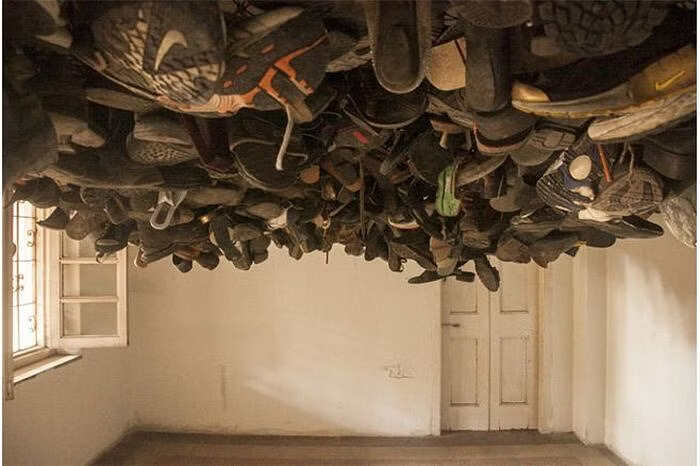
Featured Image Credits: ‘Skyscape’ by Rajyashri Goody via India Today

Ankita Baidya

[email protected]