Tag

women’s safety

Browsing

The Delhi government’s new Saheli Smart Card offers free bus travel for women and transgender residents, but Delhi University students and commuters question its impact. With safety concerns and limited metro coverage, experts say true mobility requires stronger security, inclusive access, and reliable infrastructure beyond just free fares.

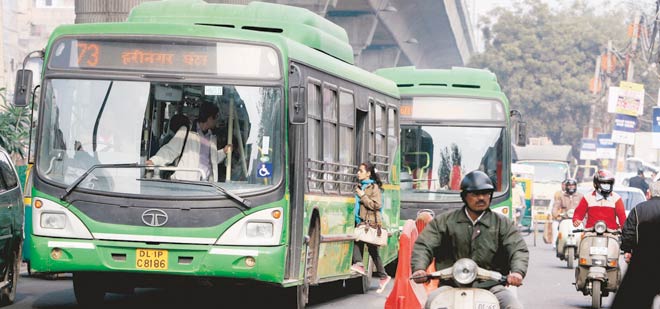
The Delhi Government is set to launch the Pink Saheli SmartCard on the auspicious festival of Bhai Dooj with the aim of digitising travel and replacing the Pink Tickets for DTC buses launched in 2019. This is a personalised travel smart card offering free travel on DTC and cluster buses for women and transgender residents, along with the option to recharge for other modes of transport. But does it really remove all the barriers which cause women to deter using buses? 

This card will be personalised with the name and photo of the user under the NCMC framework. The free rides will be restricted for the women and transgender residents of Delhi aged 12+. Applicants can register online on the DTC portal and complete KYC and Delhi resident verification for the card to be issued. The card can be recharged for paid use on other modes (e.g., Delhi Metro), but reports clarify metro rides are not automatically free under the scheme. It replaces the older paper-pink-ticket regime—but raises concerns about the exclusion of migrants, informal-housing residents and others without formal documents. 

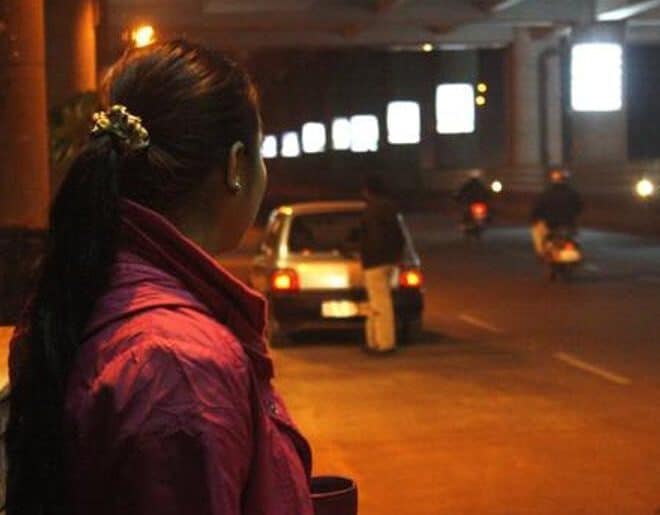
Though, the willingness of women to use public transport is not an issue that can be cured by this initiative. Recent reports and viral accounts constantly remind us how unsafe and uncomfortable travelling in public transport buses and metros can be, even with the designated women’s coach. Especially for students, it is a major concern, as they have to regularly use public transport on a daily basis. A broader survey by UN Women from 2010 found that about 50% of women reported being harassed while using public transport in Delhi. And another source states that up to 8 in every 10 women surveyed in Delhi have faced sexual harassment during commuting or in urban public spaces. These numbers are extreme, but it’s agonising how they’re not really surprising for any of us. 

A large share of daily commuters in Delhi include students travelling every day across the city to different campuses. So it’s obvious that this policy is expected to include a student angle, which is especially imperative for the students at Delhi University—as DU student activism and union records show long-standing demands for subsidised metro passes and better university-run transport. Equity in transport access is clearly linked with academic participation, and women’s safety during this travel is one of the most important concerns. The student reaction to the Saheli card has been mixed, as it criticises the card for excluding metro travel, which is now more reliable than using buses. There is also a constant call for designated student passes for the metro to reduce dependence on long bus commutes. 

In conclusion, the Saheli Card can empower women only if free travel is paired with real safety reforms. Ensuring active presence of female wardens, better lighting in top commuter hubs, ensuring constant CCTV watch, and metro concessions will make Delhi’s transport both accessible and secure—turning affordability into genuine freedom of movement.

Read Also: Crisis Erupts at SAU: Students Protest After Alleged Gang Rape

Shreya Bhushan
[email protected]

Image Credits: Anonymous
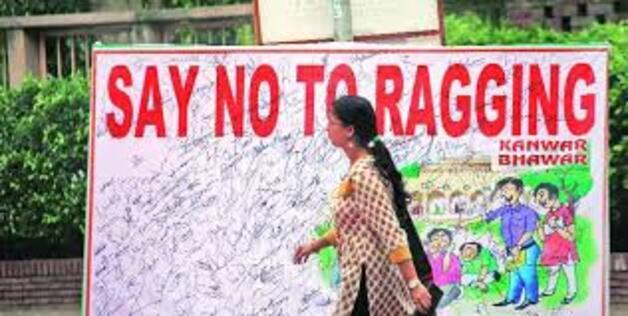
Delhi University has introduced stringent anti-ragging measures, including mandatory declarations, awareness campaigns, patrols, mentorship, grievance platforms, and control rooms, ensuring safety and smooth induction of new students.

A meeting of the Proctorial Board, held on Monday, finalised the introduction of new measures to Delhi University’s anti-ragging policy, ensuring a strict and robust stance against ragging across institutions to facilitate the smooth induction of the newly admitted students.

As opposed to the earlier approach of restricting surveillance to “sensitive areas”, the revised policy seeks to reach as many areas as possible.  Additionally, the new policy includes the integration of technology through the use of online portals, Delhi Police and the Anti Ragging App.  

All newly admitted students and their parents/guardians are required to submit an anti-ragging declaration through the national portal, www.antiragging.in. This mandate follows the directions of the Hon’ble Supreme Court to combat ragging in educational institutions under the recommendations of the Raghavan Committee. 

Anti Ragging Week
Under the UGC guidelines, DU will observe Anti-Ragging Day on 12 August, with an entire week dedicated to anti-ragging awareness campaigns and discussions from 12 August to 18 August, in both Hindi and English.

Anti-Ragging Committee and Vigilance Squads
Colleges and requisite hostels have been made to restrict outsider access. There is a proposal for the formation of an Anti-Ragging Committee and Vigilance Squads with the help of students from the National Social Service and National Cadet Corps.

Police Surveillance
Regular patrolling will be conducted outside key campus areas, especially in women’s colleges. Using vehicles like Vamika, Delhi Police has ensured that plainclothed female officers will be present within and outside college campuses to prevent any sort of harassment against female students.

PG Verification
Students opting for paying guest accommodations, which has become extremely common, have been advised to verify their PGs with local police authorities to caution them from any exploitative practices in their accommodations.

Mentorship System
The university has rolled out a mentorship system where new students will be paired with faculty mentors outside their academic departments. An official in conversation with the Times of India stated that:

These mentors are expected to help new students navigate personal and emotional challenges that often come with the transition.” 

Control Rooms
For instances of emergency, two control rooms, one each on the North and South Campus, are operable,  from 1 August to 8 August. The numbers for the control rooms are:

                      • North Campus: 27667221
                      • South Campus: 24119832 

An online platform will be launched for grievance redressal,  which will also include a referral process for cybercrimes related to ragging. All institutional authorities are required to submit weekly compliance reports during the first three months of the academic year, followed by monthly reports to the University Proctor at [email protected].

Students have been asked to install both the UGC anti-ragging app and the Delhi Police’s Himmat app. The University of Delhi, in collaboration with  Delhi Police, has committed to ensuring an effective implementation of anti-ragging measures across all campuses.

Read Also-Unlawful Detentions, Custodial Torture. Delhi Police Faces Scrutiny Over Crackdown on Student Activists

Featured Image Credits: Yaksh Handa for DU Beat

Divyanshi Dusad

[email protected]


A mass Memorandum was submitted to the Delhi police commissioner on Friday in response to the recent harassment case of a northeastern student during her Uber ride.

On 11 October 2024, a mass memorandum was submitted to Sanjay Arora, the Delhi Police Commissioner, by North Eastern students residing in the University Enclave. This came in response to an alleged incident whereby an Uber driver attempted to kidnap a student from Manipur as per the complainant’s statements. The incident took place late at night on 5 October 2024. The complainant called for an Uber from Vijay Nagar to the bus station at Kashmere Gate, hoping to board a bus to Chandigarh. Shortly after she got into the Uber, the driver asked her about her location and other personal details before trying to take her to a remote area.

“When he initially took a wrong turn, I did inform him about it and did grow suspicious, when he wouldn’t listen and instead would tell me to let him decide which way the ride should head in whilst threatening me with a blade.”

The complainant said, recalling the terrible experience. Soon after, she and her friends filed an FIR against the accused at Model Town Police Station. As the situation developed, it became clear that the driver of the car was not the same person shown on the Uber app, which raised additional safety concerns.

The police’s role in all of this was both shocking and severely disappointing. The complainant was made to wait for 7 hours before she could file a complaint, highlighting both the complacency and incompetency on the part of the officials. The accused was charged with lenient sections under the Bhartiya Nyaya Sanhita (BNS), leading to an early bail. The accused was even allowed an altercation with the complainant, allegedly to pressurise her into withdrawing her complaint. The complainant understandably felt unsafe, knowing the accused could walk free while knowing her whereabouts. She went on to express her concerns to the police officials but was met with a dismissive tone.

“I was made to wait for hours because the official in charge of filing the FIR was said to be in a meeting. My safety concerns were dismissed and blown out the window, citing that nothing of that sort would happen. All while the accused was allowed to have an altercation with me in order to put pressure on me to withdraw my complaint.

The complainant expressed her clear disdain for the irresponsible and inexcusable behaviour of the police officials at Model Town Police Station. 

The Mass Memorandum in light of this incident, and amidst a growing number of violence and harassment cases against the northeastern students in areas like Vijay Nagar, whose demography is shaped massively by the students coming from the northeast. There have been multiple key demands that have been put forward. The immediate suspension of all the police officers, with a new FIR under Section 74 of BNS, be filed. Section 74 of the BNS rules that acts of violence against women that are intended to outrage their modesty be met with a minimum sentence of 1 year, with the possibility of extending it to five years. The concern that has understandably taken precedence in the demands has been ensuring the safety of the complainant. The police have been asked to provide adequate security to protect her. Seeing the dismissive nature of the North Eastern helpline, a nodal officer has been asked to be appointed by Delhi police, who’d be responsible for matters concerning the North Eastern States. Finally, Uber, which has yet to take any kind of responsibility, has been asked to hold itself accountable for the incident.

These incidents are concerning and contribute to an environment in which women frequently feel both unsafe and unheard. The complainant attempted to contact the North Eastern helpline, only to have the issue referred to the Model Town police station, undermining the purpose of having a dedicated helpline. Vijay Nagar and many such areas in Delhi are student hubs, with students coming to study from different parts of India. Uber then becomes somewhat of a necessity for many to travel back and forth from one location to the other, making incidents like these damming on the part of Uber, who parade the narrative of wanting to ensure women’s safety but fail whilst taking no accountability whatsoever.

Read also: North-Eastern Student of Hindu College Faces Racially-Motivated Attack

Featured Images credits: Getty Images

Yash Raj

[email protected]

A DU student fights back to her molester, raising serious alarms in regards of women safety in public transportation.

 A twenty-three year old Delhi University student fights back to her molester, while on a bus ride home from Kapashera to Sangam Vihar. The victim grabbed the accused by the collar and waited till the police arrived and lodged a complaint against him. All of this happened with no support from the bus staff or the passengers aboard.

The accused, identified as Mukesh Kumar, 37, was standing beside her and made attempts to touch her. The woman describes how he started rubbing himself against her, while she was seated in reserved section for women. The man stood beside her, and started touching her inappropriately. The woman first ignored the action, and then retaliated by asking him to move away. To her dismay, the accused, unzipped his pants and started touching himself, trying to pull her towards him. The woman shook him off and then hit him with her sandal. Despite vain attempts to lure attention, the driver and the conductor paid no heed, until she forced the driver to stop the bus at Mehrauli. She stood up, grabbed the man by the collar and dragged him out of the bus. With the help of a passerby she was able to pin him down, until the police came and arrested him.

After conducting medical examinations, it was revealed that the accused was heavily drunk, as pointed out by the woman in her statement, claiming that he reeked of alcohol and kept threatening her. The accused is a resident of Molarband in Badarpur. He works in an event management company. A similar incident took place almost a month back when a nineteen year old Delhi University student jumped off a bus near South Extension, after being harassed by a man. The girl faced molestation seven times in the three months of reported abuse, every day, en route to her college.

A similar harassment case was registered under Vasant Vihar police earlier this year. A DU student posted a video online claiming the man sitting beside her was masturbating and trying to grope her, while her alarms were not given due. However, no arrest has been made so far, despite the police working upon it.

This incident was reported on route 717 of the Delhi Transport Corporation buses.

Many women do not feel comfortable travelling in buses, and harassment becomes a routine act in these buses due to lack of CCTV facilities and guards in the Delhi Buses. The DTC services in transport are one of the most used and efficient systems as it has routes all around the city, being an economical choice for its passengers.

The following row of incidents make us question women safety in public transportation and if the authorities are taken any serious action regarding it. As of the current state, public transport is very unsafe from women.

Feature Image Credits: alexanaderolin.com

Avnika Chhikara

[email protected]

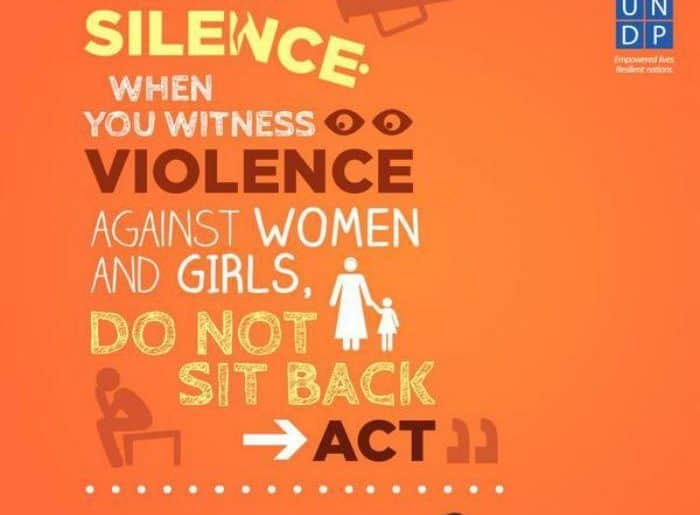
The United Nations International Day for the Elimination of Violence against Women is an occasion for international institutions and non-governmental organizations to raise awareness about violence against women. It has been observed on 25th November each year since 2000.

O 25th November , 1960, three sisters, Patria Mercedes Mirabal, María Argentina Minerva Mirabal and Antonia María Teresa Mirabal, were assassinated in the Dominican Republic, on the orders of the then Dominican ruler Rafael Trujillo. The Mirabel sisters faced this only because they fought hard to end the dictatorship. Activists on women’s rights have since observed a day against violence on the anniversary of the deaths of these women, from 1981. 25th November was designated as the International Day for the Elimination of Violence against Women by the UN General Assembly in 1999. The United Nations Population Fund (UNFPA) lists various forms of violence against women: rape and sexual harassment, child marriage, wife-beating, prostitution, female genital cutting/mutilation, dowry-related violence, trafficking, sexual violence during wars, forced sterilisation, and bride kidnapping. Violence against women also takes many forms of psychological abuse, intimidation, and harassment.

However, long after the Beijing Declaration in 1995 and many years after the Convention on the Elimination of All Forms of Discrimination against Women was embraced, some countries like Iran still don’t recognise feminist organisations, India denies armed conflict and caste, and everyone is disinclined to respect sexual rights for women, differences in sexual orientation, and gender identities.

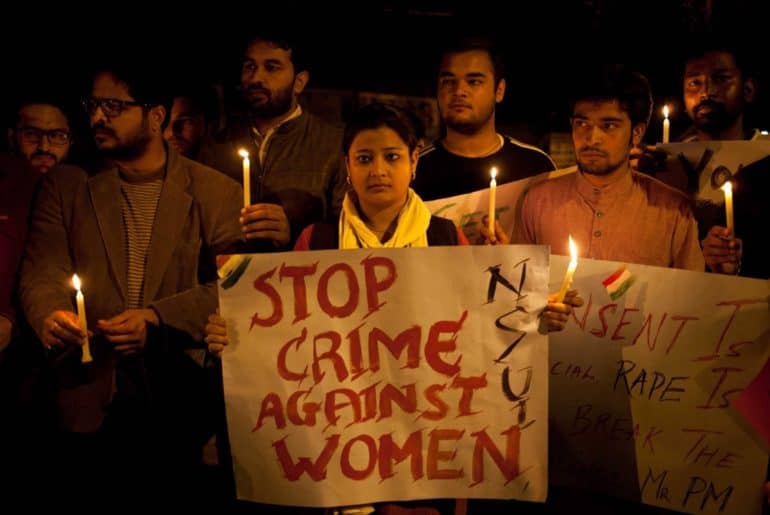
Has violence against women become so run-of-the-mill in India that we have ceased to take note of it? Do we need anniversaries, like 16th December, to remind us of something that happens every day? Gender violence happens every day, everywhere in every form. Yet, we only take note when something horrific, like the gang rape in Delhi, happens, which reeks with barbarity. It mobilised people, who had never before been out on the streets, to shout that this culture of violence must end. That was five years ago. Today, that culture of violence remains ingrained still. It is terrifying to think that women will get beaten up on the pretext of being witches, and that girls, no matter how many years old, will be assaulted physically. It includes crimes that we don’t read about in the newspapers. Violence has been normalised in India and elsewhere, because it takes place behind closed doors where there are no eyes and no cameras.

Meanwhile, as women and historically suppressed communities have (just about) started to gain a toehold into the mainstream through political representation, ‘hyper chauvinism’ has reached newer heights, still. The increase in violence against women and minorities and attempts to criminalise alternate sexualities orientations and vehement moral policing and discourses on love-jihad‘ are all part of a backlash against discerned threats to male supremacy. What is to be done, then? Feminism is not a challenge to the men of the society; it is a challenge against patriarchy.

The 16 Days of Activism Against Gender-Based Violence, a global campaign spanning from 25th November through 10th December (UN Human Rights Day), is taking place this year against the backdrop of global outcry. Millions have marched as part of the #MeToo campaign and have exposed the sheer quantum of sexual harassment and other forms of violence that women everywhere suffer, each day. At the center of this year’s theme, “Leave No One Behind – End Violence against Women”, for the International Day for the Elimination of Violence against Women (25 November), it is the imperative to support those who are particularly vulnerable, and to even reach out to the last woman. This November 25, break the silence on gender violence. Women need to thrive, not survive.


This post was aided by information from here and here.

Feature Image Credits: UN

Oorja Tapan

[email protected]


The Delhi gang-rape shook the entire country urging people to question themselves on women safety and women empowerment in India. So let’s see how far have we really come along since then.

The horror of Nirbhaya rape case is still fresh in the minds of Indians. Shame, embarrassment and disgust is all one is reminded of when one thinks of the incident. This urged people to come out on the streets in anger and remorse protesting against sexual harassment. It highlighted the degree of danger women need to deal with and more importantly, the need to make the country a safer place for women.

It did have some immediate impacts:  the 2013 Criminal Law Amendment Act, also known as Nirbhaya Law introduced a minimum 20-year-sentence for gang-rape culprits and those who are found guilty could now be given a death penalty. This was a big step taken by the Indian government to ensure adequate punishment to such offenders. The government defined acid attack as a crime with a minimum sentence of 10 years that could be extended to life in the 2013 Amendment Act. Also, the government made acid attack a non-bailable offense with a provision to pay Rs. 3,50,000 to the victims within 15 days.

Taking a stance on sexual harassment, the 2013 Women at the Workplace Act has given protection against sexual harassment to all women in the workplace, including those informal industries and domestic workers. Also, stalking or voyeurism crimes are non-bailable which earlier were bailable. The introduction of new laws focusing on women safety and maximum punishment for offenders. These laws try to cover as many ways as possible to minimize the various possible risks and crimes towards women. However, these laws and the rigidity towards the issue seem to have made little impact. Statistical data show that rape cases in India moved up from 24,923 in 2012 to 34,651 in 2015. According to NCRB, conviction rates in Delhi went down from 49.25% in 2012 to 29.37% in 2015. However, Delhi Police released a stat showing that the conviction rate has increased 5.4% from 2012 to 2015.
The Modi government launched the ‘I Feel Safe’ app, a personal safety app which is accessible even without data connection. The app was launched in 2016. The app places automatic call to 100 and tracks the location of the person in distress within 30 seconds. As per a report by Quint, published in 2016, sexual assault cases in Delhi have tripled since 2012.

Even after so many years of debate, discussion, the ‘apparent’ progress, stats reveal that we are nowhere near achieving the goal of women safety. In fact, we are worse off. Highlighting the matter does not mean that the matter is being solved. It can never be solved until it is confined to change of laws and introduction of apps. There will be a difference only when there is a change in our mentality. Yes, such things take time but we need to first move in the right direction. After all, the journey of a thousand miles begins with a single step.

Feature Image Credits: The Time Magazine


Karan Singhania
[email protected]