
Tag

#Women-friendly Campus

Browsing

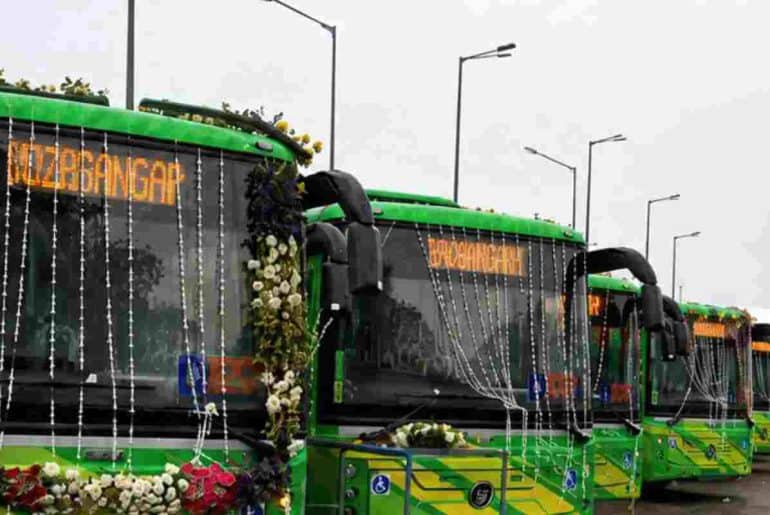
Delhi introduces 26 U-SPL women-only e-bus trips across 13 routes, connecting major DU colleges, aiming to make daily commutes safer for women students.


Delhi’s public transport network is set to get a women-focused expansion, with 56 dedicated women-only electric bus services being introduced across 28 routes.  For Delhi University students, the move will bring University Ladies Special (U-SPL) services to several prominent colleges, including Hindu College, Ramjas College, Daulat Ram College, Shri Ram College of Commerce and Lady Shri Ram College.

Chief Minister Rekha Gupta and Lieutenant Governor Taranjit Singh Sandhu flagged off 200 new electric buses on Wednesday. The rollout includes 30 Ladies Special trips across 15 high-demand routes and 26 U-SPL trips across 13 routes. The services are intended to connect residential areas with major educational and institutional hubs and will operate around morning and evening peak hours.

The U-SPL buses will provide dedicated services for women students travelling to and from their colleges. With DU students commuting from different parts of Delhi, the services could offer an additional option for those who depend on public transport for their daily journeys. The buses will carry distinctive stickers to help commuters identify the women-only services.

Transport Minister Pankaj Kumar Singh said the dedicated services had been planned around the daily travel requirements of working women and female students.The initiative follows directions issued after meetings on women’s safety held by the Lieutenant Governor with the Delhi Police Commissioner and Transport Secretary in June.

Safety measures on the buses will include the deployment of female police personnel and home guards. The services will also be operated by female staff. Panic buttons installed on the buses will be directly linked to the Delhi Police’s 112 emergency response system, allowing emergency alerts to reach the police control room.

For women students at DU, the initiative comes as commuting remains an important part of their everyday college experience. Students often travel long distances between residential areas, metro stations and campuses, with some also returning home late after classes, society meetings or other college activities. Dedicated services could provide greater convenience and a stronger sense of security during these journeys.


Read Also: SRCC and EY India Launch AI VIBE, a 12-Month Industry-Academia Programme for Students

Image Source: News Arena India 


Bishakha Gogoi
[email protected]

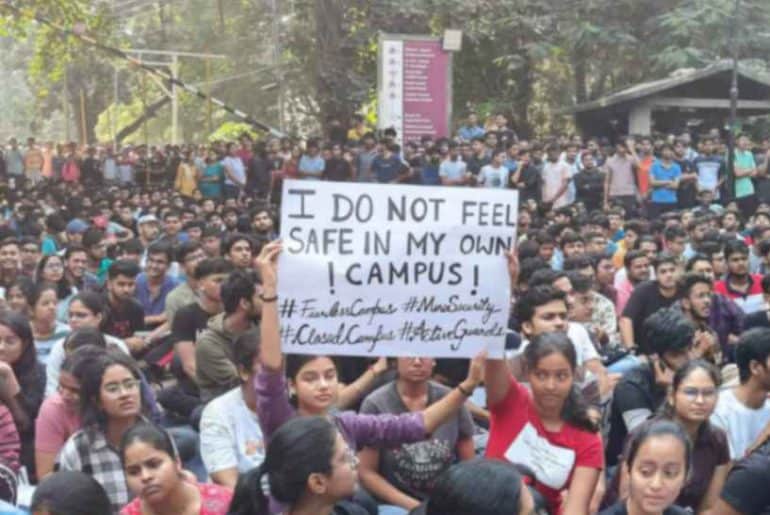
Concerns over student safety at prestigious universities are raised by the latest molestation incident at IIT-BHU. Students from different colleges question whether such institutions effectively prioritise security of its female students.

In recent times, an alarming surge in incidents compromising the safety of gender minority students has come to light in college campuses. Notably, such occurrences are increasingly prevalent in some of the country’s most popular universities. From instances of girls being recorded while they were changing at IIT Delhi during a competition to the distressing case at IIT-BHU, where a girl was undressed and molested; similar reports have emerged from Delhi University’s campuses, including Miranda House, Gargi College, and IPCW, where men forcibly entered gender-minority spaces. 

While the nature of these cases varies, they all raise a common concern: Are gender minorities genuinely safe in campus spaces? 

At IIT-BHU, an alarming incident occurred on November 1, where a student was molested by three unknown men late at night. This led to a widespread protest organised by students, not just for the victim’s justice but for broader concerns. 

“IIT-BHU shares its campus space with the main university. The open campus allows unrestricted entry even post-midnight, with inadequate checking and recordkeeping. The absence of a boundary wall and a lack of security pose a risk to safety. It’s because of these loopholes that the offenders in this case are still not caught,”

-A student from IIT BHU. 

However, the blame for the incident was wrongly placed on the victim herself, highlighting a double-standard whereby male students can roam freely at any hour while female students face restrictions and are held responsible for any mishap. It makes one wonder if the administration will ever accept their failure or not. These security concerns are not unique to IIT-BHU; they echo across various renowned universities. 

“Female students often find themselves confined to hostels during festivals like Holi and Diwali from potential threats created by men. However, there is a lack of measures to control and manage the actions of those who make common public spaces unsafe for female students. How will this situation change when the onus is always on the female and there is a lack of control and action on the people who create this nuance?”

-Shreya, a student from IPCW, argues. 

“While I feel safe at my college campus, the same cannot be said about the surrounding campus area, especially at odd hours. Cases of Eve-teasing, bag snatching, and stalking have repeatedly happened, and it is worrisome for students who have to be constantly vigilant while they live in such areas with narrow roads and less security.”

-Ananya, a student from Miranda House. 

While all-women spaces generally offer more comfort and protection, there remains a fear of outsiders violating these spaces. In co-ed colleges, where there is a persistent fear of the male gaze, posed by both outsiders and insiders. Students describe how they are constantly concerned about what they should wear, say, and do. 

“We can’t guarantee the behaviour of students at colleges because of the extremely diverse population. In many coed colleges, casual teasing and mocking are normal, and nobody takes any notice unless something really serious occurs.” 

-A student from Dyal Singh college. 

When examining the role of college administration and the police, students believe that basic safety measures such as security guards, CCTVs, and boundary walls are present on the majority of campuses. The lack of this has led to the recent fight of IIT-BHU students where they demand a secure campus with a suitable security method to track the entry of outsiders. Although, it is a crucial step forward, accounts from other supposedly “safe” campuses like IIT-Delhi, IPCW and Miranda House where these measures were breached, shed scepticism about how effective these measures really are. The fundamental question still stands: Are college campuses truly able to safeguard gender minorities, or are we normalising harassment in these seemingly “student friendly” places? 

It should be noted that resolving gender minority safety issues on college campuses necessitates a comprehensive approach that includes strict safety standards, heightened awareness, police patrolling, and a change in collective mindset. Regardless of the gender, it is imperative to establish a safe space for all students and ensure that the onus of safety does not unfairly fall on the victims.

Read Also: Women’s Safety in DU: How Safe Are We?

Featured Image Credits: Edexlive

Priya Agrawal 

[email protected]