Tag

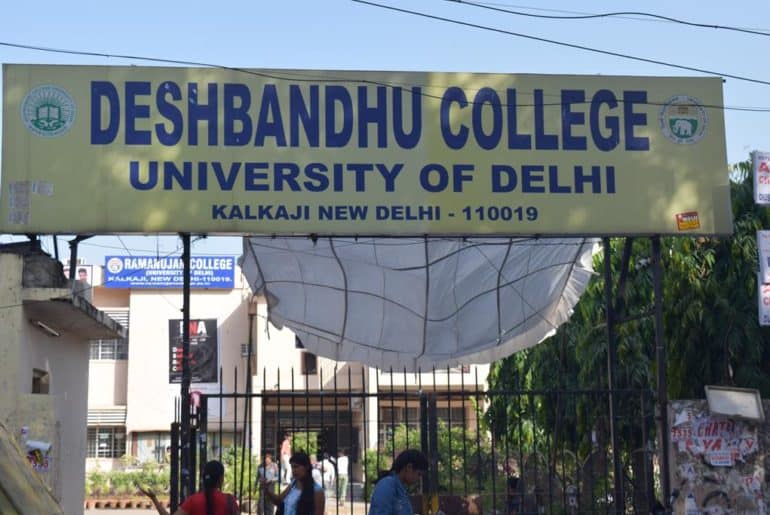
Deshbandhu College

Browsing

Deshbandhu College (Delhi University) – Explore updated details on courses, fees, admissions, campus facilities, student life, placements, and scholarships.

Deshbandhu College, DU was established in 1952 by the Ministry of Rehabilitation in memory of freedom-fighter Lala Deshbandhu Gupta. Located in Kalkaji, the college is a prominent constituent of the University of Delhi offering a wide array of undergraduate and postgraduate programmes in arts, science, and commerce. 

Over the decades, Deshbandhu College has built a reputation for its academic diversity, quality education and rich history

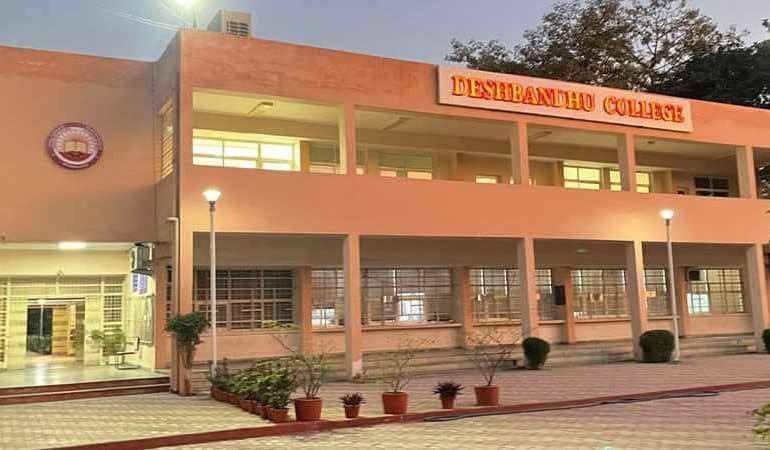
Deshbandhu College Infrastructure & Campus Facilities
The campus infrastructure at Deshbandhu College is well-equipped to serve the academic and extracurricular needs of students. Its library holds over 110,000 books, subscribes to DELNET/N-LIST for access to 6,000+ e-journals and 100,000+ e-books, and supports research and study. The college offers modern laboratories for sciences (chemistry, physics, botany, zoology, biochemistry, computer science), computer labs, WiFi connectivity, seminar halls and auditorium facilities.  and green spaces make the campus student-friendly. Although in-campus hostel facilities are not prominent, the college is well connected by public transport and offers amenities such as a canteen, student common rooms and departmental study areas.

Courses Offered at Deshbandhu College, Delhi University
Deshbandhu College offers undergraduate honours courses in B.A. program, and B.A. (Hons) in English, Economics, Hindi, History, Political Science, Sanskrit; B.Sc (Hons) in Botany, Chemistry, Physics, Zoology, Biochemistry, Mathematics, B.Sc program in Life Sciences and Physical Sciences.; and B.Com (Hons). Post-graduate (PG) programmes are offered in selected disciplines such as M.A. English, Hindi, Economics; M.Sc. Mathematics; M.Com 

The annual fees for UG honours programmes are Rs. 20745 for Science honours courses, Rs. 14191 for Arts courses, Rs. 17191 for B.Com honours, and Rs. 13427 for the Master’s courses. The fees vary based on category. The relatively low fees make the college accessible for a broad cross-section of students.

For PwD students, the annual fee is Rs. 295 for all courses.

Scholarships and Financial Assistance at Deshbandhu College
Deshbandhu College provides multiple schemes to support deserving and economically weaker students.

  • The college grants fee concessions to a maximum of 20% of the total number of students on its rolls every year. Fee concession is awarded to deserving students who apply on a prescribed form available in the college office.
  • Under the National Loan Scholarship Scheme those students who have obtained a first division (60% marks or more) in their last examination can apply for a loan scholarship through the college.
  • In addition, the college has a financial assistance fund with the objective of extending financial assistance to needy students.
  • Prime Minister’s Special Scholarship Scheme (PMSSS) J&K

PMS Scholarships are awarded to students having domicile of J&K State and having passed 10+2 Exam or 10+3 Diploma Exam from J&K and whose family income does not exceed Rs. 8 Lakh per annum are eligible for this scheme for pursuing higher studies outside the State of J&K.

Awarded by the Ministry of Minority Affairs for financial assistance to the poor and meritorious students belonging to minority communities in India to enable them to pursue professional and technical courses. Financial assistance is given to pursue graduate-level or postgraduate-level technical and professional courses from a recognised institution.

Eligibility: Family income ≤ ₹4.5 lakh per annum, pursuing regular degree courses in recognised institutions, and not availing other scholarships. 

Amount: ₹10,000 per year for UG (first three years)

Aside from Central Government scholarship schemes, information regarding freeships granted by the State Government are put on the notice board from time to time.

Extracurricular Activities & Student Life at Deshbandhu College
Student life at Deshbandhu College is lively and enriched by a variety of societies, clubs and activities. Some prominent societies are: Sharpshooters (Photography Society), Deshbandhu Dramatics Society, Oculis (Film Society), Dialecticians (English Debating Society), Antardristi (Hindi Debating Society), Art Meister (Art & Craft), Physica (Physics Society), Fiontrai (Entrepreneurship Cell), Quizzards (Quiz Club), YUVA (Youth United for Vision & Action), Timbre (Music Society), IGNIS (Flash-Mob group), NCC and NSS units, Enactus Deshbandhu, and more.The college annual cultural fest Sabrang and departmental events draw students from across DU and beyond. These platforms provide students opportunities for leadership, creativity, social service and networking.

Admissions at Deshbandhu College (Delhi University)
Admission to Deshbandhu College, Delhi University is based on CUET scores and governed by the Common Seat Allocation System (CSAS-UG).

Eligibility requires completion of Class XII (or equivalent) from a recognized board. CUET scores in language, domain subjects, and general tests determine seat allocation.

Applicants should check the DU Admission Portal regularly for updates and ensure subject alignment between Class XII and CUET. There is no age bar for undergraduate programs, and a gap year does not disqualify applicants.

Postgraduate Admissions (PG)

Admissions to PG programs are through CUET-PG, conducted by the National Testing Agency (NTA), followed by CSAS-PG counseling on the Delhi University portal. Seats are allotted based on CUET-PG rank, eligibility, and course preferences. Admission is confirmed after document verification and online fee payment.

Recognition & Rankings

In terms of achievements and recognition, Deshbandhu College holds quite a number of honors.

  • High NAAC accreditation of A++ 
  • Strong NIRF 2025 ranking of 13 in the college category
  • Recognition under various government programmes such as DBT/STAR-College schemes emphasising research and science education. 
  • The college was originally founded to educate children of Partition-refugees in Kalkaji and has grown into a leading co-educational institution in South Delhi, with a robust legacy of social commitment. 

Notable Alumni of Deshbandhu College
Alumni of Deshbandhu College include prominent personalities such as Gulshan Kumar (Founder, T-Series), Ravish Kumar (Journalist & Ramon Magsaysay Awardee), Prabhu Chawla (Senior Journalist), and Ashok Lavasa (Former Election Commissioner of India). Their achievements reflect the influence of the college across media, business and public service.

Internships & Placements at Deshbandhu College
Deshbandhu College has made good strides, particularly for commerce/science streams. According to 2024-25 data, the median salary package for UG programmes stood at around ₹5.20 LPA, with about 551 UG students placed in that cycle. Placement rate for eligible students is reported to be in the range of 50-70% depending on the course. The highest package offered by the college has been reported at ₹35 LPA in recent placement drives. Top recruiting companies include IBM, Uber, Asian Paints, Bajaj Capital, Genpact, Wipro, TCS, Amazon and others. Internship opportunities are available via the Placement Cell; while many of them may have modest stipends (₹2,000–₹15,000/month range as per some listings) the structured support helps students gain work exposure.

Image Credits: Deshbandhu College Website

Mangalya Singh
[email protected]

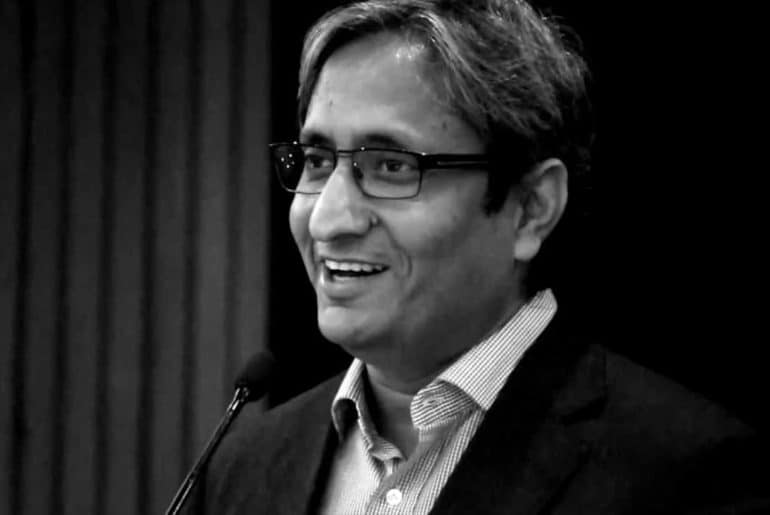
After gaining prominence with his ground breaking reporting on shows like Prime Time, Hum Log, and Ravish Ki Report, NDTV Journalist and Senior Executive Editor, Ravish Kumar was conferred with the prestigious Ramon Magsaysay Award.

Being one of the five recipients of the 2019 Magsaysay Award, the Asian equivalent of the  Nobel Prize,  Kumar has been awarded the prize  for “harnessing journalism to give voice to the voiceless” and his “unfaltering commitment to a professional, ethical journalism of the highest standards”.

Other recipients of this year’s Magsaysay include Ko Swe Win of Myanmar, Angkhana Neelapaijit from Thailand, Raymundo Pujante Cayabyab from Philippines, and Kim Jong-Ki from South Korea.

Ravish Kumar, an alumnus of the prestigious University of Delhi is a History Honours graduate from Deshbandhu College. Initially, he was interested in Public Affairs and further pursued a postgraduate diploma in Hindi Journalism from the Indian Institute of Mass Communication, but dropped out eventually.

In 1996, he became a part of the New Delhi Television Group (NDTV) and rose to the top with his dealing of the common problems on Prime Time and influential reporting of the same criticising the Government and the authority coupled with professional attitude with a fluid explanation of critical issues presenting facts and figures substantially.

Established in 1957, the Ramon Magsaysay Award is Asia’s highest honour. It celebrates the memory and leadership example of the third Philippine president after whom the award is named, and is given every year to individuals or organisations in Asia who manifest the same selfless service and transformative influence that ruled the life of the late and beloved leader.

“In electing Ravish Kumar to receive the 2019 Ramon Magsaysay Award, the board of trustees recognizes his unfaltering commitment to a professional, ethical journalism of the highest standards; his moral courage in standing up for truth, integrity, and independence; and his principled belief that it is in giving full and respectful voice to the voiceless, in speaking truth bravely yet soberly to power, that journalism fulfills its noblest aims to advance democracy,” says the citation by the Ramon Magsaysay Award Foundation.

Previously, he has also been awarded the Ramnath Goenka Excellence in Journalism Award twice in the years 2013 and 2017 respectively. He has also won the Red Ink Journalist of the Year Award in 2016.  Ravish Kumar is also a celebrated writer, who has authored books like The Free Voice India, Dekhte Rahiye , and Ishq mein Shehar Hona.

The Award will be presented in formal ceremony in Manila, Philippines on 31st August, the birth anniversary of the Philippines President whose ideals inspired the Award’s creation.

Feature Image Credits: Edugenius Blog

Faizan Salik

[email protected]

The Econometrics exam of second-year B.A (Hons.) Economics was conducted on 22nd May 2019. It had a lot of errors which created a problem for many students.

The last exam of B.A. (Hons) Economics for the fourth semester students was conducted by the University on 22nd May 2019.  According to sources, the Econometrics question paper was full of errors which created a lot of confusion among the students. In Jesus and Mary College, Atma Ram Sanatan Dharam College, and Guru Tegh Bahadur Khalsa College, students were informed about the corrections around 11:40 a.m. which was very late. By that time it was not feasible to attempt the questions according to the new changes. However, many colleges like Hindu College and Deshbandhu College did not receive the corrections at all.

In one of the questions, there was a change of sign from ‘+’ (positive sign) to ‘-’ (negative sign). This created a huge problem for those students who had already attempted the question with the positive sign since the paper was extremely lengthy. Moreover, the students were not left with any time to make the changes.

Riya, a student of Maitreyi College said, “Due to the hassle of errors and corrections in the exam, the students sitting in the examination hall felt distracted and I found it harder to concentrate. One of the corrections came around 10:30 a.m. or 10:45 a.m. I had already attempted half of that question. After the change in the signs, I had almost no time to redo the question since the paper was lengthy in itself.”

A student of Hindu College informed DU Beat that the students were not informed about any corrections and the exam was pretty easy. However,  the students are now worried about their marks since the paper they attempted wasn’t uniform with the other colleges.

According to a student of Kamala Nehru College, except for the first and second question, all the other questions had major errors. “There were corrections or clarifications in almost every question and the usual format of writing standard errors below the estimated error further below the estimated parameters was not followed which led to confusions. Some questions also had wrong signs of ‘T ratios’ but since there wasn’t much time, nothing could be done about it”, said Sanjana Sejwal, a student of Kamala Nehru College.

However, another student of Kamala Nehru College says, “The errors in the questions I attempted were general so I did not face much problem. The changes in the answers were also a matter of few minutes. So overall the exam was fine for me.”

It is also important that the University should recheck the question papers for any corrections beforehand so that the students do not face any problem during the examination. Making corrections in the question paper at the last moment also leads to low confidence level during the exams. Announcing the corrections in the examination hall distracts many students and creates a panicky situation.

A similar situation arose in the General Elective exam where there was a change in the format of the question paper and students were supposed to attempt five questions out of eight instead of four. It must be noted that some colleges asked students to attempt only four questions whereas students of other colleges were asked to attempt five questions.

However, it is necessary that the University and the Examination Committee looks into the matter and work out a solution which helps the students.


Feature Image Credits: Edexlive

Priya Chauhan

[email protected].

Deshbandhu College students took place in a hunger strike, demanding better facilities and more resources. 

A group of protesters, led by the Central Councillor of Deshbandhu College, staged a strike from the 19th of May 2018 within the college premises. The strike, which took place intermittently from the 19th, witnessed the Central Councillor of the college Students’ Union Saurabh Kumar holding a hunger strike for 2 days, only ending it at 1 pm on the 22nd.

The protesters put forth a chain of demands which included construction of a new computer science lab in the college, the appointment of a nurse, the release of funds for the cultural societies, and equipping the college chemistry lab with student safety gears including eyeglasses and gloves.

Explaining the reasons underlying his demands, Kumar told DU Beat, “Last October, in the college Chemistry Lab, a student had to be rushed to the hospital after a chemical reaction had gone wrong. Acid fumes had gone into the student’s eyes due to the lack of glasses in the lab.” Speaking on the demand for the release of funds for the societies, he commented, “It is common knowledge that the college has adequate resources to provide the required funds to our societies. But there has been withheld despite repeated requests from our side.”

Kumar, who was taken to the hospital after the strike had elaborated on their demand for a nurse by saying, “We have a medical room and yet we neither have a doctor nor a nurse. Toh Kya Faida Medical Room Ka? (What is the use of a medical room then?)”.


The President of Deshbandhu College Union Devesh Tiwary told a DU Beat correspondent, “First of all, our college doesn’t have a Principal at the moment. In the absence of an overarching authority, the financial transactions find difficulties in implementation. The interviews for the Principal’s post have been carried out. We are awaiting the results now.” He further assured, “Once the exams are over, we will conduct a meeting with the newly appointed Principal, and subsequently take stock of the demands.”

Tiwary alleged that the protesters had not given prior intimation of either their demands or the protest. Pehle Apni Maange Toh Rakho Humare Aage (at least apprise us about your demands first)”. He expressed concern and said, “I received calls from the police. But this wasn’t a matter to actuate a hunger strike upon.”

In contrast to Tiwary’s remarks, student councillor Saurabh Kumar asserted, “We had given prior notification to the college administration about the protest.” Notably, a copy of this aforementioned notification was sent to DU Beat in the evening of the 22nd. In the letter dated 18th May 2018, Kumar had put forth an ultimatum to the college administration by stating that he would sit on the hunger strike till his “last breath”. Kumar had further stated in the letter that if something happens to him during the hunger strike, the culpability of the same will lie with the college. Copies of the same were sent to the police station in Kalkaji, the Chairman of Deshbandhu College and the Vice Chancellor of the University of Delhi.

Saurabh Kumar imposed serious charges against the administration and said, “The protesters sat on strike day-and-night for two days. And yet, the administration had locked the washrooms at night. They not only prevented us from bringing in mattresses, they didn’t allow us to bring even mosquito repellents during the course of our strike.”

In a letter of assurance that was received by Kumar from the college administration, the latter had promised the commencement of construction for the computer science lab within 10 days and appointment of a nurse by the month of July. As for their other two demands,  a member of the college administration told the DU Beat correspondent on conditions of anonymity, “The issue of the provision of safety gears in the Chemistry Lab will be discussed in the department and the college will hold a meeting with the Convener of the Cultural Committee on 23rd of May.”

Feature Image Credits – Saurabh Kumar

Vaibhavi Sharma Pathak

 [email protected]


An Executive Member of DUTA, Dr. Yogendra Singh Mathur has accused the Chairperson of Deshbandhu College of tampering with the list of shortlisted candidates for the post of principal.

Executive Member of the Delhi University Teachers’ Association (DUTA), Dr Yogender Singh Mathur, in a letter written to the Vice Chancellor (VC) has demanded the removal of the Chairman of the Governing Body of Deshbandhu College, University of Delhi. Dr Mathur has also demanded a detailed enquiry into the administrative and financial irregularities that he believes were carried out by consent of the Chairperson which intend to have a structure worth 30 Lakh Rupees be built outside the college canteen.

Alleging gross violations committed in the screening of the applications for the post of Principal, Mathur noted in his letter that the Chairman ignored the screening done by the Screening Committee formed by the Varsity and tampered with the list of shortlisted candidates for the Principal’s post.  In the letter, Mathur also alleged that the names of three candidates, namely Dr Ashutosh Kumar, Dr Vinod Kumar Paliwal, and Dr Charanjeet Singh were wrongfully removed from the list of shortlisted candidates.

Dr. Mathur told DU Beat, “The University had released applications for the post of Principal. A Screening Committee was formed to declare the list of eligible candidates. The Committee had finalized 20 names. But out of those 20 names, the Chairman, without the permission of the Screening Committee, removed 3 names. Then he added 2 names from his own side, one being that of Ajay Arora and the other being Dr. Hem Chand Jain.”

Informing the DU Beat correspondent that Ajay Arora was the officiating Principal of the college for 6 years, he further alleged, “The selection committee had earlier deemed Ajay Arora not suitable for the post of Principal. And now, this gentleman has included his name. The reason behind this being, the Chairman belongs to the Rashtriya Swayamsevak Sangh (RSS), and so does Ajay Arora.”

Notably, in his letter to the VC, Dr. Mathur had clearly stated 3 demands. One, the Chairman be removed immediately for the violations committed in the screening of candidates. Two, an acting Principal is appointed immediately as recommended by the Governing Body. And three, a comprehensive enquiry be instituted into the complicit acts of the officiating Principal, Dr. Arora and the Chairman.

Significantly, the letter also conveys Dr. Mathur’s distaste for the alleged tampering of applications, as he condemns the Chairman’s involvement in the “corrupt acts” of the officiating Principal. He alleges the retention of Dr. Arora “illegally by not appointing an Acting principal” a tactic guided by “considerations to serve each other’s interests”.

Dr. Mathur made multiple other allegations against Dr. Arora, claiming a relative of his, Mr. Shyam Arora was given all major work advertised on the college website but its payment was made to a firm where Mr. Shyam’s wife worked as a proprietor.

In a phone call conversation, the DU Beat correspondent asked Dewesh Kumar Tiwary, President of Deshbandhu College, whether he knew anything about the Chairman tampering with the list of candidates for the Principal’s post. Answering the same, he remarked, “Sorry. We haven’t been informed about any such tampering. I am only aware that the candidates’ list has been finalized. And now, only the interview is yet to take place.”

On a telephonic conversation in response to being asked about the chairperson being accused of tampering with the list of shortlisted candidates, Dr. Arora told DU Beat that “There are set University guidelines and as per those guidelines, the screening committee is bound to follow those in every college. The chairman alone is not the screening committee; the committee consists of other members also”.

DU Beat attempted to get the contact details of the Chairperson from multiple channels in order to incorporate their viewpoint but was unable to do so. It has reached out to the college on its official email id and will update the story once the email is reverted back to.

Feature Image Credits – Deshbandhu College

Kinjal Pandey

[email protected]

Vaibhavi Sharma Pathak

[email protected]

Not all dreams are accomplished;
The path of accomplishment
Not always beauteous.
‘KHWABEEDA’ is OUR DREAM;
That 30 of us accomplished,
By embarking on a journey,
so noble, so beauteous.

‘KHWABEEDA’ is a bliss, a gratification,
Of bringing smiles on faces,
Of brightening dim lives.
It’s an ineffable emotion,
Of the 30 of us;
Who endeavoured towards a change,
By our dream,
Our ‘KHWAAB’.

– Team Enactus Deshbandhu

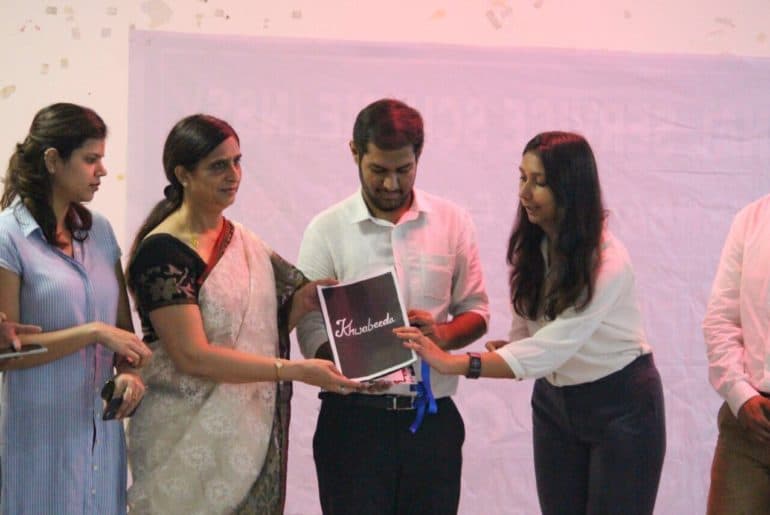
On 15th September 2017, Enactus Deshbandhu successfully launched its magazine KHWABEEDA which presents their journey of creating a sustainable society through innovation. The launch took place in the valued presence of their collaborators, Khaas – a tours and travel company run by visually impaired women, STOP – a NGO working with survivors of Human Trafficking and SHEROES – their media partner.
KHWABEEDA will now be an annual edition of Enactus Deshbandhu bringing us more stories of reality, their achievements, their worldview, and the spirit with which they will put a ding in the universe.

Project Title: Unbeatable Air Pollution in Delhi

Principle Investigators

1. Dr.D.K. Mallick, Sr.Assistant Professor, Department of Botany

2. Dr.Aparna Nautiyal, Assistant Professor, Department of Botany

3. Dr.Aparna Shekhar, Assistant Professor, Department of Chemistry

Mentor

Dr. Chirashree Ghosh, Associate Professor, Department of Environmental Studies, University of Delhi

Student Members

Ambikeya Sharma, Ashutosh Sharma, Nima Sunny, Payal Shaw, Priyanka Sharma, Tanujeet Ghosh, Sangraj, Vrashti Goel, Sharad Negi, Vikas Kumar

Deshbandhu College was awarded 12 innovation projects under DU Innovation Project Scheme 2015-2016. Each project has 10 undergraduate students of Deshbandhu College working under 3 faculty members and one external mentor. The projects provided the students from different backgrounds and discipline a space to explore new things, work in a team, develop confidence, experiment with innovative ideas and broaden their horizons beyond the classrooms and curriculum.

Urban air pollution is a serious problem in both developed and developing countries. As a rapidly expanding center of government, trade, commerce and industry, Delhi, being the capital of India has been facing many air pollution related problems and has also been ranked the most polluted city in the world. Regular checking of the tolerance of the existing tree species with respect to pollution and plantations of such more tolerant species is supposed to have a marked effect on various aspects of the air quality of urban environment and cleanliness of life in a city.

The Project DBC-311 entitled Unbeatable Air Pollution in Delhi: Trees for Rescue is a comparative study of different plant species to combat rising pollution in Delhi.   The Air Pollution Tolerance Index(APTI) of the plants needs to be monitored and checked for the predominant species that are located in this city. The research takes into account the ATPI value of 4 tolerant species, each of which are planted in the 4 distinct areas- R.K. Puram, Deer Park, Okhla and Nehru Palace, which are being used for the green belt planning, plant five samples of different species at these sites and after a certain period of time visit them again to analyze the amount of chlorophyll deducted during this time period as a result of increasing pollution.

The research shows that apart from the beauty provided by them, the trees also play a major role in detoxification of the polluted air. Also, the study of different land use site will help in making the city comparatively cleaner. In order to understand the effect of air pollution on plants and the adaption mechanisms of plants and the adaptation mechanisms of plants under stress conditions, present study is based on the idea of integration of two departments, viz., Botany and Chemistry to examine the impact of air pollution on a few commonly occurring tree species of Delhi.

The project was started in September 2015 and half the project has been done till March 2016 and yet more investigation is going on. The outcome of this project will generate further understanding about how efficient the existing plant species in the city are to combat the rising air pollution, so that strategies can be formulated and implemented not only to protect the existing species but also to look for more tolerant species to be planted. Different sites within Delhi have been surveyed for selected plant species to find out the effect of rising pollution in Delhi over the years.

Shreya Srivastava

[email protected]

‘Life is a race’, realized when I  migrated from Deshbandhu College to Sri Venkateswara college a.k.a Venky. The experience of this transition is worth sharing. Some call it a transition but I consider it as a “miss appropriation”. The changeover was not a cake walk; acclimatizing to the new climate was extremely difficult owing to not only the fact that students over here were brilliant at academics but also that they talked like any top notch journalist or political commentator.

Turns out that academics became the least of my worries; one can’t expect from a 20 year old who spent most of his life in a mundane boy’s school to concentrate on studies if he his presented with a chance to study in one of the most ‘glamorous’ colleges of D.U.  As hard as you try not to stare at them, every moment in college you are spellbound by some or the other girl. Things become worse, when after all the deliberate effort to avoid it, one has to ‘unwantedly’ sit in the lecture hall beside some of the most beautiful female folk of our college. All your sensory nerves are on high alert, you become conscious about every move you make, pretending like everything is normal but you only know that your world has turned upside down.

‘Unwantedly’ not because one doesn’t want to savour these moments, but because one hasn’t mastered the art of being comfortable in such a situation. You feel inferior and out of place when you see your co-educated metropolitan classmates extremely confident and well situated in such occasions. Here the situation is analogous to the movie “Love Aaj Kal” where our metropolitan counterpart is similar to Jai (the younger Saif) who had loads of affairs and people like me can relate to Veer Singh (sardar ji) who had only one affair in his whole life (in our case that one affair is also quite rare).

So boys like us usually end up forming groups like FOSLA (Frustrated One Sided Lovers Association) or NGO (Non Girlfriend’s Organization).

If by any chance one of our FOSLA* brothers gets lucky and  enters into a relationship, it improves their social status. The telecom sector is the core beneficiary of this status elevation. So much so that a couple or more of such cases could actually recover the losses of the 2G scam. Speculating about this former FOSLA member’s love life becomes a more important discussion than the Indian economy or Barack Obama.

A year has passed now and even after opting for Feminism over United Nations as a subject in my third year political science course, I still lack the mannerism required to converse with a female colleague. Engulfed with inferiority complex, fighting with “identity fracture”, I have no clue how this war between middle class values and college corporate culture will culminate. But one thing I observed and would like to convey to all our FOSLA brothers that one doesn’t need a Royale Enfield, dolle-sholle or ek liter doodh to mark his presence in Venky.

Disclaimer: – The writer does not intend to offend any group or sex. It’s a mere depiction of one’s experience. If there is any kind of resentment caused, it is deeply regretted. Your feedback is welcomed at [email protected] .

Vyom Anil

Pol. Sc. (H) III year

Sri Venkateswara College