

Tag

Renaming

Browsing

Delhi University’s Academic Council meeting on July 24 will consider a proposal to convert the School of Open Learning into a Centre for Distance and Online Education, in line with UGC’s 2022 distance education regulations.

Delhi University’s School of Open Learning may soon operate under a new name and a restructured administrative setup. The Academic Council meeting scheduled for July 24 will take up a proposal to convert SOL into a Centre for Distance and Online Education, abbreviated as CDOE.

The change, if approved, goes beyond renaming. Under the proposal, the designation of SOL’s principal will also be changed to that of a director, who must be a full-time officer of at least associate professor rank.  

The restructuring is meant to bring DU’s distance education setup in line with UGC’s Open and Distance Learning and Online Programmes Regulations of 2022, which made it mandatory for all universities, except open universities, to establish a CDOE to run distance and online programmes. SOL was first established in 1962 and is one of the largest distance education institutions in India.

SOL’s governing body had recommended the proposal at a July 15 meeting, and it will now go to the Academic Council for a decision. DU has said the restructuring is necessary given the growing demand for digital education and the need to bring administrative arrangements in line with current UGC standards. Once CDOE is formed, the conduct of online and distance courses, quality monitoring, and administrative arrangements will be handled in a more structured way, according to the university.

The July 24 meeting will also take up several other proposals, including the introduction of the Arun Jaitley Scholarship for three undergraduate sports students, a fourth-year research and entrepreneurship track under UGCF-2022, and the launch of a four-year integrated BA-BEd programme at Lady Shri Ram College from the 2026-27 academic session.

For the over five lakh students currently enrolled at SOL, the university has not indicated any change in courses, fees, or degree recognition as a result of the renaming.

Read Also: CM Rekha Gupta Pledges Infrastructure Push for Delhi University at Shaheed Bhagat Singh College’s Diamond Jubilee

Image Source: DU SOL

Abhishek Goverdhan
[email protected]
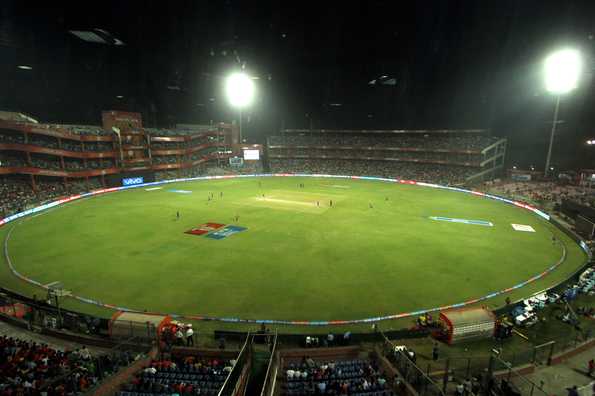


The Delhi and District Cricket Association (DDCA) decided to rename Feroz Shah Kotla Stadium as Arun Jaitley Stadium in memory of its former President, who passed away on 24th August 2019.

Renaming landmarks and cities is a global phenomenon, especially in the postcolonial era, as nations, one after the other, became independent post the end of the Second World War. Understandably, they wished to leave their oppressed colonial baggage behind. The objective of renaming being the elimination of the prevailing memories associated with those places, and the liberation of the nation from the painful times of the colonisation. India was a colony of the British and the Mughals for centuries, who, during their rule, redefined the cities and gave abundant historical landmarks that have generated reasonable tourism, etc. But for the past few years, Indians are witnessing the act of redefining these landmarks by changing their names. After the demise of Arun Jaitley, former Union Minister of Finance, the prominent cricket stadium of Delhi, the Feroz Shah Kotla stadium was renamed the Arun Jaitley Stadium.

The motive behind this embodiment was said to be an expression of gratitude towards Late Arun Jaitley, who served as the President of the cricketing body for 13 years, and his love for cricket was well known and certified. This change was made three days after his death. While the cricket ground retained its original name, Feroz Shah Kotla Ground; the name of the stadium was changed without any complexities or questions of why this was not done when Jaitley was alive and could see it for himself. This raises a debate: does this act of renaming places even have an impact on the general public, or are they indifferent and ignorant towards it? According to some people, this practice of altering names does nothing but disrupt the originality of the place and erases a slice of history from the lives of the people who share a connection with them.

Contrary to this, others have said that change is the only constant. They appear to believe that it was high time for India to gain a perspective of what the country was before it was “invaded” and ruled by the people of other nations. India has provided some great leaders, who deserve recognition and a mark of respect that lives for ages, renaming landmarks in their names instead of rulers who deprived us of freedom for long is nowhere wrong and is a progressive step that does not spread hatred. Another example of this manifestation is the renaming of different cities in West India – Allahabad being changed to Prayagraj, Faizabad being changed to Ayodhya, among numerous others. This decision that took place last year in October had the people of India shook. The authorities claim that they only corrected the history as it was Akbar, who changed Prayagraj’s name to Allahabad in 1583. But the residents of the city were not very pleased with the decision. Professor Farooqui, former Vice Chancellor of Allahabad University, said, “You can’t just erase the history of 500 years. Allahabad is not just a name – it’s a feeling that every person who grew up in the city carries, it’s like killing the city’s soul.” India is a secular country, with diverse cultures and demands.

With each new decision, there are going to be people standing by it, and people criticising it. It is hard to say what is in the best interest and what is not, as the nation does not wish to regress with time. A student, who requested to be anonymous, said, “The Government should adhere to the issues that require vigilance rather than altering history or rectifying what should have been done, the locals will always prefer the former name as name simply changes the title but does not resolve the long term issues prevailing in the country.”

Feature Image Credits: India Today

Avni Dhawan

[email protected]