Tag

adhoc employement

Browsing

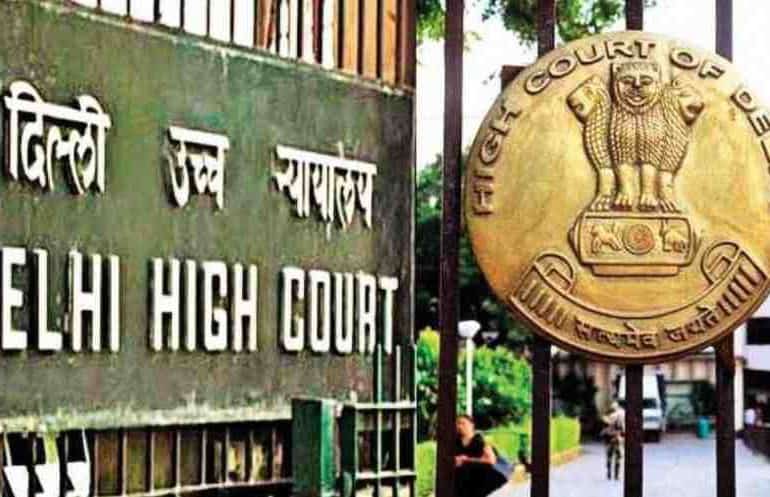
In a recent order, the Delhi High Court bashed Delhi University’s appointment of ad-hoc faculty to substitute regular employment of professors, while ordering regularisation for 2 ad-hoc professors. 

In the past decade, the number of ad-hoc faculty appointments by Delhi University has skyrocketed, and along with that their treatment of such faculty has deteriorated significantly. On 11th July, the Delhi High Court in response to an appeal by two of Delhi University’s ad-hoc faculty, severely questioned the University for “consciously using ad-hoc appointments as a substitute for regular employment”. 

The ad-hoc professors from the Department of Germanic and Romance Studies, namely Namita Khare and Mehak Talwar, petitioned in 2022 against the University’s revised guidelines for the recruitment and shortlisting of Asst. Professors that covertly excluded long-serving ad-hoc teachers, despite them qualifying the eligibility norms under the UGC guidelines. 

Questioning Delhi University’s failure to recruit regular faculty while extending the petitioner’s tenure, the High Court bench of judges, Justice C.H, Shankar and Ajay Digpaul stated

The petitioners were not engaged for a finite project or stop-gap arrangement, but entrusted with core instructional and administrative responsibilities within a permanent academic framework.”

On a typical basis, Delhi University hires ad-hoc professors on quarterly contracts which are renewed with “breaks” to avoid legal obligations. However, under this system, many teachers have taught full-time for over decades without consideration for a permanent position, despite having performed the same duties as a regular employed faculty. Commenting on the same, the bench further observed

The petitioners’ continued exclusion from the zone of regularisation, despite fulfilling all eligibility conditions and having rendered long and meritorious service, is violative of Articles 14 and 16 and cannot be sustained.”

As of 2022, Delhi University has over 4200 ad-hoc appointments that makes up for 40% of its total faculty strength and in the past 2 years over 2000 ad-hoc teachers have been allegedly displaced. In an interview with the Indian Express, an ad-hoc professor at Ramjas stated that he had seen no progress in career, increments or medical benefits under DU’s system of ad-hoc appointments. Regularisation for such appointments, is thus, the need of the hour to ensure equitable treatment and fair service. 

A press release by the Democratic Teachers’ Front (DTF), Delhi University welcomed the regularisation order – 

The High Court order for regularization should be used to bring much awaited relief to serving adhoc teachers and those displaced.”

Rajib Ray, the President of DTF, recommended the regularisation of the remaining ad-hoc faculty as well as previously displaced teachers whose entire service should be counted towards all stages of promotion and retirement benefits. 

The High Court’s judgment, reflects the Supreme Court’s 2024 Jaggo Judgment, which recognised the need for regularisation measures for ad-hoc appointees who have performed indispensable services for a prolonged and uninterrupted period. 

DUTA Executive Member, Prof. Rudrashish Chakraborty further stated, 

The DU administration is guilty of exploiting the adhoc teachers during the best years of their life and then throwing them out through selection committees. This humane judgement will force the University administration to ensure the regularisation of the ad-hoc teachers in the rest of the colleges wherever interviews will be held and also to absorb those teachers who were displaced.” 

Given the current state of ad-hoc teachers at Delhi University with lack of increments, promotions or medical benefits, the HC judgement is expected to bring relief and hope for the improvement of working conditions and their shortlisting for permanent positions. Recently, the DU Vice Chancellor, Yogesh Singh has agreed to send an official representative to the University Grants Commission (UGC) as the ad-hoc faculty demands recognition of past service and provision of promotion and retirement benefits. 

Read also: DU sends UGC rep as teachers demand recognition of past service

Image Source: DNA India

Aaratrika Ghosh
[email protected]

A long-standing demand of Delhi University’s teaching community to count the entirety of past service rendered in ad-hoc and temporary capacities for promotions and retirement benefits, has finally moved a step forward. Following sustained pressure from elected members of the university’s statutory bodies, the Vice Chancellor has agreed to send an official representation to the University Grants Commission (UGC), urging revision of existing regulations.

At the core of the issue lies UGC Regulation 2018, which, for the first time, acknowledged ad-hoc service for promotion. However, it allowed such past service to be counted only for the first promotion, from Academic Level 10 to 11. This resulted in many teachers, who spent several years in ad-hoc positions before gaining permanent status, being denied recognition for the majority of their service. Teachers argue that this selective accounting not only impacts their promotion prospects but also restricts their eligibility for full pension under the University Pension Scheme (UPS), which requires 25 years of service.

Teachers’ bodies have repeatedly highlighted how the university system has long relied on the contributions of ad-hoc and temporary staff. Many such educators have taught continuously for a decade or more before securing permanent positions. However, their years of teaching are often rendered invisible in the eyes of regulatory frameworks. The demand is that all such past service be treated as continuous and be counted fully towards promotions, pension, and retirement benefits.

The issue extends further to post-doctoral experience. Under current norms, post-doctoral work conducted in foreign institutions is eligible for promotion consideration due to higher emoluments, while similar experience in Indian public institutions is excluded due to lower pay. Teachers argue that this disparity is unfair and fails to reflect the quality and significance of academic research conducted within India. They are demanding that such post-doctoral work be given parity with Assistant Professor-level service, regardless of emolument differences.

Another concern raised in recent discussions is the implementation of periodic review mechanisms and proposals for compulsory retirement of senior faculty. Detractors argue that such policies may target experienced permanent staff under the guise of cost-efficiency, while replacing them with contractual hires who receive lower pay and fewer benefits. There is growing unease that such moves are aimed at institutionalising contractual employment at all levels within universities.

Several teacher representatives have also pointed out that the University of Delhi has not implemented a number of central government notifications that were intended to benefit employees, such as revised NPS rules or the extension of the Old Pension Scheme to certain eligible individuals. This selective adoption of policies, they argue, reflects a broader trend of administrative reluctance to support employee welfare.

The representation now being sent by the University to the UGC is seen as a long-awaited but essential step. Faculty members and union representatives hope that this formal communication will prompt the UGC and Ministry of Education to reconsider their stance and ensure fair recognition of academic labour that has long gone unacknowledged.

Ritobrita Mukherjee

[email protected] 

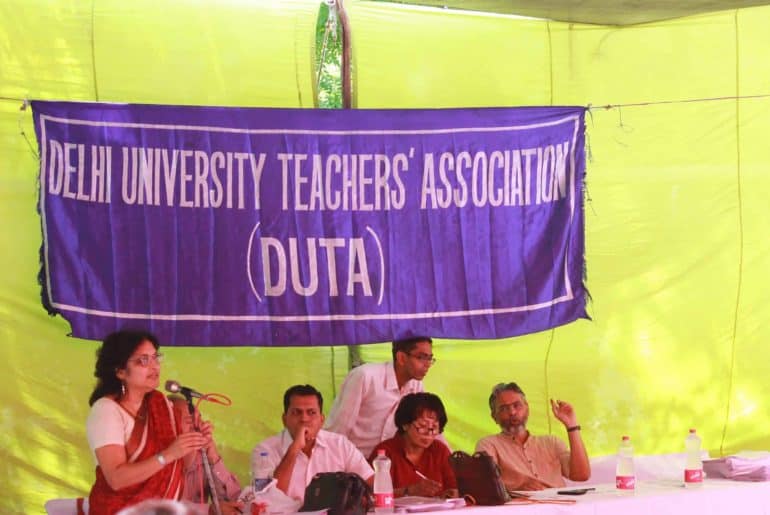
The Delhi government turned a blind eye to the written request made by the ad-hoc teachers of the University to ensure the renewal of their term from 20th July 2019 and demand funds for the creation of new teaching posts. In retrospection, the office bearers, the karamcharis and the active faculty members of the Delhi University Teachers’ Association flocked the streets in front of the University Grants Commission office to express their discontent and demand immediate action.

On the 16th July 2019, the office bearers, members of the Delhi University Karamchari Union along with the members of the Delhi University Teachers’ Association (DUTA) protested  against the government and the University administration.

The protest started around 11:30 a.m. on Bahadur Shah Zafar Marg and carried on till 01:30 p.m. Chants of azaadi, “DU VC Down Down!”, “UGC Barbaad Ho!”, and “Hum Apna Adhikaar Maangte!” echoed as a handful of students and a large group of teachers joined the protest led by DUTA President, Dr. Rajib Ray, and DUTA Treasurer, Dr. Najma Remani, to protest the existing system ad hoc appointments, rampant corruption in the provision of Development Fund to colleges by the Vice Chanellor,  and demand timely promotions, permanent appointments for job security and service benefits, release of grants for creating new teaching posts and accommodating the Economically Weaker Section (EWS) expansion and to force stop the commercialisation of Higher Education imparted at the University of Delhi by pestering colleges to accept loans from Higher Education Funding Association (HEFA) for funding expenses on infrastructural development.

The past three weeks have remained flooded with tense conversation between DUTA and the Delhi government. On talking to professors about their struggle, Dr. Debolina, an ad-hoc professor at Ramjas College said, “The administration is just trying to create a huge pool of disposable people which it can use and then throw away when it gets a cheaper substitute. I have no security of my job as a professor; I don’t get any perks, any promotions, or service benefits. We have been protesting this culture of ‘demanding gratitude’ and ‘forcing obedience’ on us for a while now and there has been no response. If I don’t have a job for the next three months, I am going to fall in the EWS category.”

“The Delhi government has finally agreed upon paying the salaries of professors in 12 colleges funded by them and its 5% share of the development expenses but that is not enough. The 12 colleges including some premier institutions like Vivekanand College and Moti Lal Neru College also need funds for facilitating the EWS expansion and to have a higher teaching staff to meet the greater student intake in this academic session. None of this has been addressed by the Deputy Chief Minister, who also holds the Office of the Education Department, at the DHE meeting held on 12th and 15th July respectively. Although they have made a verbal commitment about releasing the 2nd tranche of OBC expansions, there is still no paperwork for it,” said Dr. Rajib Ray, President of DUTA.

Dr Swati, a professor from the Department of Germanic and Romance Studies said, “I have been on an ad-hoc appointment in the department for 12 years, and every time the University releases the applications for making permanent appointments, they refuse to entertain past experience. This has forced me to be working on such an uncertain job where I don’t know whether I will be teaching the students I am teaching now, at this time next year. Somewhere this has also impacted student psychology because they see their teachers coming and going after break-years.” “This has further created a situation where students have now started to make a choice of college not according to the best faculty but according to the most stable faculty,” said Dr. S. K. Kaushik, Professor of Mathematics, Kirori Mal College, further adding that the sole reason for this is the ‘absence of willingness of the government and the University administration’.

Despite the blazing heat, all professors matched their voices in solidarity against the fraudulent system of the University. Seeing ‘gurus’ demanding their rights, it makes one wonder, is this system really democratic and fair? If it is, then why does this democratic system turn a blind eye to the cause of its building blocks? Will the system not collapse if these building blocks disintegrate? Time will tell us, whether DU too will collapse in its essence like other Central and State Universities, or will its prestige, that comes from its strong, qualified experienced and highly intellectual teaching staff, be maintained.

Feature Image Credits: DU Beat Archives

Yaksh Handa

[email protected]